Newsletter June 2026
- 9/06/2026
Welcome to this month's Fish & Game update, where we are advocating for our community as parties gear up for the general election in November.
Fish & Game has been working hard to make sure the voices of New Zealand's 175,000 anglers and game bird hunters are heard by the people who want to govern this country.
Earlier this year we sent every major political party a questionnaire covering the issues that matter most to our licence holders: public access, fishing and hunting traditions, wetland protection, resource management reform, Water Conservation Orders, and Fish & Game's statutory role. The deadline for responses has passed, and we will be publishing what the parties had to say in our upcoming fishing edition of the magazine.
That edition reaches a print readership of 130,000 and a total audience of 208,000 across print and digital platforms. It is one of the most-read magazines in the country, and we think it is the right place to put these responses in front of the people they matter to most.
If you want to read the questions for yourself before the responses are published, you can find the full questionnaire here: Fish & Game political questionnaire
I have been meeting politicians across the political spectrum advocating for fresh water angling and game bird hunting. There's keen interest in the value of angling and game bird hunting and politicians have been positive and receptive to our views.
We will keep pushing to make sure recreational fishing and hunting are taken seriously as we head into this election. You can count on that.
Ngā mihi, Corina Jordan Chief Executive, Fish & Game New Zealand
Conservation land management changes
Key issues for Fish & Game in the Conservation Amendment Bill and National Conservation Policy Statement (NCPS)
The New Zealand government is consulting on two proposals that will change how conservation land is managed across the country.
The Conservation Amendment Bill and the new National Conservation Policy Statement (NCPS) are the biggest changes to conservation planning in New Zealand in many years. For Fish & Game, they bring both opportunities and risks around how we can influence planning decisions, protect habitat, and ensure the future of sports fishing and game bird hunting. Read more here.
ReWild: game bird hunting knowledge hub
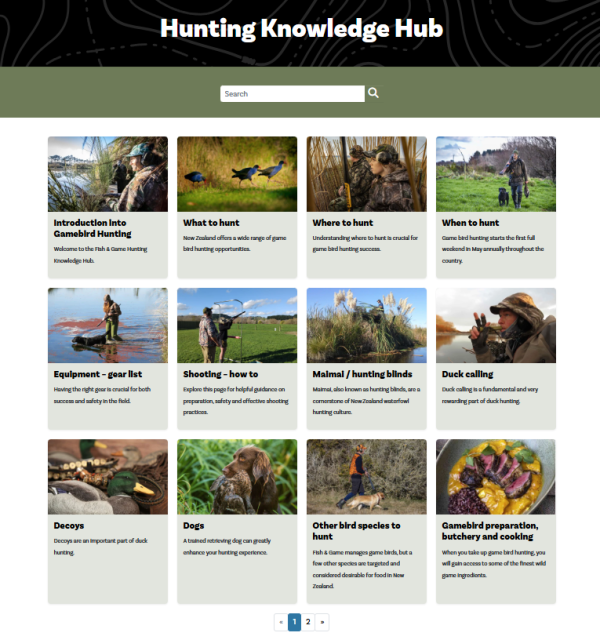
In March, we launched a free online knowledge hub packed with resources for game bird hunters at every experience level.
We're getting great feedback about it, so if you haven't yet checked it out please do.
Whether you're heading out for your first season or your fiftieth, the hub has you covered, with downloadable guides on everything from equipment selection and game bird identification to maimai construction, calling techniques, decoy strategies, and getting the most out of your harvest at the dinner table.
The resources can be downloaded and taken into the field, or read whenever you like on your phone, wherever you are.
The knowledge hub is a living resource, and we're keen to hear from game bird hunters about what else would be useful. Visit fishandgame.org.nz to explore the hub and share your feedback with [email protected]
And yes, a fishing hub is also on the way!
Conversations from the Riverbank
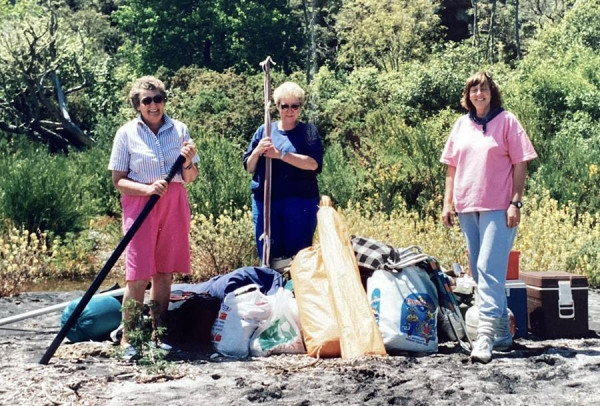
Cherry Twaddle is pictured on the right in this photo taken in 1994.
Leigh Johnson from Women on the Fly
Fly fishing is woven into the rivers, lakes and communities of New Zealand. Yet the stories of the women who have shared in this tradition have not always been widely told.
Wading Through Time is a series of conversations with women who have been part of the story of fly fishing in New Zealand. Some discovered the sport later in life, while others grew up around rivers and fishing families, but each has followed her own path on the water.
Through these interviews we hear about first casts, memorable mentors, early challenges, friendships formed along the way, and the places that have become special to them. These stories capture both personal journeys and the evolving presence of women in fly fishing.
Read them here.
Fish & Game divers take the plunge to keep tabs on trout and waterway health
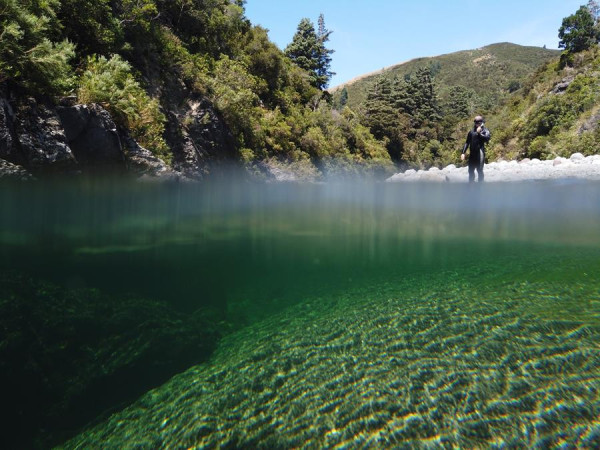
Fish & Game New Zealand has wrapped up another season of drift-diving surveys, with staff kitting up in wetsuits and snorkels to glide down more than 100 rivers nationwide in a bid to understand the health of the country's trout populations and freshwater.
The surveys are a cornerstone of Fish & Game's monitoring programme, providing data on trout abundance that directly informs catch limits for anglers but also an opportunity to check the health of New Zealand’s rivers.
Our staff are in the water assessing water clarity, habitat quality, aquatic insect populations and the abundance of indigenous fish. Together, that gives us a broad and reliable picture of overall river health.
Each year, Fish & Game staff drift and glide down hundreds of kilometres of rivers throughout the country, compiling data that feeds into the management of sports fish populations on behalf of New Zealand's 140,000 fishing licence holders. There are very few organisations who do this and none more extensively.
Trout require the cleanest water of any freshwater species in the country, which makes them an excellent indicator of river health. When trout are thriving, it tells us the waterway is in good shape. When they're struggling, it's often a sign that something is wrong upstream.
This work is what underpins our ability to advocate effectively for healthy rivers and lakes.
Drift diving is one of several monitoring methods used by Fish & Game, alongside electric fishing, spawning surveys, acoustic surveys, eDNA testing, and angler surveys.
Captions: Fish & Game staff drift diving on the Rangitikei River
Catchment community catching rats
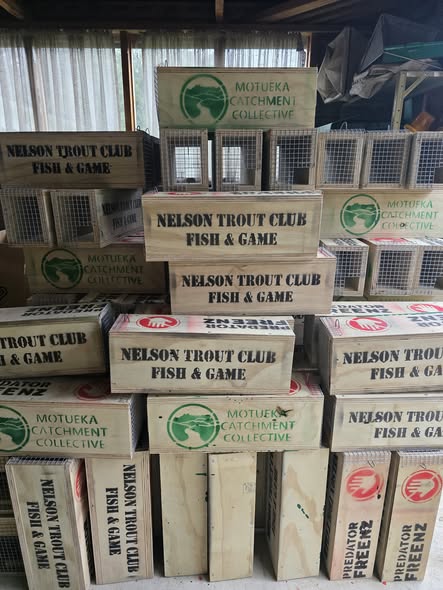
Last week, members of the Nelson Trout Fishing Club and Fish & Game staff completed another 100 rat tunnels for the Motueka Catchment Collective. These traps now bring the total to over 400 DOC200/rat tunnels built for this catchment group over the past 12 months.
These traps will be used in a Motueka Town Trapping project, which received sponsorship from Predator Free NZ, to catch rats and other critters to support native bird and insect life in the area.
Thanks also to PlaceMakers Motueka for the generous sponsorship of plywood to build the traps.
New Hatchery troughs for Ngongotaha
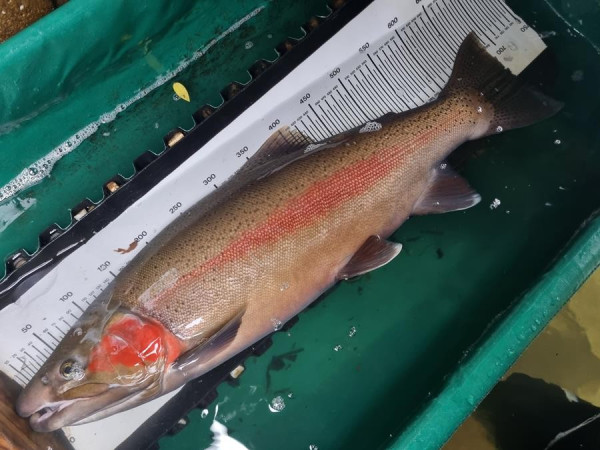
Eastern’s Ngongotaha facility was started in 1937, and some of the plant is still being used today.
The hatchery's original steel-reinforced concrete fry troughs have given up the ghost, so it was time to renew.
The Kiwi Tanks team custom-built the first batch of replacement HD plastic troughs and they were put into service in April with the first crosses of the winter season.
Disclaimer:
The information presented in these news items is based on the context and regulations in place at the time of publication. Please note that some articles may include reference to laws and regulatory standards that have since changed. For the most current and accurate information please check our Fishing Licences & Regulations pages or our Hunting Licences & Regulations pages.