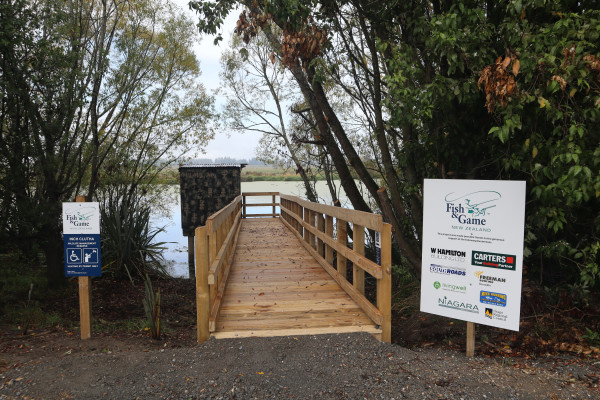
 Inch Clutha Accessible Maimai - 2026 Partnership Project
Otago Fish & Game is hugely grateful to the project partners who made possible the Inch Clutha wheelchair accessible maimai:
- W Hamilton Building Ltd
- Carters
- Freeman Roofing Dunedin
- Livingwell Disability Resource Centre
- SouthRoads
- Mike Hurring Logging and Contracting
- Niagara
- Otago Regional Council
We asked why they got involved in the project, and how they contributed:
Bill Hamilton, W Hamilton Building Ltd director
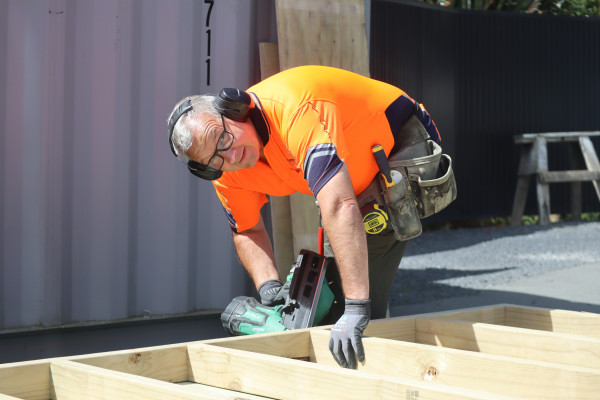 “Following the successful completion of Otago Fish & Game’s new premises, we built a strong working relationship with their team. When the opportunity arose to be involved in this project, it was something we were naturally keen to support.
“This is a meaningful community initiative, and being able to contribute is a privilege. It aligns with our values as a company, particularly when it comes to supporting projects that create more inclusive opportunities for people to enjoy the outdoors.
“There is also a strong personal connection within our team. We have a number of staff who actively enjoy and participate in the hunting opportunities that are readily accessible to us here in New Zealand. Bill himself has been duck hunting since he was 8 years old, so being able to help make that experience more accessible to others adds an extra layer of meaning to the project.
“Our team was involved from the outset, working through the design and layout of the maimai and access ramp in collaboration with Fish & Game and accessibility advisor John Marrable from Livingwell. This ensured the final design was both practical and fit for purpose.
“We carried out site visits to confirm positioning, dimensions, and levels before finalising the design.
“We were fortunate to have the support of key suppliers who shared in the vision for the project. Carters Branch Manager Ben and Sales Representative Francis partnered with us to supply materials and played a key role in transporting and placing the pre-built maimai and ramps on site. Freeman Roofing also contributed, with Ronnie providing the Colorsteel cladding.
“To streamline the build, much of the structure was pre-constructed at our Kaikorai Valley Rd premises before being transported to site. Our team then completed the onsite installation, including the ramp, handrails, and decking.
“It is rewarding to see our team’s skills contribute to a project that removes barriers and enables more people to take part in an activity that is an important part of the local outdoor culture.”
Ben Chamberlain, Carters Dunedin branch manager
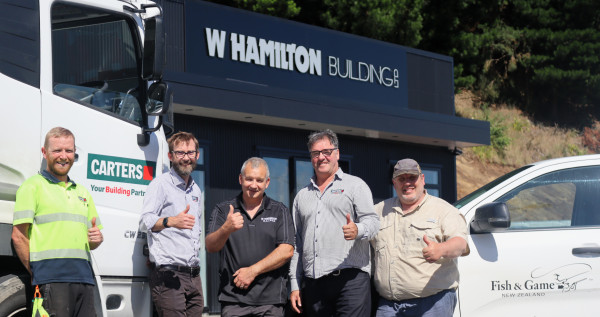 “Where possible it is always great to be involved in community projects. As a member of the construction industry, it was an easy decision to help Fish & Game and Bill and Greg and the team at W Hamilton to bring this project to life.
“We have helped to facilitate and provide the materials for this project through our supply partners, at as low cost as possible. Being outdoors is a big part of our culture as New Zealanders. In the building industry it is a great way to get away from some of the stresses and pressure of business. If we can help in a small way to make this accessible to as many people as possible then that’s a good thing.”
Ronny Hayes, Freeman Roofing Dunedin branch manager
“When Bill from W Hamilton Building came to see me, I instantly recognised a local sharing the same enthusiasm and spark for doing meaningful work for others. Freeman Roofing puts huge emphasis on supporting local so backing a project that’s relied heavily on contributions but provides so much opportunity sat right with our values.
“Roofing materials are our bread and butter, so it didn’t take long to see the value in contributing the quality Colorsteel roofing and flashings we manufacture to the wheelchair-accessible maimai. It’s a fantastic initiative driven by passionate people, and when everyone plays their part, the results can be pretty magical.”
John Marrable, Livingwell Disability Resource Centre access consultant and educator
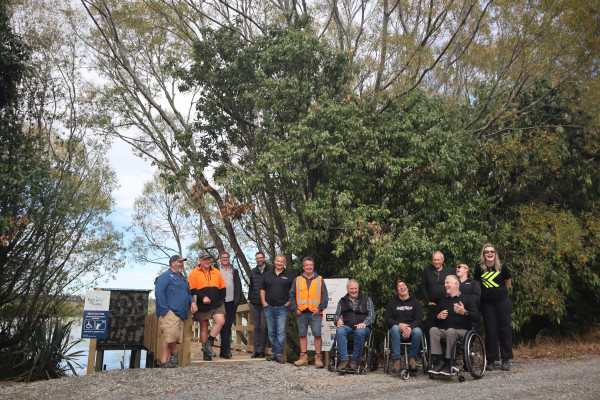 "Livingwell supported the wheelchair-accessible maimai because everyone should be able to access the outdoors and take part in shared experiences with friends and whanau. Too often, disabled people are excluded from these spaces. This project reflects Livingwell’s commitment to inclusion, independence, and wellbeing. Designing it to be accessible helps remove barriers and ensures wheelchair users and others with mobility issues can be part of these experiences.
“Livingwell’s contribution focused on ensuring that accessibility to the maimai was possible for a person using a wheelchair or other mobility aid in accordance with the New Zealand Building Code and where possible exceed the minimum requirements for access. Making the maimai accessible means more people can participate in outdoor recreation, maintain social connections, and enjoy the wellbeing benefits that come from being outdoors.
“Livingwell greatly valued the passion and commitment of the Fish & Game team and all involved in the project in making the Inch Clutha maimai an inclusive site. They were a pleasure to work with and demonstrated a strong willingness to listen, collaborate, and ensure accessibility was meaningfully embedded in the design.”
Keri Solomon, SouthRoads Balclutha branch manager
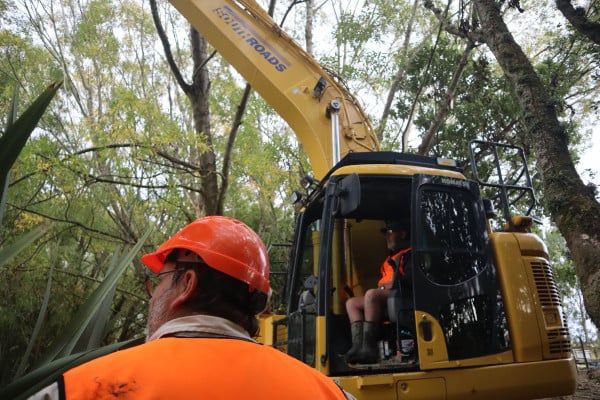 “At SouthRoads, we’re deeply connected to the communities we work in and we genuinely want to give back where we can. We’re involved every day in shaping and caring for the places where we all work, live, visit and play, so supporting a project that improves access and inclusion felt like a natural fit. This maimai removes a real barrier and allows more people to enjoy duck hunting and the outdoors, which is something we strongly believe should be accessible to everyone.
“We contributed labour and equipment, applying the same practical skills we use across our civil construction and maintenance contracts. It was a great example of our people working alongside organisations like Fish & Game, and in the same spirit of collaboration we have with the Clutha District Council, Otago Regional Council, and other partners. Seeing those skills used to help responsibly manage and improve shared spaces and to make them more accessible is incredibly rewarding for our team. Knowing the finished maimai will allow more people to participate safely and comfortably makes that effort especially worthwhile.”
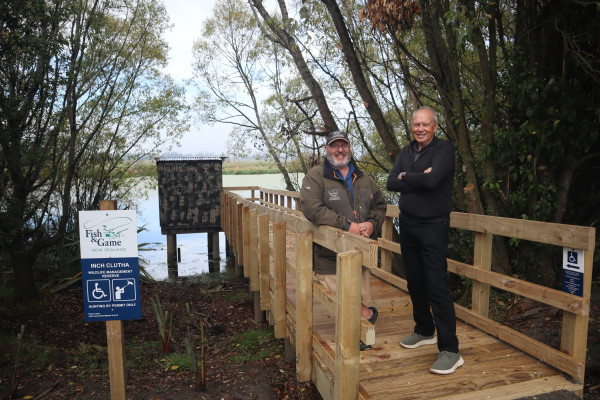 Steve Dixon, Otago Fish & Game officer
Pictured: Fish & Game officer Steve Dixon with Otago Fish & Game Councillor John Cruden.
“The new maimai at Inch Clutha Wildlife Management Reserve was the result of a collaboration with local businesses, disability advocates and local government.
"This project was a true community effort delivered at as low cost as possible to game bird hunting licence holders.
“W Hamilton Building led the design and construction, Livingwell Disability Resource Centre provided access advice, Carters, Freeman Roofing Dunedin and Mike Hurring Contracting helped facilitate and provide materials and haulage, SouthRoads installed the piles, and Otago Regional Council helped navigate the regulatory system to build a maimai in a public space.
“The goal was to remove physical barriers that prevent mobility-impaired hunters accessing public land.
“As the father of a son with a mild disability, I have a personal connection to this project and understand how hard access can be,” Mr Dixon said.
“This maimai is not only for people who were duck hunters and found themselves in a wheelchair after an accident, but also for people who’ve had mobility challenges all their lives and want to have a go at duck hunting.”
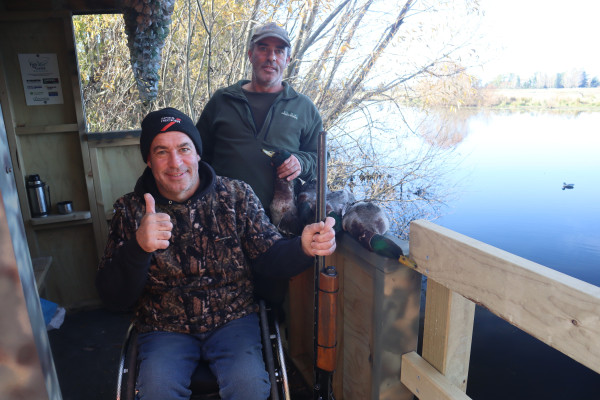 Pictured: Brendon Storer (left) and his brother Mark on opening weekend of the 2026 game bird season at Inch Clutha.
WHAT IS FISH & GAME?
The Otago Fish & Game Council represents the interests of anglers and game bird hunters in the Otago region. Fish & Game receives no money from the government. All funding is provided by freshwater anglers and game bird hunters – a “user pays, user says” tradition dating back 150 years.