Back to Fishing Knowledge Hub
Fishing from boats – Trolling
Trolling remains one of the most popular and effective methods of catching trout from boats in New Zealand's lakes.
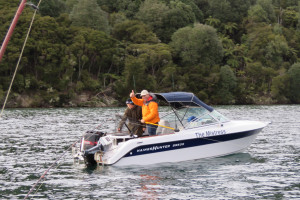
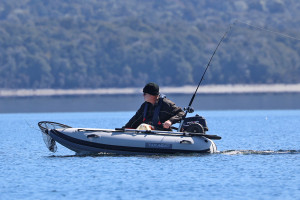
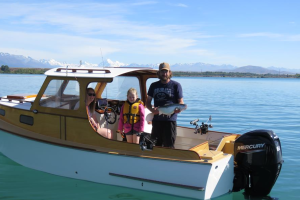
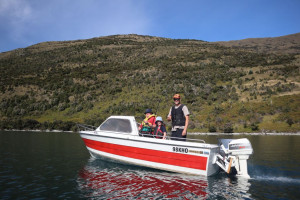
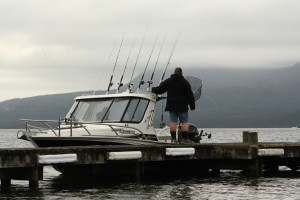
Whether you are fishing from a purpose-built trailer boat, a small dinghy, or a kayak equipped for trolling, this technique will allow you to cover large areas of water and locate actively feeding fish.
Guides
What is trolling?
Trolling involves towing a lure or fly (feathered lure) behind a moving boat.
The movement of the boat, whether powered by a motor or paddled, causes the lure to move through the water like a small fish. Trolling is an effective technique, that allows anglers to effectively cover large areas of water and present lures to fish that may be spread across a lake. There are a variety of different factors that should be taken into consideration when trolling including lure patterns, presentation, lure depth, trolling speed and local habitat conditions. Trolling can be effective throughout the year and is suitable for targeting brown and rainbow trout as well as chinook salmon.
Rod and reel requirements for trolling
Trolling tackle does not need to be complicated.
A rod between 6.5 and 8 ft in length with a medium action provides enough flexibility to absorb the lunges of hooked trout while maintaining pressure during the fight. Most anglers use 2000–4000 size spinning reels or compact overhead reels spooled with either 6–10lb monofilament or braided line.
Monofilament line is commonly used because its stretch helps absorb the weight of a striking fish. Braided line offers better sensitivity and allows lures to run slightly deeper due to its thinner diameter but should always be paired with a monofilament or fluorocarbon leader.
Selecting lures for trolling
There is a wide variety of trolling lures available, but a handful of proven styles continue to produce across the season and throughout the country.
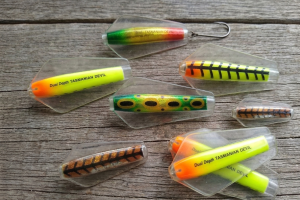
Tasmanian Devils remain one of New Zealand's classic trolling lures. Their erratic swimming action can trigger aggressive strikes from both brown and rainbow trout, with colours often chosen to suit water clarity, light conditions and local prey availability. Cobras, Zed spinners, Tobys, and other similar metal lures also account for many fish, especially when trout are feeding aggressively. In the North Island, minnows with a slim profile that imitate smelt can be highly effective.
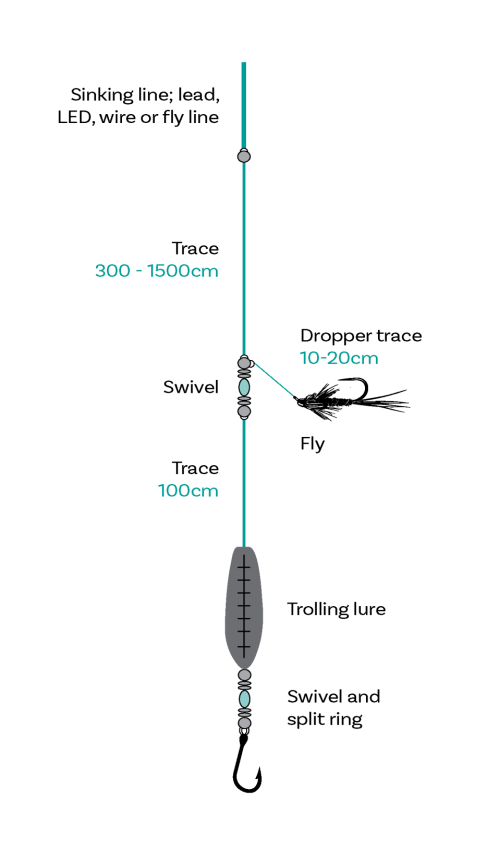
Many anglers also troll feathered lures using lead-core line or a small trolling sinker. Popular fly choices include Grey Ghosts, Parsons Glory, Jack Sprats, Mrs Simpsons, Hamill's Killers, and modern smelt imitations tied with synthetic flash materials.
It is worth carrying a range of lure styles and colours so you can change your presentation to suit the conditions and local prey availability until you find a combination that works on the day.
Depth when trolling
One of the biggest challenges in trolling is keeping your lure where the fish are. Simply letting more line out does increase depth, but not always predictably.
Instead, there are a variety of actions anglers can take to place lures at the required depth.
Lead-core line remains one of the most widely used options. With this weighted line, each coloured section sinks at a relatively consistent rate, allowing anglers to estimate lure depth based on trolling speed.
Downriggers offer the greatest level of precision. A heavy weight carries the lure to the chosen depth, releasing it automatically when a fish strikes. This allows anglers to fish accurately around the thermocline or directly above schools of bait fish (smelt).
Diving (bibbed) minnows provide another simple option to get your lure down. Different bibbed lure models are designed to reach specific depths without additional weight.
Snap weights and trolling sinkers can also be used to increase lure depth while allowing your lure to maintain a natural swimming action.
Before setting your lines, check your fish finder to determine where trout or baitfish are holding. There's little benefit in trolling five metres deep if the fish are consistently sitting at fifteen metres.
Trolling speed
The speed you are traveling when trolling influences the action of your lure. Most trout lures perform best when being towed between two and four km/h, although this varies depending on lure design.
Smaller hard-bodied minnows generally work well around three km/h, while spoons and Tasmanian Devils often present best when towed slightly slower.
Rather than maintaining one constant speed, try making gentle turns while trolling. Lures on the inside of the turn slow down, while those on the outside accelerate. This change in speed often triggers following trout to strike.
It is also worth dropping the lure just off the side of the boat and watching how it looks before setting it out. Ensure it tracks straight and swims properly before beginning your trolling run.
Where to troll
Trout rarely distribute themselves evenly throughout a lake.
Productive areas often include:
- River and stream mouths
- Weed edges
- Rocky shorelines
- Points and headlands
- Drop-offs leading into deeper water
During summer, open-water trolling becomes increasingly productive on North Island lakes as trout follow schools of smelt. Use your sounder to identify bait concentrations before deciding where to troll. If you locate several schools of smelt with trout nearby, it often pays to work that area thoroughly rather than continuing a long circuit of the lake.
Using your fish finder when trolling
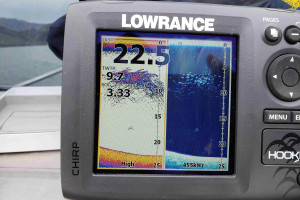
Modern electronics have transformed trolling. Instead of relying solely on local knowledge, anglers can now identify baitfish, suspended trout, underwater structure, and changes in depth as they fish.
Watch for schools of smelt suspended over deep water, often appearing as dense clouds on the screen. Individual trout usually appear as arches or larger marks positioned around the bait. If you are consistently marking fish below your lure depth, adjust your lure depth accordingly. Small changes of just two or three metres can dramatically improve catch rates. GPS mapping also allows anglers to repeat productive trolling runs and accurately follow underwater contours, weed edges, or submerged river channels.
Playing and landing trout when trolling
When a trout strikes, resist the temptation to grab the rod immediately. Allow the rod to load up fully while it remains in the rod holder.
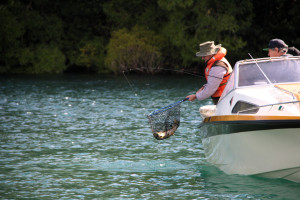
The forward movement of the boat will usually help set the hook. Once the rod is in hand, maintain steady pressure and let the rod and reel’s drag system absorb the runs and sudden movements of the fish. Once the fish is alongside the boat, use a landing net to bring it aboard. A long-handled, rubber-coated net is ideal for boat fishing. The long handle makes it easier to reach fish alongside the boat, while the rubber-coated mesh helps reduce damage to the fish. Having the net ready before the fish reaches the boat will greatly increase your chances of landing it successfully.