North Canterbury Fishing Report - 16th April 2026
- North Canterbury
- 16/04/2026
- Jackson Meecham
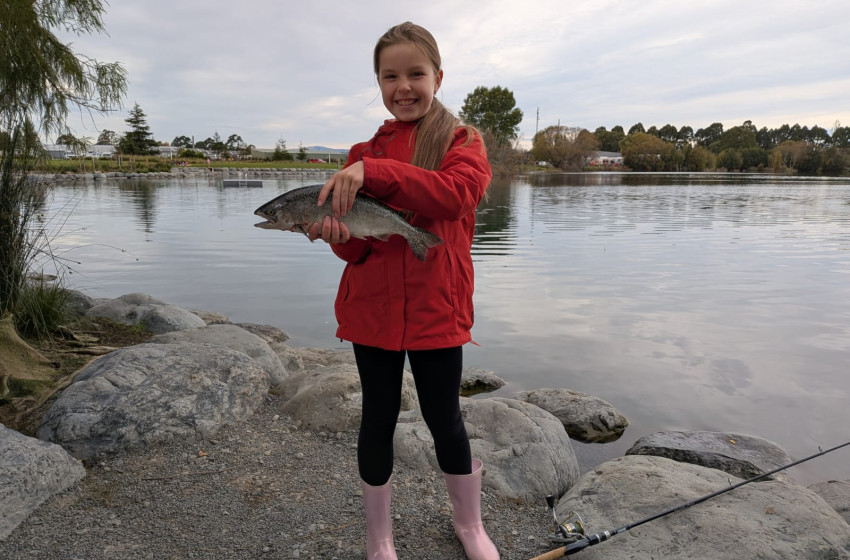
School Holidays Providing for Young Anglers
Photo Above: Alexandra Zinoveva with a Salmon from Lake Roto Kohatu caught while fishing with her dad.
We’re now heading towards the end of the school holidays, possibly to the relief of many parents, but it’s been a fantastic window for getting kids outdoors and making the most of what our region has to offer. Conditions have generally played ball, and it’s been great to see families making the most of the middle and back end of the break.
The recent salmon stocking at Lake Roto Kohatu has provided excellent fishing for Canterbury anglers of all ages. Rangers checking licences have reported plenty of happy faces around the lakes, with a wide range of successful methods on display, from bait fishing through to anglers finding success on the fly during the evening rise. Spinning has also been producing, particularly for those covering water and putting in the time. It’s been outstanding to see so many people getting out and enjoying this fishery off the back of the salmon release.
A key regulation to keep front of mind at Lake Roto Kohatu is the daily bag limit. Anglers are reminded that there is a limit of two sports fish per person, per day. If you’ve chosen to harvest two fish for the table, you have reached your limit and must stop fishing at that location until the following day. Continuing to fish after reaching your limit, even with the intention to catch and release, is an offence under the Conservation Act. Rangers who detect anglers doing so will issue an offence notice, which could result in the seizure of your rod, tackle, and catch. It’s a simple rule, but a vital one. Know it before you go and help everyone enjoy this fishery.
While the fishing close to town has been red hot, those venturing further afield into our more remote lakes and rivers have also been well rewarded. Last Friday, staff visited several high country lakes and encountered more than 20 anglers spread throughout the area. Some were into fish and enjoying excellent success, while others were just getting started on what looked to be promising days on the water. With the season now entering its final stretch, these less-pressured locations can really come into their own for anglers willing to make the effort.

Benson Cooper with a nice 2lb Rainbow caught on a Tasmanian devil at Lake Coleridge during the school holidays.
One of the biggest challenges for anglers at the moment is the cost of fuel, whether petrol or diesel, but with a bit of planning, trips can still be kept manageable. Here are a few handy tips to help make it happen:
- Share the load – organise trips with mates and split fuel costs
- Cast the net wider – post your plans in local fishing Facebook groups; you might find someone keen to tag along
- Plan your route – use apps like Google Maps to find the most fuel-efficient option (even familiar routes can have better alternatives)
- Make it count – if you’re travelling a long way, consider the time of day you’re fishing and if there are locations you can stop in for a fish on your way there or home
- Stay longer, travel less – when possible, you can turn a day trip into an overnight stay to reduce repeat travel, also giving you more opportunity to go fishing
- Keep it simple – focus on how you want to fish rather than packing everything; less gear means less fuss and deliberation, which in turn means more time fishing
With only a limited number of weeks left in the main season, now’s the time to make the most of the opportunities that are still on offer. Whether you’re sticking close to home or heading further afield, there’s still plenty of good fishing to be had for those willing to get out there. But don’t forget, many of our fishing locations do remain open year-round, so be selective in these last few weeks!
Don't Miss An Update Make Sure Your Following Us In All The Right Places!


The Art of Late-Season Fly Fishing: Earned, Not Given

Emily Craig with a solid 4lb brown trout caught on a size 14 green mayfly nymph.
As the season draws to a close across the North Canterbury region, it’s tempting for anglers to start winding things down, cleaning gear, shifting focus, and calling it a wrap. But for those willing to stay the course, the late season offers some of the most rewarding fly fishing of the year. In many of our rivers, this is the final window before they close, not reopening again until October 1st.
It’s a different kind of fishing now.
The rivers are quieter, the pressure has eased, and there’s a certain stillness that settles in. On the surface, conditions can look ideal, with low, clear flows and fish holding in classic water. But by this stage of the season, those fish have been there and done it all. They’ve seen every fly, every drift, and every mistake in the book. These are educated trout, and they won’t give themselves up easily.
That’s exactly the point.
Late-season fly fishing is where the margins tighten, and the small details start to matter. It demands a more thoughtful approach, moving carefully, reading water properly, and making each cast count. Rushed decisions and sloppy presentations rarely go unpunished. Instead, it’s the anglers who slow things down, refine their technique, and adapt to what’s in front of them who tend to find success.
You might need to go lighter on the tippet, lengthen your leader, or scale down your patterns. A perfect drift becomes far more important than covering lots of water. Often, it’s about quality over quantity, focusing your effort on likely holding water, such as deeper runs and soft seams where fish are conserving energy.
And while the fishing can be more challenging, it’s also far more satisfying.
Hooking a late-season fish isn’t just luck; it’s earned. It’s the result of doing the basics right and sticking at it when things aren’t coming easily. There’s a real sense of achievement in fooling a trout that’s spent months avoiding anglers. In many ways, this is fly fishing at its purest, just you, the river, and the challenge of getting it right.
With only a short stretch of the season remaining, now is the time to make the most of it. These final weeks are often overlooked, but they offer a unique opportunity to experience our fisheries in a different light, quieter, more technical, and deeply rewarding for those prepared to put in the effort.
Because in the end, it’s never really been about it being easy.
It’s about the challenge.
And late in the season, that challenge is as good as it gets.
At this stage, I haven’t even covered how good the winter challenge is, I’ll save that for next fortnight. Stay tuned.
North Branch Hurunui River Designated Waters Signage

Quick heads up for anyone heading up the North Branch Hurunui above Lake Sumner. We’ve had a few anglers let us know the Designated Waters sign is missing, so staff checked it out on a recent compliance run and can confirm it’s been taken out by the latest high flows.
We’re onto it and will get a replacement sign back in the ground as soon as able. In the meantime, it’s still on you to know where the boundary starts.
The Designated Waters and Controlled Fishery section begins 500 metres upstream of the Lake Sumner outlet. The boundary is marked on the map above, but if you’re on the river and don’t have a GPS handy, there’s an easy visual cue, the Lake Mason Track and a line of tall trees on the river’s true right sit roughly in line with where the Designated Waters begin.
Tackle Tip Of The Week: Trust Your Confidence Box

Late in the season, it’s easy to fall into the trap of overthinking everything.
The river’s low and clear, the fish are educated, and every refusal starts to feel personal. Before you know it, you’re standing mid-current cycling through fly after fly, convinced the next change will be the one that cracks the code.
More often than not, it won’t.
That’s where a confidence box comes in.
What is a Confidence Box?
A confidence box is a small, carefully selected group of flies you trust, patterns that have consistently produced fish for you over time. Not what’s trending, not what someone mentioned in passing, but flies you know work in the rivers or lakes you fish.
Late in the season, this matters more than ever.
Fish aren’t necessarily looking for something new; they’re looking for something that behaves naturally. Presentation, drift, and approach will outfish constant fly changes nine times out of ten.
Why It Works
When you limit your options, a few important things happen:
- You fish better – less time tying knots, more time focused on reading water and executing clean drifts.
- You commit to the presentation – instead of blaming the fly, you refine your approach.
- You stay confident – and confidence leads to better decisions on the water.
Indecision is one of the biggest killers of late-season success. A confidence box removes it.
What Goes In It?
Your box doesn’t need to be big, just reliable. Think along the lines of:
- A couple of trusted dry flies for super calm conditions
- Proven nymphs that match your local food sources
- One or two “creative” patterns that have saved the day before (this could be a squiggly worm)
- Variations in size rather than completely different flies
Final Thought
Next time you head out, resist the urge to bring the entire fly collection. Strip it back. Build a small confidence box and trust it.
Because at this time of year, it’s rarely the fly that’s letting you down. It’s everything else.
Notice Board
News
Sea-Run Salmon Season Bag Card Reminder

As the sea-run salmon season draws to a close, we’re reminding anglers to return their season bag cards once they’ve finished fishing for the year.
If you’ve already sent yours in, thank you — your contribution is greatly appreciated.
If not, please take a moment to do so, even if you didn’t catch a fish or didn’t get out at all. Every response helps build a clearer picture of the fishery and plays an important role in its future management.
The deadline for returns is 7 May. The quickest and easiest way to submit your information is via the online form below.
Time is running out to provide feedback on the North and South Branches of the Upper Hurunui River Controlled Fishery Trial

North Canterbury Fish & Game is currently seeking feedback on potential regulatory changes, and this is your chance to be heard.
All feedback will be considered as part of fishery management planning and shared with the North Canterbury Fish & Game Council and the Minister for Hunting & Fishing to help guide future decisions.
The consultation closes at 11:59 pm on Sunday, 19 April 2026, which is this weekend, so don’t miss your opportunity.
For more information and to make a submission, head to our website: CLICK HERE
Controlled Fishery on the North and South Branches of the Upper Hurunui River Enters Second Season of Trial
Many anglers would be aware that both the sections of the North and South branches of the Upper Hurunui River are under a Trial Controlled Fishery for a two-season trial. The beginning of last season saw some early challenges with the booking software; however, we expect the system will operate as it did at the conclusion of last season.
For information or to make a booking, please click here.
Weather Outlook
Christchurch

Rakaia

Waipara

Culverden

Hanmer Springs

Arthurs Pass

Lewis Pass

River Flows in m3/s
Waiau Uwha at Malings Pass: 5.872
Waiau Uwha at Marble Point: 41.176
Hurunui River at No.2 Hut: 34.862
Hurunui River at SH1 Bridge: 36.054
Ashley River at Lees Valley: 1.086
Ashley River at SH1 Bridge: 1.77
Waimakariri River at Below Otarama: 89.902
Waimakariri River at Old Highway Bridge: 78.207
Selwyn River at Whitecliffs: 0.952
Selwyn River at Coes Ford: 1.081
Halswell River at Ryans Bridge: 0.763
Harts Creek at Timber Yard Road: 0.696
Rakaia River at Fighting Hill: 129.923
To help you plan your fishing adventures, be sure to check the following resources:
- E-Can River Flows: River Flow Data
- Outdoor Access Live Cameras: Live Cameras (subscription required)
- MetService Weather Warnings: Weather Warnings
- Windy: Wind Radar
- Yr Weather Service (most accurate for High Country): Yr Website
- Canterbury Weather Updates: Webcams and Website
Stay safe out there!
Please note: This weather update is current at the time of publishing. We recommend checking the latest forecasts, river flows and road conditions before heading out.
Click the licence below to get your licence today!

Next Video Report: Next Season
Next Written Report: 30th April 2026 (Email and Website)
Tight Lines,
Jackson Meecham, North Canterbury Fish & Game Officer & the whole North Canterbury Team.
Disclaimer:
The information presented in these news items is based on the context and regulations in place at the time of publication. Please note that some articles may include reference to laws and regulatory standards that have since changed. For the most current and accurate information please check our Fishing Licences & Regulations pages or our Hunting Licences & Regulations pages.