Back to Fishing Knowledge Hub
Hooking, landing, harvesting and releasing sports fish
Hooking, landing, harvesting, and releasing fish are all important skills for anglers to learn.
Understanding how to hook and land a fish correctly helps maximise your chances of success, while learning how to humanely harvest fish and properly release fish ensures they are treated appropriately and, in the case of released fish, have the best possible chance of survival.
Guides
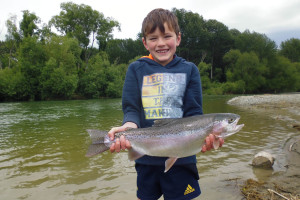
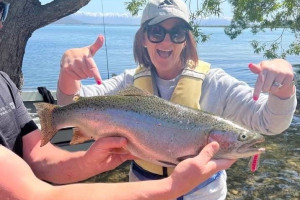
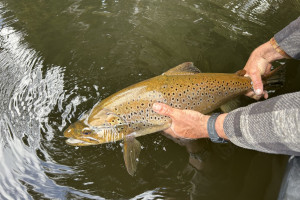
How to hook and land a trout
When a trout takes your lure or fly, it is important to set the hook firmly but not excessively. A smooth but firm lift of the rod is usually all that is required to embed the hook.
Once hooked, it is important to maintain steady pressure on the fish, always keep a bend in your rod, and avoid letting the line go slack. If the line does go slack, there is a risk the hook may fall out, particularly if the trout is only lightly hooked.
Trout will often make powerful runs, leap from the water, or use the current to their advantage. Allow the rod and reel's drag system to absorb these sudden movements rather than trying to force the fish in. Occasionally, you may need to follow the fish upstream or downstream if it is particularly large and makes a long run.
As the fish tires, gradually work it towards you. Use the rod to steer the fish away from snags or weed beds and towards your landing area and net. When landing the fish, always guide the fish into the net headfirst, as they can’t swim backwards.
Always avoid dragging any sports fish onto rocks, gravel, or dry ground, particularly if you intend to release it.
How to harvest a trout
Harvesting a trout, salmon, or perch for the table is one of the most rewarding aspects of fishing.
If you intend to keep a fish, it is important to dispatch it quickly and humanely. A firm blow to the top of the head immediately behind the eyes is the most common and effective method. This blow can be achieved with a suitably sized rock or sturdy fishing tool. Once dispatched, the fish should be bled by cutting or removing the gills. This improves flesh quality and longevity and therefore eating quality.
If possible, gut the fish as soon as practical and keep it cool. Placing the fish on ice or in a chilly bin will help maintain its condition, particularly during warm weather.
Keep in mind that not every fish is worth keeping. Before harvesting a trout, consider its condition and suitability for eating. Brightly coloured fish in good condition are the best fish to harvest, and these are not always the largest fish. Thin fish, fish in poor condition, or post-spawning fish are often better released.
How to release a trout
Sometimes you may want to release a fish that you catch. Releasing fish correctly improves their chances of survival and helps maintain quality fisheries.
When releasing a sports fish:
- Land the fish as quickly as practical.
- Keep the fish in the water whenever possible.
- Wet your hands before handling the fish to protect its delicate slime layer.
- Avoid touching the gills or eyes, as these areas are particularly sensitive.
- Use forceps or pliers to remove the hook carefully.
- Minimise the amount of time the fish spends out of the water.
If you would like to take a photograph, have the camera ready before lifting the fish from the water and return it promptly afterwards.
Before release, hold the fish gently facing into the current until it regains its balance and is able to swim away.
Careful handling can make a significant difference to the survival of released fish and helps ensure they remain available for other anglers to enjoy in the future.