Back to Fishing Knowledge Hub
Equipment
When it comes to fishing equipment, the gear you need will vary depending on the type of fishing you intend to do.
Understanding the basic equipment needed for each fishing method will help you select the right gear for the technique you want to try.
Whether that's spin fishing, fly fishing, or fishing from a boat.
Guides
Equipment list - spin fishing
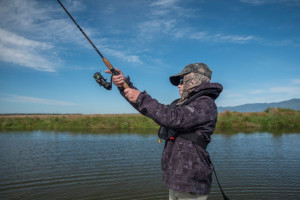
Spin fishing is a simple and effective method of targeting trout, salmon and perch using lures, soft baits, or natural bait.
See the list below for basic equipment requirements.
- Spinning rod – A lightweight rod (1–4 kg) of about 2m (7ft) in length. The light, sensitive rod is used to cast light lures and soft baits and to detect subtle bites.
- Spinning reel – A lightweight spinning reel with a smooth drag system and a line rating of approximately 2–4kg (6–8lb).
- Fishing line (monofilament or braid) – Line with a breaking strain of 2–4kg (6–8lb). Monofilament is recommended for beginners as it is easier to use and more cost-effective, while braid offers increased sensitivity and casting distance.
- Lures – A selection of appropriately sized lures, soft baits, and jig heads. See the spin fishing and soft bait fishing sections within this knowledge hub for more information.
- Hooks – Used for presenting natural bait such as worms or baitfish. Size #6 bait-holder hooks are a good general option.
- Sinkers – Barrel sinkers (around ½oz) are an ideal sinker type for bait fishing.
- Landing net – Used to land hooked fish and reduce the chance of losing them close to shore.
- Forceps or pliers – Used to safely remove hooks from fish.
- Pocket knife – Used for gutting fish and trimming fishing line.
- Polarised sunglasses – Reduce glare on the water and help with spotting fish.
- Sturdy boots or waders – Sturdy footwear is needed for walking riverbanks and lake edges. Boots can be used for wet-wading, while waders are a good option in colder conditions or deeper water.
- Fishing pack – Used to carry tackle boxes, tools, and other fishing essentials.
Equipment list - fly fishing
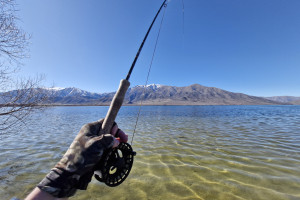
Fly fishing is a method of targeting trout using a lightweight fly rod, fly line, and artificial flies designed to imitate aquatic insects and small fish.
- Fly rod – A lightweight rod (typically 4–6 weight) around 2.7m (9ft) in length.
- Fly reel – A reel matched to the rod that holds fly line, backing line and provides a smooth drag system.
- Fly line – A specialised weighted line that carries the leader and fly to the target. Floating line is a good general-purpose option, with intermediate and sinking lines used for specific conditions.
- Tapered leader – Clear, tapered monofilament or fluorocarbon line that connects the fly line to the tippet. Lengths of 2.7-3m (9-10ft) are good general options.
- Tippet – Fine-diameter monofilament or fluorocarbon line attached to the end of the leader. It is useful to carry a couple of different spools with different breaking strains between 2–3.5kg (4–7lb). The fly is tied to the end of the length of tippet.
- Flies (dry flies, nymphs, streamers) – Artificial imitations of aquatic insects, terrestrial insects, or small baitfish. A small selection of patterns will be needed to match different conditions. See the fly fishing section within this knowledge hub for more detail.
- Fly box – A small storage container used to organise fishing flies.
- Landing net – Used to safely land fish and minimise handling stress.
- Forceps – Used to safely and efficiently remove hooks from fish.
- Line snips – A small cutting tool used to trim leader and tippet material.
- Waders and wading boots – Sturdy boots are needed for river and lake access. Wading boots can be used for wet-wading, while chest waders are useful in colder conditions or deeper water.
- Polarised sunglasses – Reduce surface glare, improve visibility into the water, and assist with spotting fish.
- Fishing vest or pack – Used to carry flies, tools, tippet material and other essential gear in an organised and accessible way.