Back to Fishing Knowledge Hub
Soft bait fishing
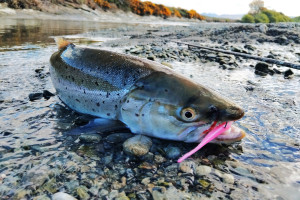
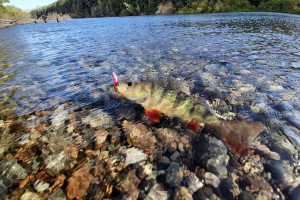
Soft bait fishing has become increasingly popular with trout anglers in recent years.
This popularity is largely due to soft baits being affordable, versatile, and highly effective.
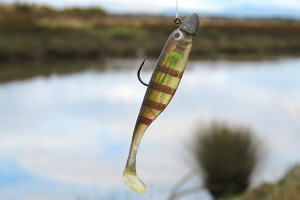
Soft baits are artificial lures made from soft plastic or plastic-like materials that imitate small fish or crustaceans often with added synthetic scents.
Getting a few key things right with equipment and technique is important for fishing soft baits effectively.
Guides
Equipment requirements for soft bait fishing
The equipment used for soft bait fishing is very similar to that used for spin fishing with hard lures.
A lightweight 2–4kg rod of around 2–2.2m (7–8ft) is ideal, and many cases, anglers can simply use the same spinning rod they use for casting hard-bodied lures.
The reel should be small and light, spooled with 3–3.5kg (6–8lb) breaking strain line. Reels can be spooled with either monofilament or braided line. While both line types can work well, many soft bait anglers prefer braid because it provides greater sensitivity, allowing them to feel subtle bites and maintain better contact with the soft bait.
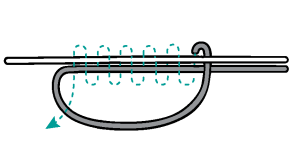
If using braid, it is important to add a monofilament or fluorocarbon trace between the main line and the soft bait. This helps reduce line visibility to fish and improves overall presentation. To connect your leader to braid, a double uni knot is a good option as it is easy to tie with a bit of practice.
Double uni knot
Check out the diagram below for further instruction.
|
|
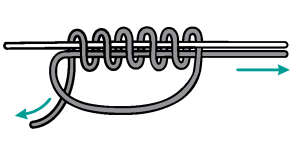
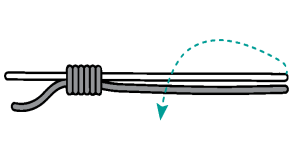
| 1. First loop - Place the two lines side by side and create a loop with the bottom line. Leave a few cm of tag end extending from the loop.. | 2. Wrap - Pass the tag end through the loop and wrap it around both lines at least six times. |
|
|
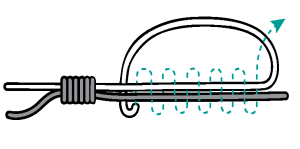
| 3. Tighten - Pull the tag end to tighten the wraps and form the first knot. Check that the wraps are neat and secure, as shown in the diagram on the above. | 4. Second loop - Using the top line, create a loop around the bottom line, Leave a few cm of tag end extending from the loop. |
|
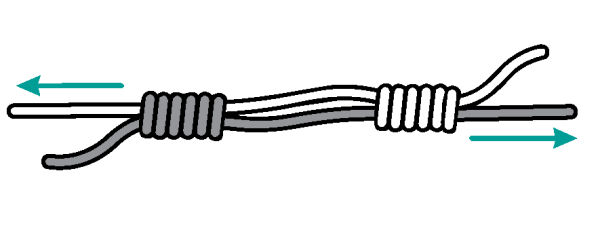
|
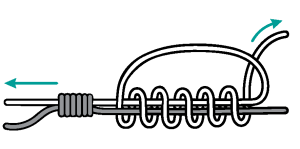
| 5. Wrap & tighten - Pass the tag end through the loop and wrap it around both lines at least six times. Pull the tag end to tighten and form the second knot. | 6. Cinch the knots - Lightly wet both knots and the line between them. Hold the main lines and pull in opposite directions so the two knots slide together and tighten. |
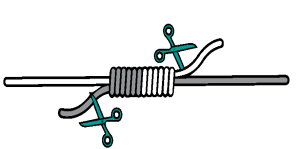
|
|
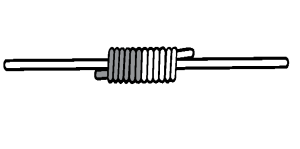
| 7. Trim the tags - Once the knots are firmly cinched together, trim the excess tag ends close to the finished knot. | 8. Knot complete - Your Double Uni Knot is complete. The finished knot
should look like the diagram above. |
Selecting a soft bait & jig head
There are a wide range of soft baits available, with different shapes, sizes, colours, and actions. The good news is you only need a small selection to get started.
Paddle tail soft baits are a great option for beginners. They are forgiving to use and produce strong tail action on a simple retrieve. Minnow-style soft baits with forked tails are also effective, but generally require a bit more technique, such as a twitching or bouncing retrieve to impart action. For any soft baits you use, aim for sizes of between 6-9cm (2.5-3.5inches) in length.
It pays to carry a few different colour soft bait options so you can adapt to water clarity and conditions. Natural colours (greys, browns, greens) tend to work well in clear water and on bright sunny days, while brighter colours (fluorescent orange, pink, yellow, white) can be effective in slightly discoloured/tannin-stained water or on overcast days.
Another important consideration is the jig head. The jig head provides the weight needed to cast the soft bait and plays a key role in how it moves through the water.
Jig head weight is particularly important. A jig head that is too light may not reach the desired depth, while one that is too heavy can make the presentation look unnatural. Having a selection of weights allows you to match conditions and water depth effectively:
- 1/16oz for shallower water (less than 1m deep)
- 1/12oz for medium depth and moderate flow; a good general purpose weight
- 1/8oz for deeper water or faster currents
For jig head hook size, aim for #1 and #2.
How to successfully use soft baits
Soft bait fishing can be a highly effective way to target trout, but success often comes down to using the right equipment, rigging the soft bait correctly, and fishing it in the right way.
Soft bait fishing is quite different from fishing hard-bodied lures. With hard-bodied lures, the action is typically generated by simply winding the lure in. With soft baits, the angler is more responsible for actively imparting action to the lure.
Check out the video above, where we cover the fundamentals of soft bait fishing for trout, from equipment setup through to selecting soft baits and jig heads, and the techniques used to fish them effectively.