Back to Fishing Knowledge Hub
Bait fishing
An introduction to bait fishing for trout.
Bait fishing involves using natural food items that trout like to eat, rigged on a hook with enough weight to cast the bait and present it effectively.
Common baits include worms, small fish, and other natural food sources that trout may encounter in their environment.
Bait fishing is a great method for beginner anglers because it is simple to learn, requires relatively little casting, and can be highly effective when done correctly. Once the bait is in the water, the angler can simply wait for a fish to find and take it, making bait fishing a relaxed and enjoyable way to get started in the sport.
Guides
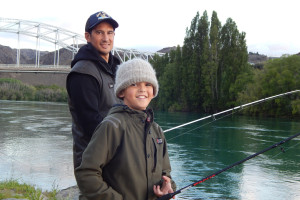
Bait fishing equipment
A basic spinning rod (2–4 kg) of about 1.8-2m (6-7 ft) in length.
A basic spinning reel spooled with 3-4kg (8-10lb) line.
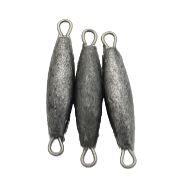
- Sinkers – 1/2 oz barrel sinkers are a good option.
- Split shot sinkers – not essential but can be useful to have on hand for situations where extra weight is required.
- Size #6 bait holder hook - A great general option for threading on worms or fish baits.
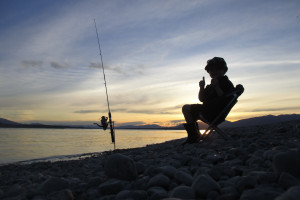
- Rod holder – to place rod in and prevent the rod from being pulled into the water when you get a bite.
- Bite indicator bells – help you detect bites.
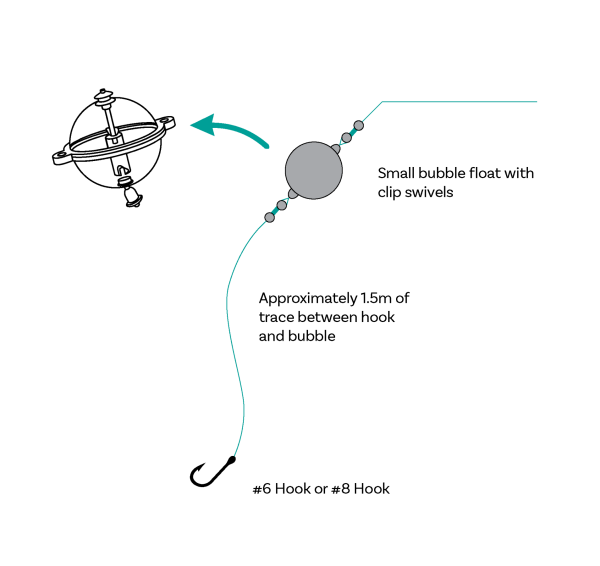
- Bubble float – for fishing a bait just under the surface.
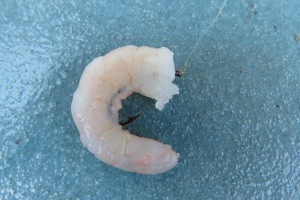
- Bait – Good bait options include garden worms, cooked shrimp from the supermarket or whole fish like smelt.
Where to bait fish
Choosing the right location is one of the most important factors in successful bait fishing.
When bait fishing in rivers, look for areas of deeper, slower-moving water such as pools, backwaters, and slower runs. These areas are often where trout cruise around on the bottom actively looking for food. Avoid fast-flowing water where possible, as it can be difficult to keep your bait on the bottom. Strong currents will often drag the line downstream, causing the bait to swing towards the riverbank.
In lakes, focus on areas where trout are likely to be feeding. River and stream mouths are often excellent locations, as trout will patrol these areas looking for food that has been washed or carried into the lake from the inflowing stream or river. The edges of weed beds can also be productive. It is also worth keeping an eye out for trout cruising the shallow lake margins, as these fish can often be targeted effectively with bait by casting out and waiting for the cruising trout to intercept your bait.
Baits to use
Under the First Schedule regulations, the following baits are permitted. “Bait” means:
- Natural insects - which includes huhu grubs and cicadas for example.
- Natural spiders
- Natural worms - for example, earth worms or milk worms.
- Natural crustaceans - for example crabs.
- Natural fish - such as smelt, anchovies, and bullies. Please note that using portions of sports fish or their ova (eggs) for bait is not permitted.
- Uncoloured bread dough
- Scented artificial baits (synthetic baits with chemical attractant properties), including synthetic doughs and soft baits.
When considering baits, there are some regional differences in bait regulations which can mean other bait options are also allowed. For example, in some regions, portions of non-sports fish may be permitted for use as bait, and in other regions, molluscs (such as squid and mussels) may also be allowed.
Always check the relevant Second Schedule in the regulations guide for the fishery you intend to fish. This will confirm whether bait fishing is permitted and identify any region-specific rules relating to the types of bait that can be used.
Finally, when using bait, keep in mind that you may only use one bait assembly. A bait assembly is defined as one hook rigged with a number of baits (e.g., a hook with several worms on it) or one bait rigged with a number of hooks (e.g., a single smelt rigged with two hooks).
Bait fishing – how to
There are two main ways to fish with bait for trout and perch: fishing a bait statically on the bottom or suspending a bait beneath a float. Both methods can be very effective, depending on the conditions and the type of water you are fishing.
Static bait on the bottom:
Fishing a bait on the bottom is one of the easiest ways to get started and is very effective.
The basic approach is simple. Cast your baited rig into an area where trout are likely to be holding, allow the sinker to settle on the bottom, and wait for a bite. Good areas for bait fishing include slow flowing areas of river, deep pools and river/stream mouths at lakes.
The video above outlines the basics of bottom fishing and provides a step-by-step guide on setting up a basic bait fishing rig.
You can also download the instructional bait fishing PDF below.

Bait under a float:
Fishing a bait beneath a float is a great option for small ponds, lakes, reservoirs, and around weed bed edges where trout may be feeding higher in the water column.
A common setup uses a bubble float. Attach a clip swivel to each end of the bubble float and fill the float approximately one-third to one-half full of water. This adds casting weight while still allowing the float to suspend your bait.
Tie your main line to one end of the float and a trace to the other. A trace length of around 1–1.2 metres is a good starting point, although you may need to shorten it in shallower water or go slightly longer for deeper water.
Attach a hook to the end of the trace and add your chosen bait. If needed, crimp a small split shot onto the trace to help sink the bait below the float.
Once rigged, cast out and watch the float closely. If the float dips, moves sideways, or disappears beneath the surface, a fish may have taken the bait. At that point, lift the rod firmly to set the hook and begin playing the fish.