Back to Fishing Knowledge Hub
Understanding sports fish behaviour
Understanding how trout and other sports fish behave is a key part of becoming a more successful angler.
Once you start to recognise where fish are likely to be, what they are feeding on, and how conditions influence their behaviour, this can inform how you fish on the water.
Guides
Reading the water - rivers
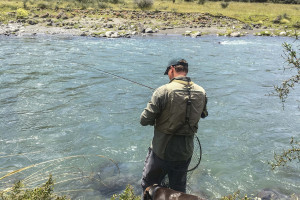
Rivers are constantly moving systems, and trout position themselves in areas where they can productively feed while conserving energy.
Key holding areas include:
- Seams: where fast and slow water meet, often concentrating food and providing slow water to conserve energy.
- Riffles: shallow, broken water that provide a productive invertebrate (insect) drift.
- Slow moving runs: steady flowing sections that carry food at a consistent pace.
- Pools: deeper, slower water where fish rest and feed opportunistically
- Undercut banks and structure: areas that provide cover and ambush points.
- Willow trees: These provide underwater structure and food (willow grubs) at certain times of the year.
In general, trout prefer to sit in positions where they can easily intercept food without expending too much energy. Learning to “read” these features will help you identify high-probability fishing spots quickly. For more info, check out the video of reading the water or download our ‘how-to’ brochure- rivers.
Must read Before you fish
Reading the water - lakes
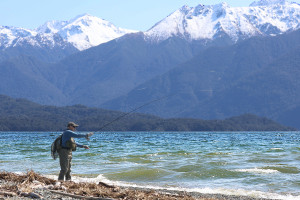
Lake fishing requires a slightly different approach to rivers, as fish are not influenced by current in the same way. Instead, trout and other species tend to position themselves based on food availability, water temperature, and underwater structure.
Where trout are commonly located in lakes is often related to several key features:
- Drop-offs: These are areas where the lakebed transitions from shallow littoral zones into deeper water. Trout often patrol these edges, moving along the contour changes in search of prey items.
- Weed beds and edges of vegetation: Aquatic vegetation forms the base of the lake food web. It provides habitat for aquatic invertebrates and small fish, both of which are key prey species. As a result, trout and perch are commonly found around weed beds and particularly along the edges where feeding opportunities are highest.
- Stream and river mouths (and lake outlets): These areas create localised current within an otherwise still environment. They also transport food into the lake, making them highly productive feeding zones.
- Structural features: Submerged rocks or logs provide cover and habitat for prey species. Trout frequently use these features as feeding areas.
- Thermocline: In deeper lakes, particularly in the North Island, a thermocline can form during warmer months. This is a layer of water where temperature changes rapidly with depth. Trout often position themselves just above or within this layer, as it typically represents an optimal balance between temperature, oxygen levels, and prey availability. Baitfish and planktonic food sources are also often concentrated around this zone, which helps explain why trout are frequently found in these depths.
Must read Before you fish
Seasonal food availability
Trout feeding behaviour changes throughout the year depending on what food sources are available. Having some knowledge of seasonal food availability can really help when planning effective fishing trips and deciding which fishing methods are likely to be most productive.
In spring, migratory baitfish such as smelt move into many river systems. These can be present in lower river reaches through to late summer, often peaking around December. Smelt can also reach high abundances in some North Island lake systems, particularly around the thermocline during the summer months. At these times, trout may feed heavily on smelt, creating excellent opportunities for anglers using streamer flies, soft baits, and lure-fishing techniques that imitate these small fish.
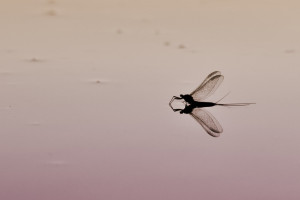
From spring through to summer, insect activity begins to increase. Brown beetles and green beetles become important food sources during November and December. Then as temperatures get warm, larger terrestrial insects such as cicadas and well as small willow grubs can play a major role in trout diets in some areas. At the same time, aquatic insects such as mayflies and caddisflies can hatch throughout the season, creating excellent dry fly fishing opportunities.
In late autumn, the onset of cooler temperatures can often trigger significant mayfly hatches in some areas, providing another key feeding opportunity for trout and, in turn, excellent fishing opportunities for anglers.
Seasonal conditions can also influence the availability of other food sources. For example, elevated river flows during the spring can cause river banks to erode and worms to be washed into the water. As flows begin to recede, trout will often actively seek out these food items, making bait fishing with worms a particularly effective technique early season.
Ultimately, understanding what food sources are available at different times of the year can help you decide where to fish, which methods to use, and what flies, lures, or baits are most likely to be successful. Matching your approach to what trout are naturally feeding on will often improve your chances of success.