Reel Life April 2026
- F&G NZ
- 24/04/2026
Seasonal wrap: winter canals & late-season fishing
This is the final Reel Life for the season, marking the transition from autumn into winter across New Zealand’s freshwater fisheries.
Over the past few weeks, we’ve seen a consistent shift in trout behaviour nationwide. Water temperatures are dropping, daylight hours are shortening, and fish are moving into classic autumn and early winter patterns — feeding less frequently, but concentrating in more predictable locations.
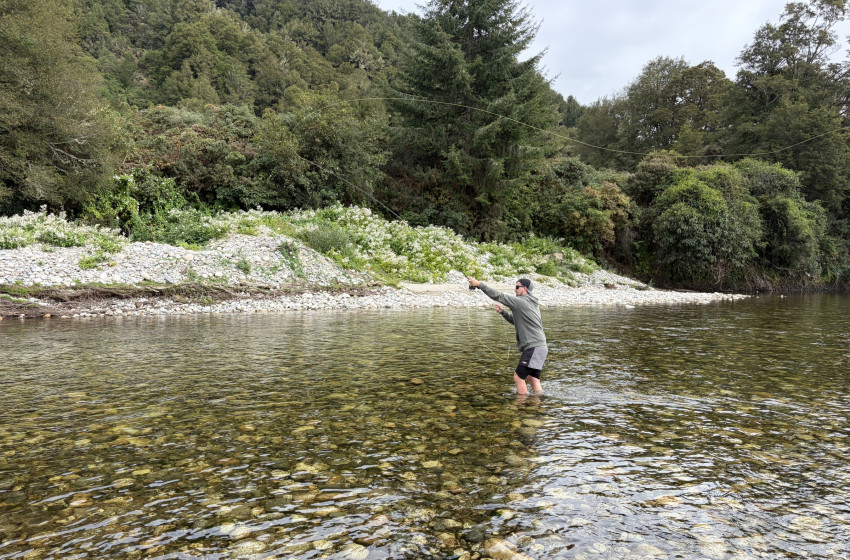
Pictured above: Luken Bisley enjoying some late-season fly fishing on the Inangahua River on the West Coast.
Across both islands, the same story is emerging in different forms: spawning runs building in lake systems and tributaries, trout gathering at river mouths, and fish holding deeper in rivers and lakes as flows stabilise after autumn rain.
Conditions shaping fishing right now
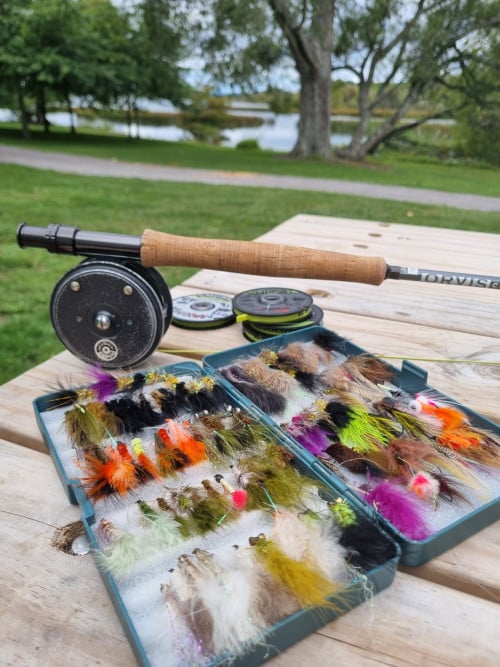
A variety of streamers covers the options at this time of year in Eastern region.
Recent weather has helped reset conditions in a number of regions.
In places like Hawke’s Bay, freshes have improved river flows in systems such as the Mohaka and Tukituki, with fishing improving as clarity returns.
Further south, cooling conditions are now driving classic autumn behaviour — brown trout gathering near river mouths in Otago and Southland, while lake systems in the Eastern Region are seeing strong shoreline spawning activity.
Across much of the country, the same trend is evident: fish are still active, but increasingly grouped and location-driven rather than spread out.
A shift in where and how fish are holding
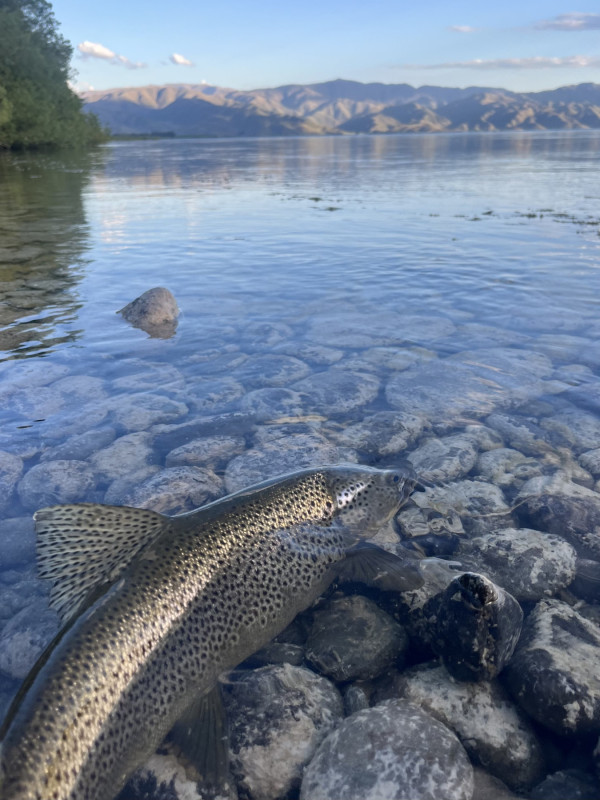
Lake Benmore brown trout caught on a house fly imitation. Central South Island. Credit Blake Harper.
Anglers who are adjusting their approach to match winter fish behaviour are seeing the most consistent success.
As trout slow down with dropping water temperatures, they tend to feed less often but more deliberately, holding in places where food is easy to intercept.
This is why slower presentations are becoming more effective, allowing the lure or fly to stay in the strike zone longer and match reduced fish movement.
Across different water types, this is translating into success with:
- slower retrieves and longer drifts
- fishing deeper runs, pools, and structure edges
- focusing on food-rich areas such as seams, drop-offs, and inflows
Methods such as nymphing, streamer fishing, soft baits, and slow-spun lures are all proving effective, depending on conditions and clarity.
Return your sea-run salmon harvest card data
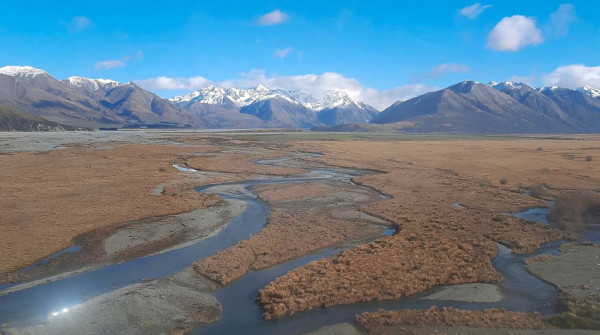
Spawning counts have started in the North Canterbury region.
Each year, Fish & Game undertakes important work to estimate sea-run salmon populations across our key indicator rivers and this season’s 2025/26 surveys are already underway.
Anglers who also have a sea-run salmon licence can jump online here to return their harvest card data.
Next issue - August 2026
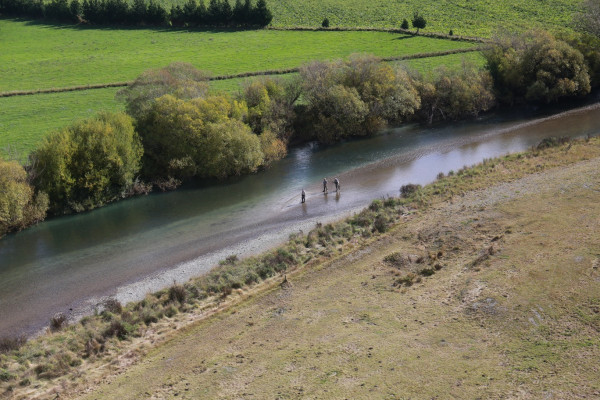
Making the most of April, three anglers searching for browns in the Mataura River in Southland.
As many lowland rivers close to protect spawning fish, winter fisheries remain available across the country, but conditions vary and regulations should always be checked before fishing.
Thanks to all anglers for your support, observations, and time on the water throughout the season. We look forward to bringing you updates again next season.
Disclaimer:
The information presented in these news items is based on the context and regulations in place at the time of publication. Please note that some articles may include reference to laws and regulatory standards that have since changed. For the most current and accurate information please check our Fishing Licences & Regulations pages or our Hunting Licences & Regulations pages.