Both Barrels July 2026 - West Coast
- West Coast
- 20/07/2026
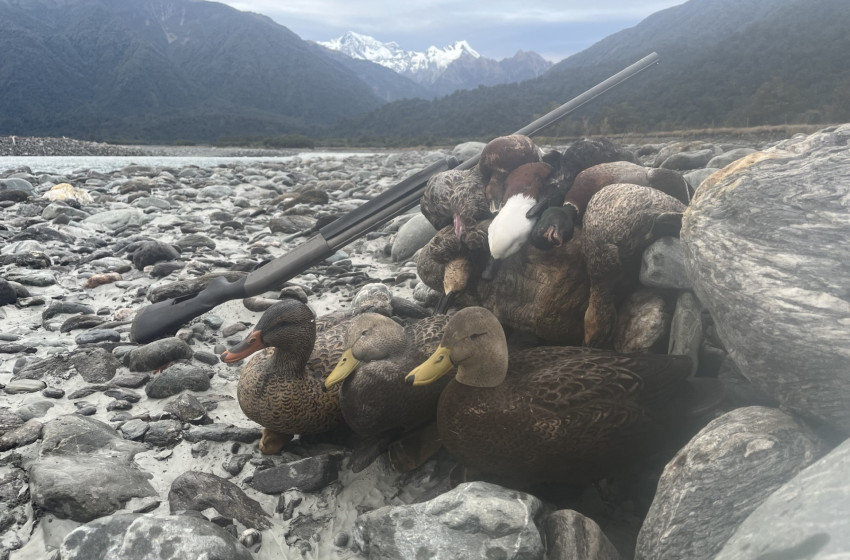
Last Opportunities on the Water
We’ve made it to the tail end of the 2026 duck season, and conditions are shaping up well for a strong finish. The unsettled weather lately has been a bonus for duck hunters, with wind and passing fronts helping keep birds moving and more responsive. The forecast heading into closing weekend looks favourable, and birds are beginning to concentrate in their usual haunts, making scouting and location choice more important than ever.
Image above: Riverbed hunting
As is typical late in the season, you’ll notice different behaviour between lone drakes and paired birds. While hens and their partners tend to become more wary, solo drakes are often much more willing to respond to decoys and calling. From a management perspective, this is an ideal time to target unpaired males and help maintain a balanced population.
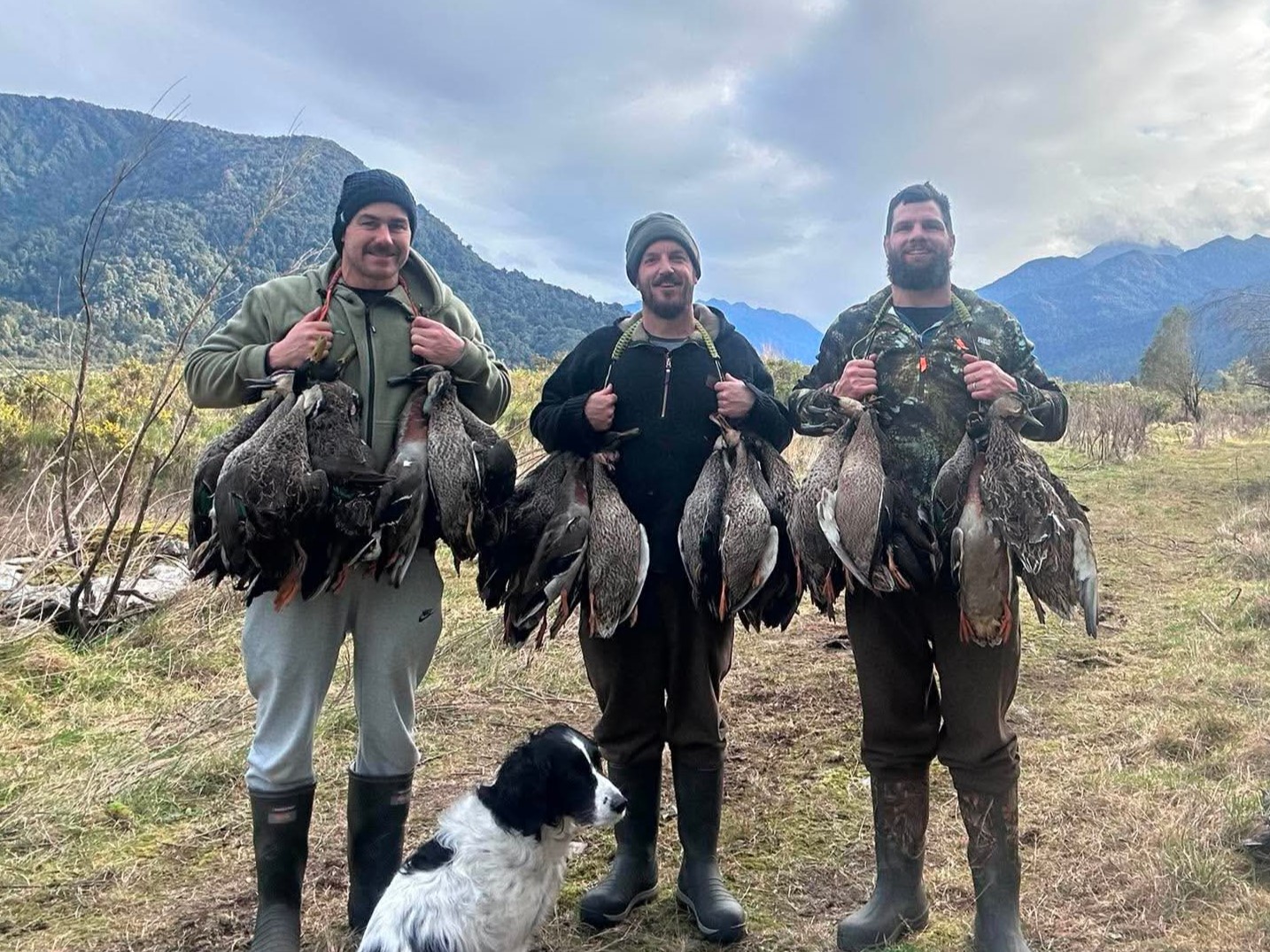
Visiting hunters Simon Kalin, Dan Gavin, and Kieran Moffat enjoing a great weekend on the Coast.
Pūkeko numbers remain high in many areas across the Coast, particularly around pasture margins and wetlands. Consider factoring in a pūkeko walk later in the day to round out your hunt. Likewise, swans remain plentiful on many of our larger waterbodies, and access can often be arranged through supportive landowners.
Game bird hunting doesn’t end here
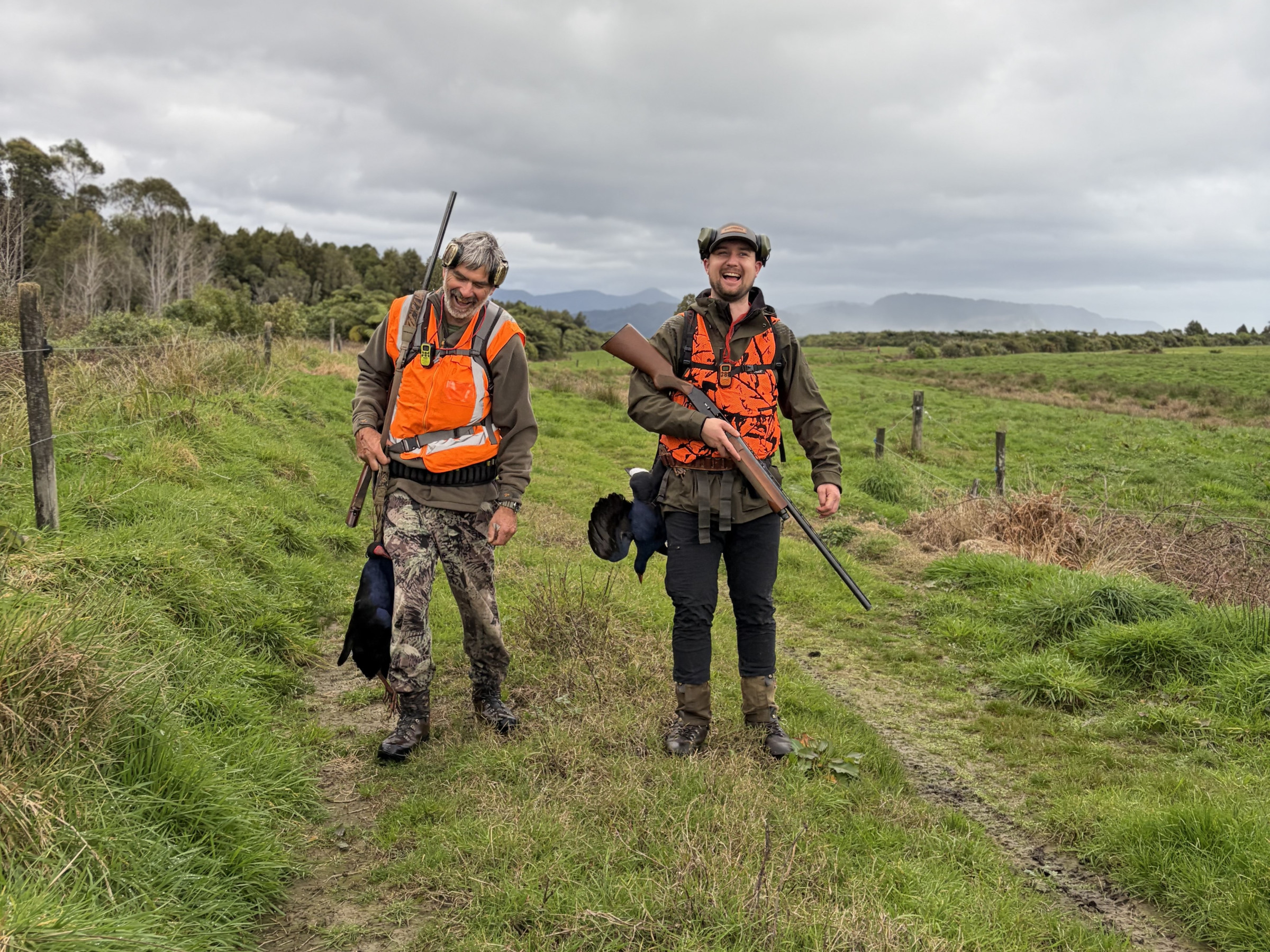
An afternoon stroll hunting pukeko with a friend is hard to beat.
While the main waterfowl season wraps up on Sunday 26 July 2026, hunters on the West Coast still have opportunities ahead, with the summer hunting season returning in early 2027.
Summer hunting opportunities:
- Pūkeko: 1 January – 22 March 2027
- Paradise shelduck: 28 February – 22 March 2027 (Must be 200 m or more from open water)
- Black swan: 28 February – 22 March 2027
These summer seasons provide hunters with an opportunity to help manage healthy bird populations while enjoying some good shooting during warmer, longer days. They are also a great chance to introduce someone new to hunting — whether that’s a mate, a child or a partner keen to give it a go.
If you want to keep your shooting skills sharp during the off-season, consider heading along to your local clay target club. It’s a great way to stay connected with other hunters and continue developing your skills.
2026 Organised hunts a success
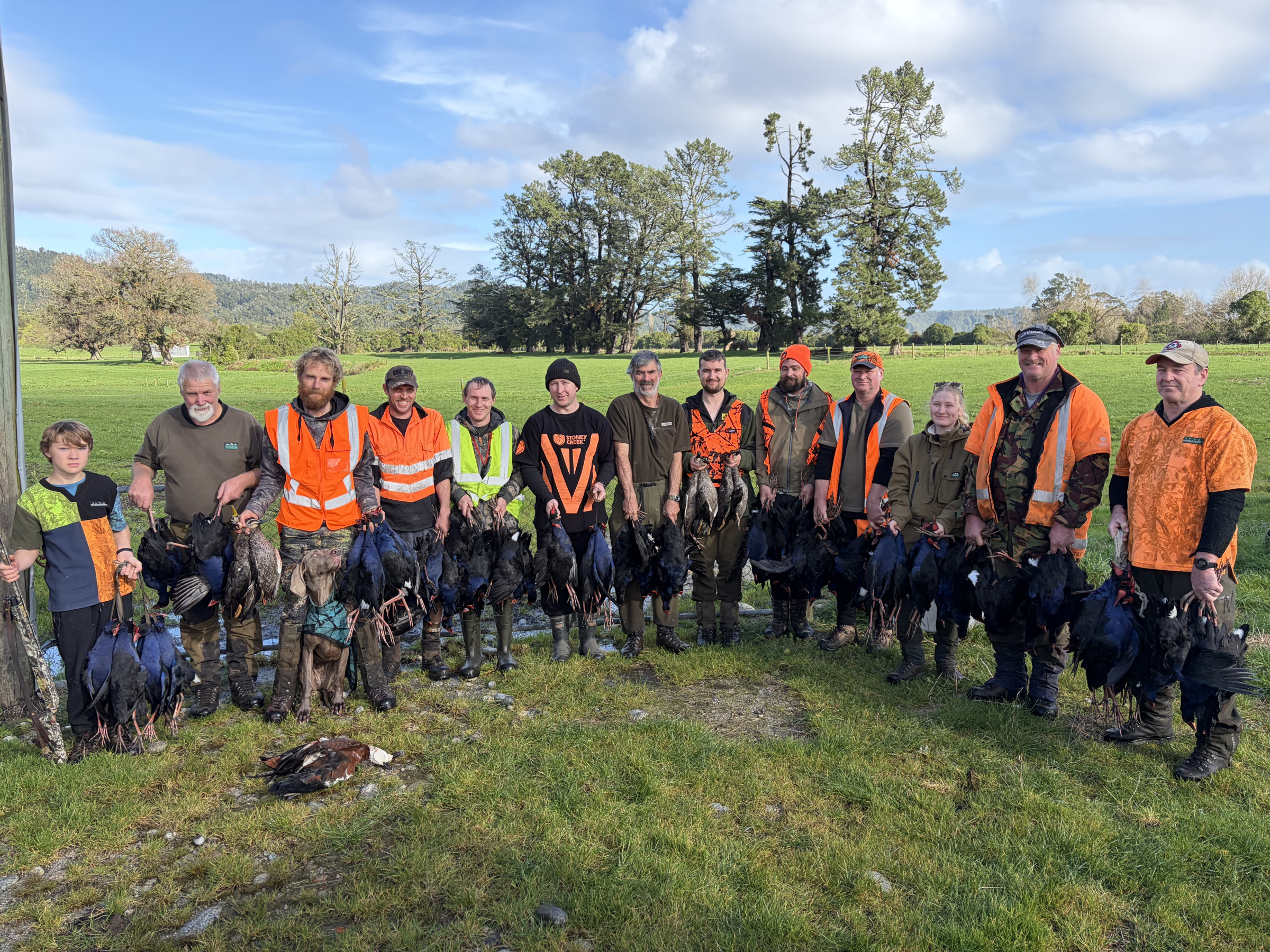
Some of the participants from the Karamea event proudly showing their harvest.
The organised hunts for the year have now been completed and were a great success, with hunters enjoying some quality days in the field and bringing home plenty of birds.
Attendance numbers were ideal this year, with approximately 20 hunters attending each of the three events. This proved to be the right balance, allowing everyone to be involved while ensuring the drives could be run safely and effectively.
If numbers continue to grow beyond 20 hunters, we will likely need to limit attendance, as experience has shown that around 20 participants is the optimum number for our organised drives.
West Coast licence holders are given priority for all organised hunts. If you are planning to hunt in the West Coast Region, make sure you purchase a West Coast licence to avoid missing out on future opportunities.
If you are interested in future events and would like to be added to our keen hunters list, email [email protected] or contact the office.
There are still several important dates on this year’s calendar, so be sure to check them out below.
Giving Back to the Places we Hunt
As game bird hunters, we all value the places that provide us with the opportunity to get out in the field each season. Healthy habitats and successful breeding are important foundations for maintaining quality hunting experiences and strong game bird populations.
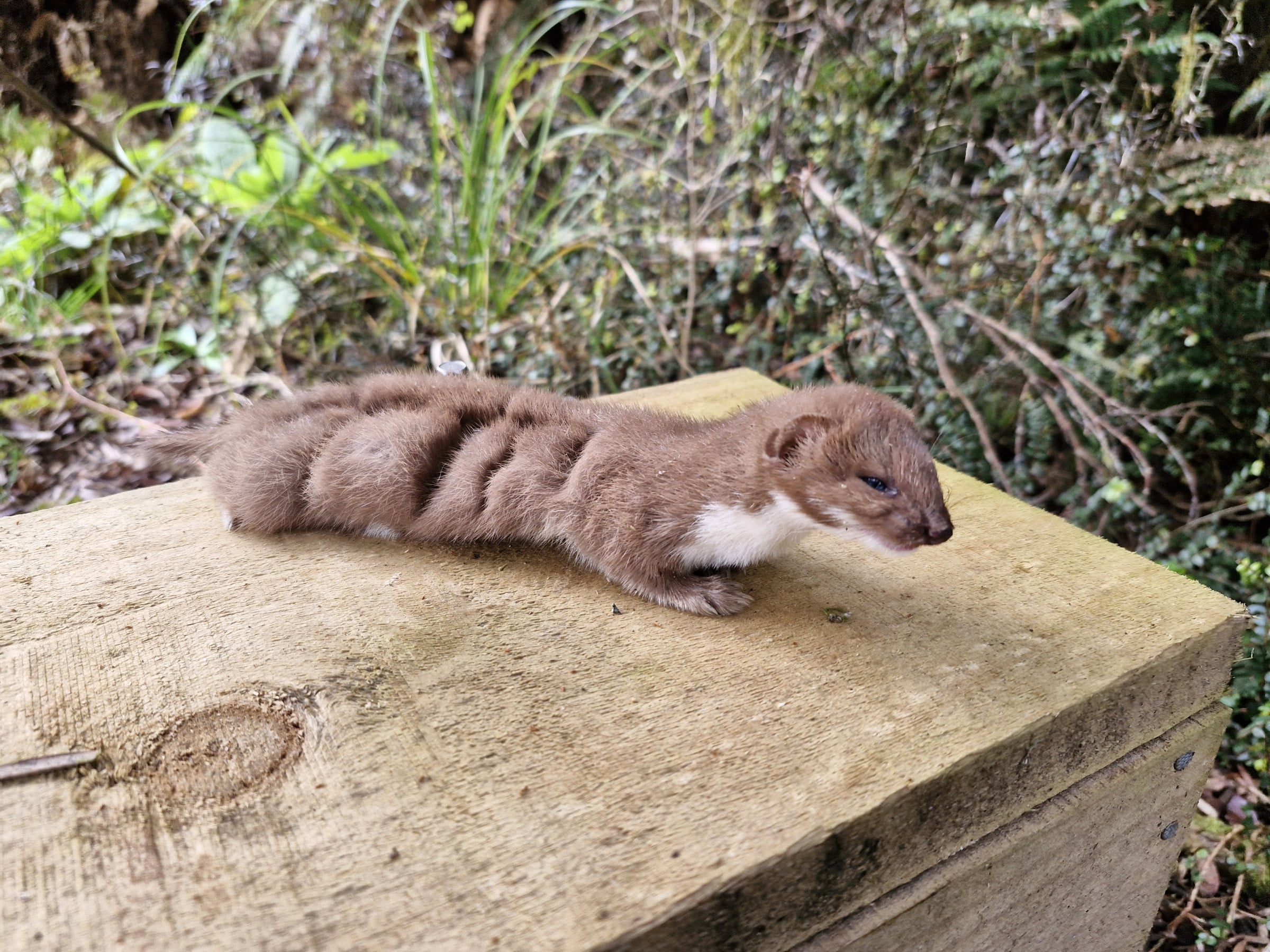
Stoat
Predator control is one of the most practical ways hunters and the wider community can contribute to protecting the species and environments we value. Duck hunters know the value of predator control, having seen first-hand how predators can impact nesting success and the survival of young birds.
When Conor from Predator Free Te Kinga got in touch to highlight an opportunity for hunters to become involved in predator control and help protect important waterfowl nesting habitat, we were keen to share it with our West Coast hunters.
Predator Free Te Kinga update
Predator Free Te Kinga was established more than five years ago to remove possums from Mt Te Kinga. As possums have been removed from the mountain and ongoing suppression continues across surrounding farmland and ranges, more effort has now been directed towards controlling rats and stoats.
In the last year, a total of 2,146 rats, 71 stoats and more than 17 feral cats have been trapped and recorded, with the true numbers likely to be higher.

Whitestone - select image for larger view
While Mt Te Kinga itself remains the focus of the project, efforts are also being directed towards nearby habitats that support threatened species such as fernbird and bittern, as well as providing important nesting areas for waterfowl.
One area, Whitestone at the foot of the mountain, has been protected with more than 60 traps over the last year, removing at least 123 rats and nine stoats.
The project has long wished to provide Lake Swan, within the boundaries of Mt Te Kinga, with the same level of protection. However, with resources limited, support from the hunting community that uses and values the area would be greatly appreciated.
There are several ways hunters can get involved, including supplying bait, checking traps, helping with track maintenance, building traps or joining organised working bees. Every contribution helps strengthen predator control efforts and protect the habitats that support the game birds we value.

Swan - select image for larger view
If you are interested in getting involved, contact Baylee or Predator Free Te Kinga directly at [email protected].
Hope to see you out there.
Baylee Kersten
Senior Fish & Game Officer – West Coast Region
Disclaimer:
The information presented in these news items is based on the context and regulations in place at the time of publication. Please note that some articles may include reference to laws and regulatory standards that have since changed. For the most current and accurate information please check our Fishing Licences & Regulations pages or our Hunting Licences & Regulations pages.