Both Barrels June 2026 - Central South Island
- Central South Island
- 22/06/2026
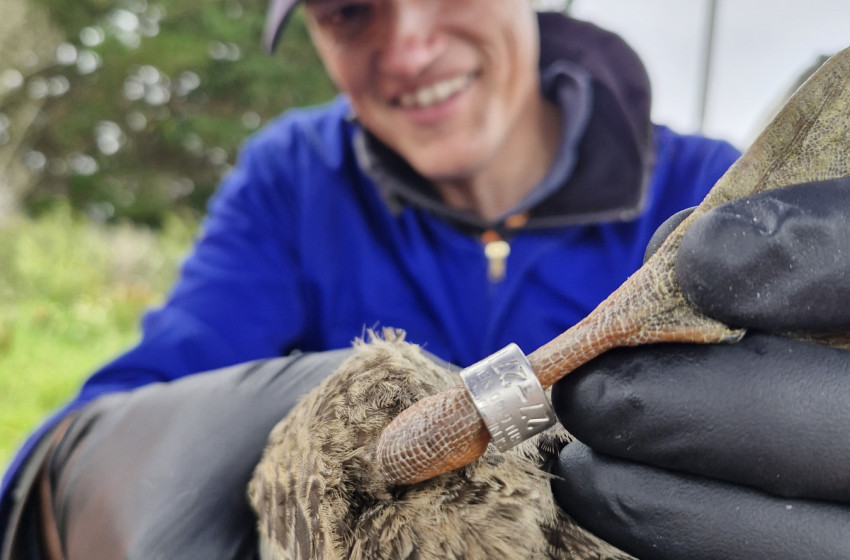
Have You Shot a Banded Bird?
In February, CSI collaborated with MPI and neighbouring Fish & Game regions on a surveillance programme for HPAI (Highly Pathogenic Avian Influenza), commonly known as bird flu. You can read more about this project in the 2026 Fish & Game Zealand Game Bird edition magazine HERE.
Image above: Hamish Stevens banding a mallard
Mallard ducks were the target species for the surveillance programme and, while the birds were in hand for sampling, we took the opportunity to attach identification bands. As a result, hunters in the Central South Island region now have a rare chance of harvesting a banded mallard and contributing valuable information about duck movements.
To date, we have received 15 band returns, with birds travelling up to 315 km from the banding site.
The ducks were banded near Temuka and have since been reported as far south as Winton (see image below) and as far north as Oxford. While some birds dispersed long distances, many remained relatively close to home, with eight banded mallards recovered within 50 km of the banding site between Waimate and Ashburton.
Other notable distances travelled by banded mallards include movements of more than 100 km to locations such as Ranfurly, Tapanui, and Springston. All distances reported are straight-line distances from the banding site or, ‘as the mallard flies’.
If you harvest a banded bird this season, please report it to the CSI office, call 0800 BIRD BAND, or submit the details through the Fish & Game website.
Every band return provides valuable information about mallard movements. We thank the volunteers, hunters, and landowners who supported the banding programme, and appreciate the hunters who take the time to report their band recoveries.
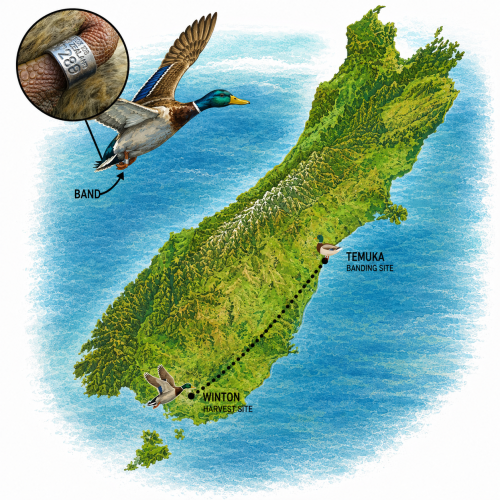
Banding site to harvest site
Take a Newbie Duck Hunting!
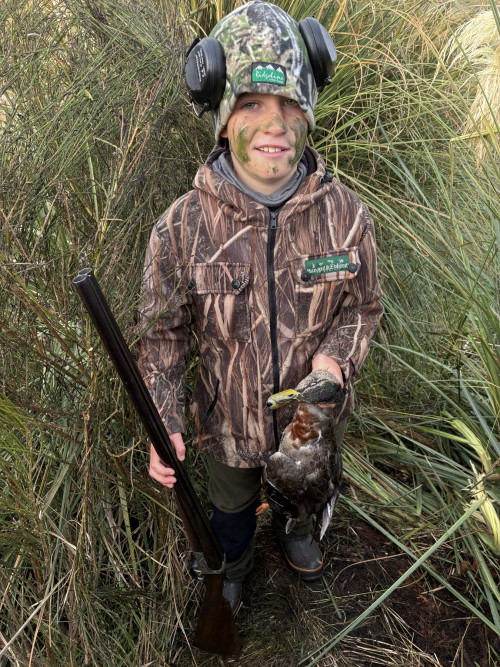
Sam Laming with his first ever duck – Credit Dad
For many hunters, the social side of duck hunting is a big part of what gets them out there each season. But plenty of people have never experienced the excitement of a duck hunt, simply because they haven't had the opportunity.
That’s why we’re encouraging you to take someone new hunting this season. You never know what it might mean to them. It could be a son, daughter, grandchild, friend, neighbour, or workmate experiencing their first hunt and creating memories that last a lifetime.
A great example is 8-year-old Sam Laming, who recently shot his first-ever mallard duck near Waimate. As if that wasn’t special enough, it also happened to be one of our banded ducks. Sam later went on to harvest his first goose as well, making it a day he won’t forget anytime soon.
Introducing someone to hunting isn’t just about the birds harvested. It’s about sharing knowledge, spending time outdoors, and helping create the next generation of hunters. So, if you have the chance this season, consider taking a newcomer along, you might just spark a passion that lasts a lifetime.
‘Day’ licences make it easy for newcomers to give duck hunting a go: they’re just $27 for adults and $10 for juniors aged 12–17. Kids aged 11 and under can even get a whole season licence for only $5.
Grab a game bird licence on our website HERE.
Outlook for the Remainder of the Season
Surface water opportunities
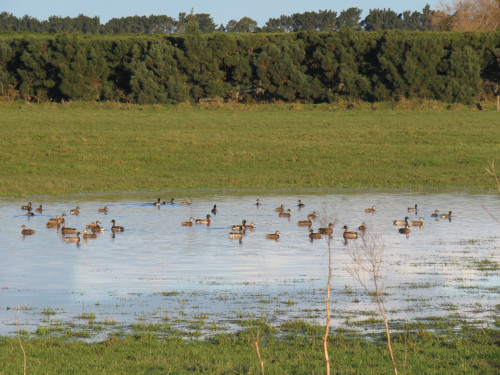
Ducks making the most of some surface water in a paddock after some rain - credit Rhys Adams
Although yet to arrive, Winter often brings periods of heavy rainfall, leading to widespread surface water. These temporary areas create ideal feeding grounds for ducks foraging for worms and invertebrates. This can provide a great opportunity to set up in a well-scouted area where you’ve observed ducks congregating. One tip is to ensure your lay out blind or makeshift maimai is well concealed and blends in naturally with the surroundings you are hunting. Ducks are smarter than you think, especially as the season progresses into the mid to late stages.
Don’t overlook local rivers
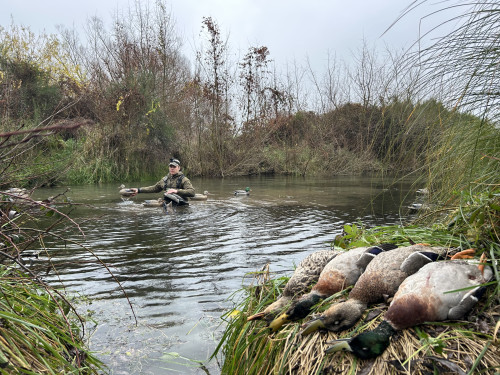
Cameron Smith packing up some decoys after a successful mid-season river hunt – Credit Blake Harper
Local rivers can also provide productive hunting opportunities throughout July. As the season progresses and hunting pressure eases, ducks often seek out quieter stretches of river, particularly tight willow-lined sections that offer both cover and security.
Another feature of winter is frost, which can make the idea of heading out in sub-zero temperatures less appealing. However, after several consecutive frosty days, many ponds and still water bodies begin to freeze over. This can work in your favour, as ducks are forced to move to open water, particularly rivers.
The accompanying photo shows a successful mid-season hunt on a local river, highlighting that good hunting can still be found well beyond opening weekend. A bit of scouting and a willingness to explore your local river or creek can often be rewarded with some memorable hunting.
Don’t have a spot? Head to our managed wetlands!
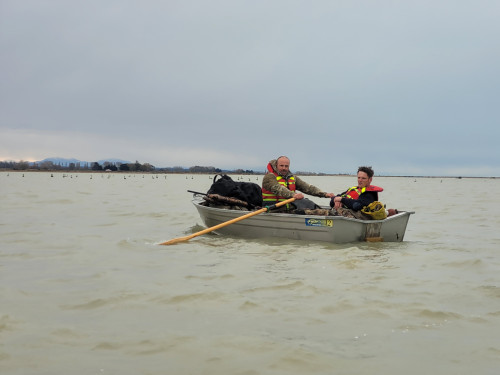
Wainono Lagoon - credit Blake Harper
CSI Fish & Game administer hunting at four wetlands and although these wetlands were balloted for Opening Weekend, from now till the end of the season these wetlands can be hunted by all licence holders, provided you obtain a permit and, if required, contact the landowner prior to hunting.
Our wetlands can provide quality hunting post Opening Weekend, especially if you can time your outing with some rough weather.
Click here to jump on our website to check out the wetland maps and info.
While there, fill out the permit application found at the bottom of the web-page, or alternatively get in direct contact with the office.
CSI Fish & Game contacts: email [email protected] or phone 03 6158400.
Check out this YouTube video of what is on offer at our Fish & Game Wainono Wetland Reserve
Goodluck out there,
Blake Harper, Fish & Game Officer
Disclaimer:
The information presented in these news items is based on the context and regulations in place at the time of publication. Please note that some articles may include reference to laws and regulatory standards that have since changed. For the most current and accurate information please check our Fishing Licences & Regulations pages or our Hunting Licences & Regulations pages.