Both Barrels June 2026 - Southland
- Southland
- 22/06/2026
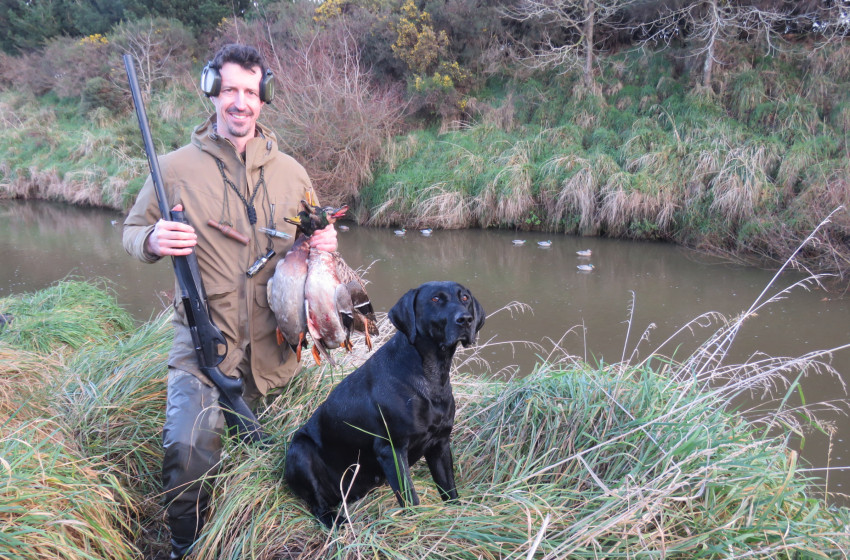
The Southland waterfowl hunting season has just passed the halfway mark and overall reports suggest there has been some excellent hunting enjoyed across the region. With just over a month of the season remaining, plenty of opportunity still remains.
Image above: Some mid-season success for Southland Fish & Game Field Officer Ben Febery
Scouting for Success
As many hunters will appreciate, opening weekend is often one of the easier times of the season to hunt mallards. With almost all waterfowl hunters out in the field, mallards are being disturbed throughout the weekend and are therefore moving around more than usual. This creates plenty of opportunity for hunters to call in displaced birds.
After opening weekend however, hunting activity declines. On any given day there may be very few hunters out, meaning there is much less mallard movement driven by hunting pressure. Success therefore becomes less reliant on disturbed birds and more reliant on finding and targeting resident mallards that are consistently using particular areas.
The foundation of a successful mid-to-late season duck hunt is identifying areas where mallards regularly loaf during the day. These are places where mallards return after feeding overnight and can provide excellent hunting opportunities when approached correctly. This might be a patch of willows along a river, a particular pond on a farm, or a corner of a large wetland. Mallards are creatures of habit and, once they find a location where they feel safe, they will often continue using it until they are disturbed or environmental conditions change.
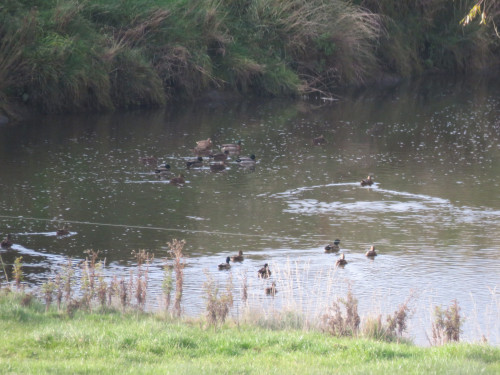
Finding a group of mallards like those pictured is often the first step towards a successful hunt.
One of the best times to scout for mallards is during the late morning or early afternoon. By this stage, most mallards have finished their overnight feeding and are settled into their daytime loafing areas. This gives a much clearer picture of how many mallards are using a location and whether it is worth investing time to set up a hunt.
When scouting, the key is to avoid disturbing resident mallards. The aim is to leave the area undisturbed, so mallards continue to see it as safe. This becomes increasingly important as the season progresses, as mallards that have experienced hunting pressure become far more cautious and less forgiving of disturbance. For this reason, scouting from a distance is best wherever possible. A good pair of binoculars can be invaluable for observing mallards without getting close enough to push them off the spot.
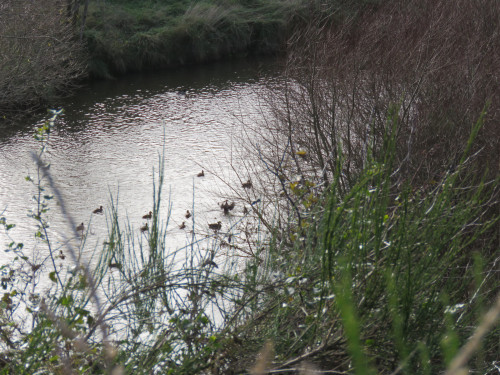 A careful approach to scouting helps ensure mallards continue using an area and are not unnecessarily disturbed.
So, when out scouting, what are you looking for? Ideally, a location holding 20 or more mallards. Naturally, the more mallards using an area, the better the potential hunting opportunity. However, even 20 mallards can provide an excellent hunt, particularly later in the season. As winter progresses, mallards become more pair-oriented, meaning twenty mallards may represent ten pairs. If those pairs commit to your decoys at different times throughout the morning, it can provide plenty of shooting opportunities.
Once you find a group of mallards, it is important to try and hunt them as soon as practical. Mallard behaviour can change quickly, and it only takes a small disturbance or environmental change to alter their routine. This might include another hunter locating the same area, nearby farm machinery or activity, or even changes in weather that open up alternative feeding opportunities or make a loafing site less suitable. A location that is holding mallards one day can be empty the next, so timing is important.
If you find an area mallards are consistently using but there is no maimai present, don’t let that discourage you. Scrub, willows, and other riverbank vegetation can all provide excellent concealment. Wearing camouflage or natural-coloured clothing and making use of available cover is often all that is required. When scouting, take note of surrounding vegetation and identify potential positions from which you could safely and comfortably hunt.
One advantage of hunting an area that mallards are habitually using is that a large decoy spread is unnecessary. If mallards are already using the area regularly, they already want to be there. A modest spread of six to twelve decoys is often sufficient.
As always, make sure your setup is completed under the cover of darkness. Arriving early gives you plenty of time to place decoys, organise gear, and settle into position before first light. The last thing you want is to be splashing around in the water while mallards are beginning to move.
After the hunt, leave the area alone for a couple of weeks before checking it again. If mallards were using the spot in the first place, there was likely a good reason. Given time, the area will often settle down post-hunt and either the original mallards or new mallards will begin using it again, creating another worthwhile hunting opportunity later down the track.
Ultimately, a few hours spent scouting can make the difference between an average hunt and a successful one. If you're looking to improve your success, put some time into finding where the mallards want to be. Once you have found a good group of mallards, the rest often falls into place.
DIY Motion Decoy
Southland has experienced a relatively mild winter so far, with fewer frosts than we would normally expect by this point in the season. However, those frosty, still mornings will inevitably arrive and when they do, adding some movement to your decoy spread can help.
On calm days, stationary decoys can look exactly that – stationary. In contrast, real ducks are almost always moving. They paddle around, create ripples, and tip up to feed. Adding a little motion to your spread can help create a more realistic decoy spread.
Fortunately, creating motion does not have to be expensive. Though commercial motion decoys are available, there are also a number of effective DIY options. Simple jerk cords can work well, while homemade motion decoys powered by small bilge pumps can create some great movement.
A couple of staff in our office have had a crack at building their own bilge pump motion decoys and have found them to be effective additions to their spreads.
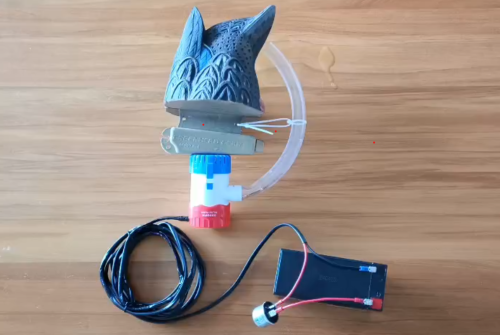
A homemade bilge pump motion decoy
If you are keen to build one yourself, below is a basic parts list to get you started. Most of the components can be sourced relatively cheaply and you may even have some of the parts in your shed already.
Parts list:
- 12V battery
- Bottom-up decoy
- 6mm twin core wire – 6m length is a good starting point (but consider your own hunting situation).
- Bilge pump
- Clear tubing to attach to the bilge pump
- Glue to fix the bilge pump to the bottom of the decoy.
- Indicator relay – to create intermittent water pulse
- Heatshrink tubing – to seal wire connections that will be exposed to water
- Battery clips – for fixing the wire to the battery
- Switch – optional (enables user to easily turn the bilge pump on and off to conserve battery)
- Decoy weight and rope to fix decoy in place
Disclaimer:
The information presented in these news items is based on the context and regulations in place at the time of publication. Please note that some articles may include reference to laws and regulatory standards that have since changed. For the most current and accurate information please check our Fishing Licences & Regulations pages or our Hunting Licences & Regulations pages.