Both Barrels June 2026
- F&G NZ
- 27/06/2026
Bird movement is more predictable — but birds are harder to fool
We’re well into the 2026 season, and while conditions have varied across the country, one theme is becoming clear: bird behaviour is tightening up, and hunters adapting fastest are seeing the best results.
With winter now firmly set in, the upcoming Matariki long weekend also falls into a key mid-season window, when many hunters take the opportunity to get back into the field. It often provides a useful stretch of time in the field during the heart of the season, when timing and preparation continue to play an important role in response to changing weather and bird movement.
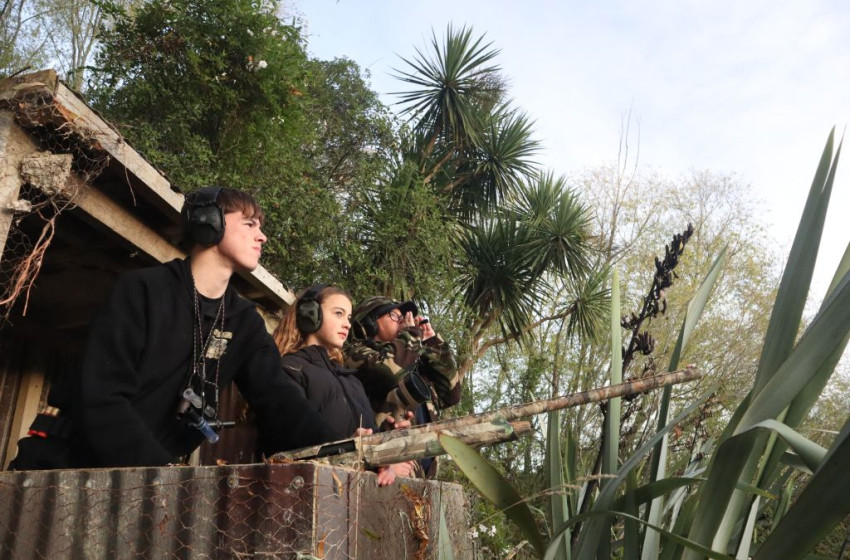
Pictured above: Lee, Poppy and mum Tara Sutherland started out their season on a Fish & Game-managed wetland in Otago. Credit: Bruce Quirey.
Dry spells in some regions, intermittent weather in others, and shifting hunting pressure have all combined to make this a season where location and timing matter more than ever.
But the detail behind what’s working — and where — varies by region, with full regional updates available above.
What’s working right now
Across the country, successful hunters are consistently doing three things:
- Targeting tight, reliable food sources (maize, stubble, ponds, river edges)
- Setting up on small, sheltered water rather than large open systems
- Matching low-pressure bird behaviour with minimal, realistic spreads
In dry regions like Northland and Taranaki, birds remain tightly tied to agricultural food sources and predictable evening flight lines. In wetter and more variable areas such as the West Coast and Wellington, wind and rain events are still creating short bursts of movement — but only for those ready to adapt quickly.
Calm conditions are changing the game
One of the features of this season has been periods of calm weather across parts of the country. And when conditions settle, bird behaviour changes noticeably.
Hunters are reporting:
- More decoy-shy mallards
- Older, more cautious birds
- Reduced response to calling
- Higher scrutiny of spreads
The solution has been simple — and consistent:
- Smaller decoy spreads
- Subtle or minimal calling
- Better concealment
- And importantly, introducing movement into the spread
From Southland through to Hawke’s Bay, even simple ripple creation or pull-cord systems have outperformed static spreads on dead-calm water.
Late season opportunities are still strong
While dabbling duck seasons are closing in regions like Wellington, Taranaki, Auckland/Waikato, and parts of Eastern, the season is far from over.
Strong late-season opportunity remains for:
- Pūkeko
- Black Swan
- Quail
- Pheasant and upland game
Regions like Northland, Auckland/Waikato, and Hawke’s Bay continue to offer productive upland and Pūkeko hunting well into winter, while Wellington’s extended Swan season is now a key late-season focus.
North Canterbury and Otago still offer strong upland-style and access-based hunting, while the West Coast provides more permission-based waterfowl and mixed hunting opportunities. Overall, variety remains available through winter even as duck seasons wind down.
More happening than just hunting in the field
Maimai competition finalists in Auckland/Waikato with their prizes.
This season has also been shaped by strong regional involvement.
With organised hunts on the West Coast and in Nelson Marlborough, junior and school-based engagement in Auckland/Waikato, hands-on training and simulator experiences in Hawke’s Bay, more initiatives are still underway as the season continues.
Check the regional links above for full details and local updates.
Movement patterns are bigger than your local patch
Hamish Stevens banding a mallard - Central South Island
Band recoveries continue to highlight just how far mallards can travel within a season, with birds moving significant distances between banding sites and where they are later harvested — sometimes hundreds of kilometres from where they were originally banded.
Recent examples and updates from regions including Otago, Northland, and Central South Island highlight just how widespread these movements can be — check the regional updates above for more detail.
If you harvest a banded bird this season, please take a moment to report it.
Every report helps build a clearer picture of duck movement across New Zealand, supporting better management and better hunting for the future.
Adaptability beats tradition. Every time
Dry conditions, shifting bird movement, and changing pressure have all rewarded one thing — adaptability.
There is still plenty of hunting left in the year, especially through upland and extended waterfowl opportunities, but the hunters staying ahead are those who:
- scout regularly
- adapt their approach on the ground
- and treat every outing differently, not routinely
Disclaimer:
The information presented in these news items is based on the context and regulations in place at the time of publication. Please note that some articles may include reference to laws and regulatory standards that have since changed. For the most current and accurate information please check our Fishing Licences & Regulations pages or our Hunting Licences & Regulations pages.