A Winter Drift For Mallards
- 13/05/2026
Written by Bruce Quirey
On a frosty morning, Phin eyes me across the steam of my coffee. He gets up and sniffs my duffel bag and ammo case in the hallway, then stands at the front door. He knows something's up. He's not missing out.
The canoe has been strapped on the roof racks since yesterday, as I'd been out the night before to watch the All Blacks beat France — their 500th Test win. Paddles and PFDs (Personal Flotation Device) sit in the ute. Soon, Phin is in the back of the ute, too, pleased.
There's no need to hurry. The sun rose after 8am and the road will be icy. I drive across town to meet Ian, and we carry on in two vehicles. The temperature drops below zero as we head across country roads into the low sun, a big pale orb.
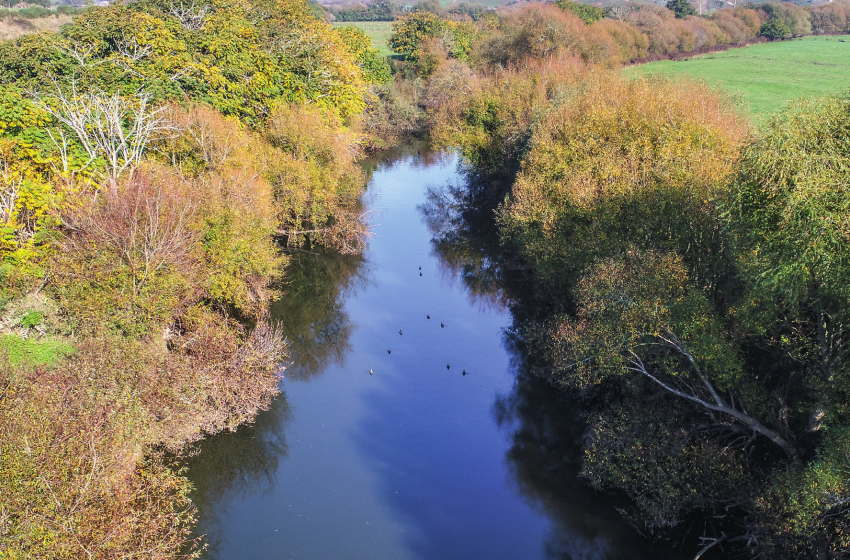
We arrive at a bridge over the river where bare willows glisten. Grass sways in swollen tannin water that laps at tree roots. The water is 2 degrees C.
Leaving one vehicle, we drive to the next bridge up the valley. In a straight line, the two bridges don't seem far apart. But the serpentine river is deceptive.
In summer, we've wet-waded along the twisting banks and backwaters above and below these bridges, fishing for big-shouldered browns. But summer flows are a fraction of today's pulsing current.
This morning, we've checked forecasts and live river flow data on the regional council website. We stand at the bridge and look carefully. Committing to a river in the dead of winter is no small thing — it demands a big dose of caution. Satisfied it is navigable, we decide we're doing this.
Phin paces about and watches as we pull on chest waders and fasten belts and PFDs. We lay the Canadian canoe on frozen grass and load it. It is a 15-foot Dagger — light, virtually indestructible, and unsinkable in two decades of use.
Dry bags with spare clothing, flasks and food are fixed to the yoke. Ammo is stashed in a waterproof box. I will start as rear paddler, so my gun stays in its waterproof bag, tied down.
The icy, flooded margins crack as we slide the canoe to the river. Ian, with his Remington, takes the bow seat. Phin is eager to get in.
The canoe's wide beam is stable. But the weight of a big dog leaning with front paws on one gunwale can be unnerving at the best of times. So, his place is the narrow nook at the stern. He's less pleased to be there, but it keeps his weight centred. Much safer. He'll spend the next hours straining past the shoulder of the rear paddler, scanning ahead for ducks and ready for action.
We push off.
We've drifted for only a few minutes when we hear the chatter of mallards. We can't see them, camped on a sunny bend behind a pair of willows. Through the tree limbs, four birds lift and disappear over a high bank.
The river curls and straightens. Ahead lies a thick willow stand where the water twists on itself like an eel biting its own tail. In the bow, Ian is poised with gun at the ready as we near the bend.
Sunrays cut through the haze onto a small backwater under the trees. We can see behind across a ploughed paddock. The line is clear. Beating wings break the stillness. One, two, three, four, then five mallards.
Ian wastes no time. He swings and fires, and a greenhead folds and falls on the far bank.
Phin shifts and whines and is reminded sharply to wait. I dig my paddle in and guide us towards the left bank. We pull up and Phin gets the word every gundog wants to hear. He's out and bounding along the bank, then wheels in a tight turn and buries his head among the reeds and long grass, emerging with a resplendent drake in his jaws.
It's no surprise we've found ducks on the river. The winter freeze has pushed birds off frozen paddock puddles, ponds and creeks and onto bigger, moving water.
Drift hunting from a canoe or small rowboat opens new hunting spots and improves access for waterfowlers. It allows you to cover kilometres of secluded water that's otherwise tough or impossible to access on foot. At its exciting best, it delivers sudden, close encounters with mobs of waterfowl in a hunt. Opportunities may lie at every bend.
At the peak of the game bird hunting season, ducks are on constant watch for danger. Stealth is key to closing the gap. On straight runs of the river, they'll usually spot your approach from a long distance. If you're detected, most ducks will flee well before you've drifted within effective shotgun range. Just occasionally, a mallard will wait until you've passed. Be alert. Staying close to one edge of the river increases the element of surprise for any ducks tucked under trees or in the mouths of small creeks and tributaries.
If they haven't seen you coming, ducks are just as likely to have heard you unless there is a helpful wee breeze. To minimise noise, paddle only when necessary. Drift and steer. Communicate with subtlety. Scan the water ahead for clues — areas that offer shelter, food and, especially on those cold days, warmth — and be ready.
Safe boating and safe gun handling always outweigh the opportunity to take a bird. While one gun is in use, the other is unloaded and stowed safely. Sometimes we both need to help paddle to stay on line and out of trees. Paddling together has cost us birds. It's a constant judgment call but if things go south, we're facing a long and unhappy trudge to the nearest road. Or worse.
Back to the hunt.
The bow. My turn. Ian's now paddling at the rear. We're taking it all in. Last night I was in a stadium full of noisy rugby fans. Today we're gliding down a cold river in silence. As we close in on the next bend, Ian whispers. Ducks! Lots of ducks — probably 20 or more.
I look around and check the area is clear. Birds rise in a blur of spray and feathers. I focus on one. It hangs in the air, rising steeply to clear the trees. I fire. And fire. Pick out another. Fire again.
If you're picturing me collecting nothing but spent shells, this is where I admit that hitting flying targets with a shotgun while seated in a boat isn't always a given. Add to that consistently and accurately shouldering a gun in waders, winter layers and a PFD. I'd be lying to claim any great mastery. Suffice to say — and mainly to myself — practise, practise, practise more. It doesn't make perfect, but it makes better. Incidentally, when shooting from a seated position, a helpful tip is to shift your hips to open your swinging arc.
The drift continues. Another mob, bigger than the last. I'm ready. After more shots, we pull up in another backwater to search for a bird I've downed. Phin's collar has been removed so he won't get entangled. I send him out, splashing chest-deep and clambering among branches and saplings. He emerges, head held high in triumph. To give credit where it's due, we would have not retrieved this bird, like most others we shoot today, without our four-legged pal.
Camaraderie is a big part of the hunting experience, and there's nothing like the 'encouragement' of a cobber, especially when it comes to hits and misses. When I miss, Ian reckons the dog's crest-fallen expression says it all. You've got to laugh.
Ian's back in the bow. The river broadens as we cross the plain and the landscape opens with it. A mallard lifts from a side creek and Ian drops it cleanly in the middle of the river. A few paddle strokes and we're alongside for an easy retrieval from the canoe. Phin's ears lower. Utter disgust that we are now doing his job.
We pull up again before another backwater. From experience, we know this corner is best stalked. Ducks are chattering ahead somewhere. Ian walks to the left of the backwater. I go to the right and crouch. They spot us and flush and Ian brings down two. Another comes directly towards me. I take a shot and the bird splashes almost at my feet. By now we've got a good bag of ducks on board. We've been hunting for several hours. Phin makes a long retrieval in the frigid river and I towel him down as the air temperature dips and the sun sits now low to the west. He's not done hunting.
We disturb some grey teal at an oxbow and the protected natives fly off low and safe. Their rising and falling, looping motion in the air reminds me of mayflies dancing — I wonder if I'm the only one who's imagined that.
We're nearing the haul-out spot. I want to end the day positively.
The river turns sharply and splits around a narrow island. Riding a swift riffle, we surprise two mallards in the pool below. As they lift and cross low, I swing the barrel and down a drake — a young strapper with a chestnut breast and patchy green head. One final, easy retrieval and a memorable photo against the setting sun.
Light fades and the cold creeps back. We shoulder the canoe, load up quietly, and leave the river to winter again.
---
DRIFT HUNTING: DOING IT RIGHT
Rivers wind through farmland and reserves, past houses and sheds, along walking tracks and cycleways. Rivers and their nearby surrounds are increasingly shared, and the responsibility that comes with carrying a firearm in them is absolute.
Drift hunting can be an effective and enjoyable way to hunt waterfowl, but it comes with responsibilities that deserve close attention. Hunters need to always exercise careful judgement. Some regions have drift-shooting exclusions — check local regulations, and if unsure, contact your regional Fish & Game office.
Under the Wildlife Act (Section 18a), drift shooting is permitted only from a 'rowboat' — defined as a vessel wholly propelled by oars, paddles or poles. If a boat is fitted with a motor, it must not be used to hunt while under power.
While motors may be used for transport to a location and retrieval in some circumstances, hunters should understand that compliance issues commonly arise when firearms are accessible in motorised boats. To remove any doubt, we advise drift hunters lift the outboard motor clear of the water when actively hunting.
From a legal angle, hunters drift shooting must comply with the Arms Act, especially Section 48. Discharging a firearm near dwellings or public places can bring serious consequences.
When drift hunting, it's essential to consider not just where you're shooting from, but where shot may land. The Wildlife Act, Section 21 (1) requires hunters to have landowner or occupier authority to hunt on any land. Shot can easily travel beyond the river margin. Hunters should think carefully about where land boundaries lie and whether consent has been obtained.
Before drifting a new stretch of river, take time to scout it using maps and satellite imagery and the Walking Access Commission website. Check for public access areas, pinch points, bridges, tracks, and nearby buildings.
Drift hunting, done properly, is careful, selective and respectful. Done poorly, it risks public safety, legal consequences, and the reputation of all hunters. Careful preparation, good judgement, and a willingness to leave birds alone when conditions aren't right are what keep this method viable for the future.
And remember, as with any hunting situation, always follow the seven rules of firearms safety.
WHERE TO DRIFT HUNT
We asked Fish & Game regional managers to suggest places that may be drift hunted:
Northland: Northern Wairoa offers good duck numbers through the season and multiple entry/exit points to set up drift runs.
Auckland-Waikato: The Waihou and Waikato are great rivers for drift hunting but there are several exclusions due to public safety concerns. Consult local regulations and if in doubt please call the office.
Eastern: Parts of the Waikato River, associated hydro dams, and Kaituna River.
Wellington: Manawatu, Rangitikei and Ruamahanga rivers hold good numbers of birds after Opening Weekend. Birds hold tight under willow cover, or on sunny days will be in the open on exposed gravel beds and sandbanks.
Nelson/Marlborough: Lower Pelorus, lower Aorere and Buller around Murchison and sections of tributaries such as the Matakataki and Maruia. Otherwise, limited opportunities due to safety issues and Marlborough District Council restrictions on hunting bermlands. Wairau Lagoons only from moored boat.
Central South Island: Limited opportunities on small to medium-sized lowland rivers.
Otago: Taieri, lower Tokomairiro, Clutha (check local regulations for exclusion dates), and lower Pomakaha rivers. High caution required due to walking and cycle tracks.
Southland: Oreti, Mataura, Aparima and Waiau rivers, and their navigable tributaries. Check local regulations (under review at the time of writing).
Disclaimer:
The information presented in these news items is based on the context and regulations in place at the time of publication. Please note that some articles may include reference to laws and regulatory standards that have since changed. For the most current and accurate information please check our Fishing Licences & Regulations pages or our Hunting Licences & Regulations pages.