Off-Season Clays: In Season Results
- 13/05/2026
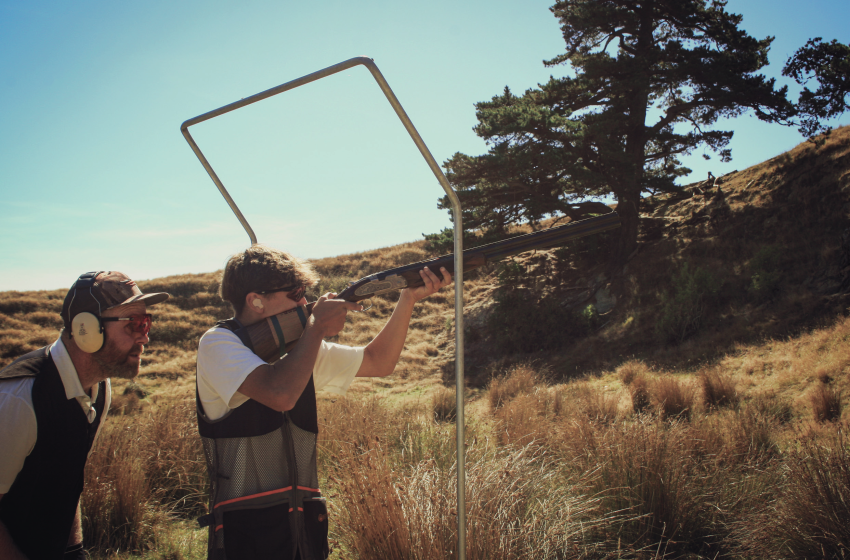
Written by James Mackie
Many shooters can relate to the moment. You've just taken a beautiful bird. A single greenhead, sweeping right to left, dropping in fast. You catch the first glimpse, lock eyes on it, mount the gun cleanly and swing through. Bang. Stone dead on the water. It all happens without conscious thought.
Then a small flock responds to your call.
They circle twice. You think about taking a shot, but hold off. They look wary, light on the wings, undecided. On the next pass they commit just enough, to the same range as the earlier drake. This will do.
You stand and mount the gun. Your eyes flick from one bird to another. The flock flares with the first shot. A second shot. You fire again. Nothing drops, they keep going.
What changed between those two moments wasn't the gun, the ammunition, or the distance. So, what was it?
Mechanics Before Mindset
There's a common belief that good shooting is instinctive. That if you look harder and react quickly enough, everything else will take care of itself. When a fast, clean shot comes off it's easy to assume it was pure instinct at work.
In reality, those instinctive-looking shots are rarely spontaneous. When good shooters make them consistently, they're drawing on something that's been built over time and practice. What looks like instinct is usually the subconscious application of learned skill. And the first building block of that skill is mechanics.
Physical fundamentals must be ingrained deeply enough that they no longer require conscious thought. Stance, balance, gun mount, eye alignment, and gun fit are the foundation everything else sits on. In the field, issues can remain hidden for years, masked by favourable angles and close birds. Clay targets remove that camouflage.
On a clay ground, poor fundamentals tend to show up as inconsistency when shooting routine target presentations. That pattern is the giveaway. It's not failure, but information. Correcting these issues takes time, repetition, and guidance. One or two warm up clay shoots before the season won't change years of learned behaviour. Real change requires dedicated practice, ideally with someone knowledgeable helping to identify what's actually happening.
As new habits are introduced, they initially feel awkward and forced. Taking a step back in order to take several steps forward is often unavoidable. With enough correct repetition, those movements become automatic. Then they belong to the shooter. This process takes more clay shooting than many hunters expect. But that investment is the price of consistency.
Gun fit Doesn't Fit Doesn't care how Experienced You Are
One of the most overlooked contributors to inconsistency is gun fit.
A shotgun that does not place the pattern where the shooter is looking demands compensation. That compensation may work some of the time, but it breaks down across a wide range of situations, particularly under time pressure, awkward angles, or shots that require rotation and commitment.
When a gun doesn't align naturally with the shooter's eyes, it forces subtle changes in head position, posture, or mount to make the picture work. Those adjustments can feel manageable, but they are difficult to repeat. On a clay ground, this shows up quickly. Patterns that consistently sit above, below, or to one side of where the shooter is looking often point directly to fit issues rather than technique alone. No amount of confidence, intention, or trying to 'look harder' can compensate for that misalignment.
The advantage of addressing gun fit on the clay ground is that changes can be tested immediately. Adjustments to length, cast, or mount technique show results straight away. Over time, a properly fitted gun stops feeling like something that needs managing and starts to feel like a natural extension of the shooter. Once that relationship is established, the shooter can stop thinking about the gun entirely.
When Technique Becomes Subconscious
This is where shooting starts to change character.
When stance, gun mount, eye discipline, and gun fit are no longer things that need active thought, mental space opens up. The body already knows how to move, the gun naturally follows the eyes, and the shot happens without instruction or correction.
Clay shooting accelerates this transition through repetition and variety. Sporting clays in particular present a steady stream of problems that need solving, but only one at a time. A fast crosser followed immediately by a slow flopper. A target that changes speed or shape halfway through its flight and forces a late decision.
Each presentation reinforces something slightly different. More importantly, it teaches shooters to trust what they've already learned. Over time, the conscious mind quietens down, decisions happen earlier and movement becomes smoother and more deliberate.
Good shot execution isn't about speed. It's about making the shot feel unhurried, even when the opportunity is fleeting.
The Mind is the Final Variable
Once the mechanics are ingrained, shooting becomes predominantly mental.
This is where the difference between the first shot and the last shots in the opening scenario begins to make sense. The first bird was taken with a clear plan and singular focus. The eyes stayed on one target. The method was chosen and implemented quickly by the subconscious mind. The second sequence introduced uncertainty – multiple birds, time pressure – the conscious mind was too active managing these variables. The subconscious was no longer trusted to do its job.
Learning to keep the conscious mind out of the way is a skill in itself. It requires discipline. Pick a target. Commit to a method. Stay visually locked on the bird's head or beak. Let the shot happen. This mental discipline does not develop in chaos, but through repetition in controlled environments, where mistakes can be examined and learned from.
Shot Methods are Tools
Another advantage of sporting clays is exposure to multiple shot methods.
Swing-through, pull-away, maintained lead, and variations of each all have their place, but none of them work consistently everywhere. Hunters who rely exclusively on a single method often find themselves struggling with certain angles or presentations.
Maintained lead, for example, is the default for many shooters, but it can be difficult to execute consistently without regular practice. It relies on constant calculation and maintaining a very specific relationship between the target and the barrel. For shooters who practice less frequently, that judgement often becomes inconsistent, with good days followed by very ordinary ones.
Swing-through and pull-away methods tend to suit dynamic hunting situations particularly well because they develop a shooter's understanding of the line of the target. That understanding is critical when birds curve, swing, drop, or change speed. Sporting clays give shooters the opportunity to experiment, work out what suits them, and understand when each method applies. That adaptability transfers directly to the field, where no two shots are ever truly the same.
Ethics Live in Preparation
Clean kills are rarely accidental.
They are the result of good decisions made calmly and executed well. Clay shooting improves more than raw accuracy. It develops the skills and judgement required to make decisive, well-planned shots that kill cleanly, rather than rushed shots that may sometimes wound. Through repetition, shooters learn their limits, their effective range, and what a genuinely makeable shot looks like.
When shooters are comfortable, composed, and committed to a single outcome, they are much more likely to make that clean kill. Practice reduces panic. When a clay target is treated as the size of a bird's head or beak, precision becomes the standard rather than the exception. Time spent practising isn't about ego or performance. It's about respect for the quarry and responsibility for the outcome.
Clubs, Culture, and Learning Properly
Many hunters hesitate to step onto a clay ground because of time constraints, unfamiliarity, or simply stepping outside their comfort zone. Pre-season duck hunters' shoots are often a useful starting point, but there is far more available beyond them.
Clay target clubs vary widely. Some still operate on rigid schedules and long-established formats. Others are evolving, offering more flexible shooting days, informal attendance, and genuine introductions for newcomers. Family-friendly environments are becoming more common, and they play an important role in modelling safe, disciplined firearm use to younger shooters and hunters.
For those wanting to improve, the best starting point is simply to make contact. Look up clubs in your region, find out which days suit game bird hunters, when sporting clays are being set, and when someone experienced is likely to be around. Many highly capable shooters are happy to share what they know when asked, and the right guidance can shorten the learning curve considerably.
At Wairarapa Clay Target Club, where I'm involved, a deliberate effort has been made to offer that kind of environment. Flexible formats have been introduced to suit busy schedules, genuine introductions are provided for newcomers, equipment can be made available, and the club is consciously family-friendly. There is also a strong depth of experience on hand, with multiple national-level shooters regularly shooting and willing to share their knowledge. That combination has made it easier for hunters to step in, learn properly, and enjoy the process.
The Quiet Work That Shows Later
The off-season is where shooting is shaped. Not through volume alone, but through deliberate practice, correcting mechanics, ingraining good habits, and building repeatable technique. Through loading the subconscious with the information it needs to make clean, decisive shots happen without hesitation when it matters.
When the next season arrives, those who have done that work don't look the same in the field. There is a calm decisiveness to the way they shoot. Fewer rushed movements. Clearer choices. Shots taken with intent rather than hope, and cleanly killed ducks become the norm.
For many hunters, that change shifts the entire experience. Instead of simply filling a bag on a forgiving pond, there is satisfaction in selecting birds deliberately, executing better shots, and working to bring the shot-to-duck ratio down. Tricky opportunities that once caused hesitation or chaos become moments to enjoy rather than endure. That's where the real reward sits.
James Mackie is a Wairarapa-based game bird hunter and national-level clay target shooter. He has been involved in hunting and clay shooting since a young age and has represented New Zealand internationally across multiple disciplines. He is actively involved at Wairarapa Clay Target Club, where he helps introduce and mentor shooters of all levels.
Disclaimer:
The information presented in these news items is based on the context and regulations in place at the time of publication. Please note that some articles may include reference to laws and regulatory standards that have since changed. For the most current and accurate information please check our Fishing Licences & Regulations pages or our Hunting Licences & Regulations pages.