Counters brave the cold as annual shoveler survey spans the country
- 6/08/2026
- Maggie Tait
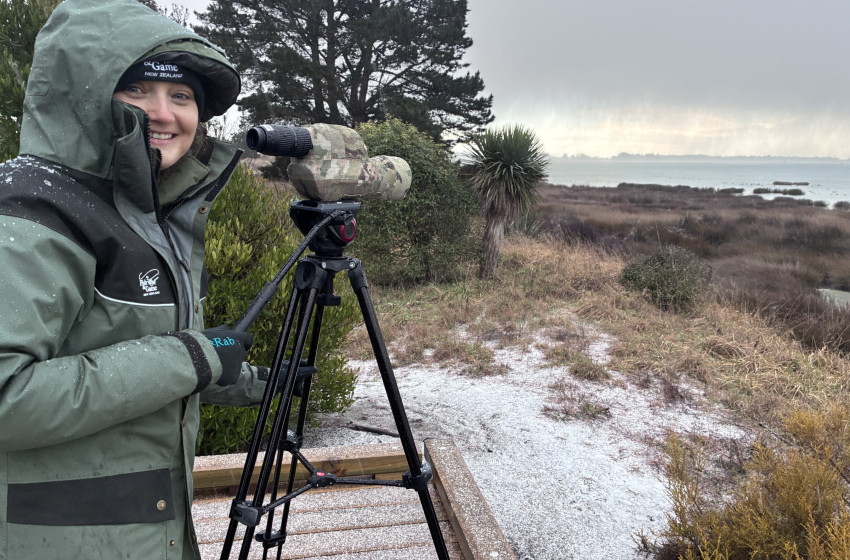
There are easier ways to spend a freezing August morning than counting ducks through a spotting scope, but Fish & Game teams around the country did just that as they conducted the annual Australasian shoveler count earlier this week.
Fish & Game staff, councillors and volunteers were out on Monday walking the beat in boots and surveying from boats, for the annual nationwide survey that stretches the length of the country.
The count is painstaking, cold work. On the first Monday of August each year, teams fan out, binoculars and spotting scopes in hand, across roughly 300 sites to record shoveler (kuruwhengi), a native game bird recognisable by its broad, spoon-shaped bill. This year severe weather in the lower South Island pushed some counts out by a day or two, with regions such as Southland and Otago holding off until conditions cleared.
The survey is coordinated by Matthew McDougall, Senior Fish & Game Officer for the Eastern Region, and draws on a dedicated group of helpers, including keen birdwatchers from the Ornithological Society of New Zealand.
"We do the count at the same time every year because that is when the birds mob together before breeding," McDougall said. "Shoveler are highly mobile and can travel large distances in a very short time, almost the length of New Zealand in a couple of days. Counting them all on the same day, wherever we can, means we are not double-counting birds as they move around."
He said the weather made the work challenging.
"We need clear conditions with little wind, because wind puts chop on the water and makes the birds flighty, which makes them very difficult to count," McDougall said. "The regions that had really bad weather held off and will count as soon as it settles. Our counters do a great job in tough conditions."
Across the sites counted last year, teams recorded 12,250 birds. McDougall said the survey worked as an index of population change rather than a total population estimate, and the long-term picture was encouraging.
"Over the last 26 years the population has fluctuated, gone up and down, which is exactly what you would expect with any waterfowl species," McDougall said. "But the overall trend has been pretty stable, which is good news for hunters."
Fish & Game Chief Operating Officer Richie Cosgrove noted the timing of the survey was useful since H5 bird flu (clade 2.3.4.4b) has arrived in New Zealand.
“This year's count also gave Fish & Game an opportunity to keep an eye out for signs of H5 bird flu while approximately 50 staff and volunteers were out on wetlands around the country. No problems were identified,” Cosgrove said.
Shoveler can be hunted by licensed game bird hunters, and monitoring populations helps Fish & Game ensure hunting remains sustainable. This year's data will be processed and analysed by McDougall in the coming weeks.
Photo caption: A North Canterbury Fish & Game Council Fish & Game Officer out counting Shoveler
Disclaimer:
The information presented in these news items is based on the context and regulations in place at the time of publication. Please note that some articles may include reference to laws and regulatory standards that have since changed. For the most current and accurate information please check our Fishing Licences & Regulations pages or our Hunting Licences & Regulations pages.