Otago - The Game Call - 13 August 2026
- Otago
- 13/08/2026
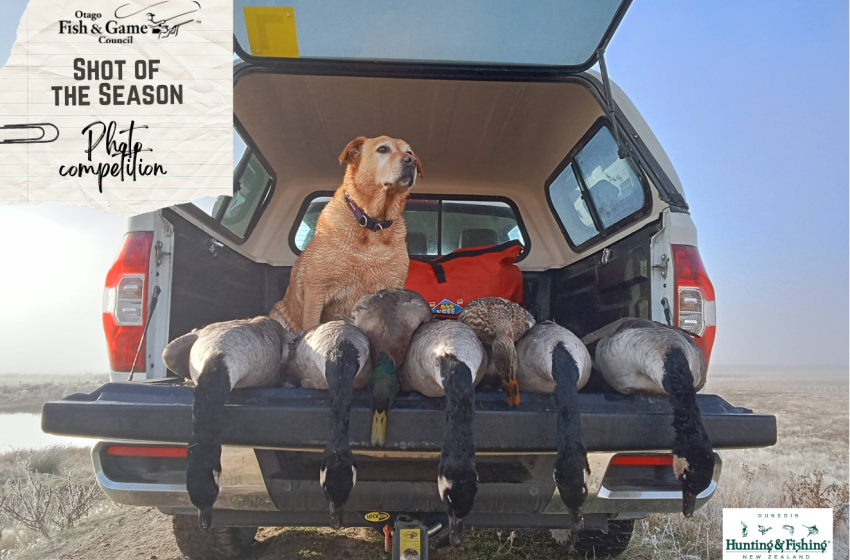
We have a winner! This photo, taken by Scott Weatherall, of 9-year-old Labrador Meg in the back of a ute with honkers and mallards is the “Shot of the Season” winner for 2026.
Welcome to the final 2026 edition of The Game Call, your fortnightly Otago regional hunting report.
The next two weeks mark the last opportunities to hunt upland game (California quail, chukor or pheasant) or waterfowl (paradise shelduck and black swan) in the 2026 Otago game season.
The season finishes on Sunday, August 30.
In this issue:
- 'Shot of the Season' winner
- It's a dog's life
- Hunting honkers
- Slow-cooked goose salamis
- National shoveler count
- Parrie special season
- Staying active off-season
- Bird flu - High Pathogenicity Avian Influenza (HPAI)
‘Shot of the Season’ winner
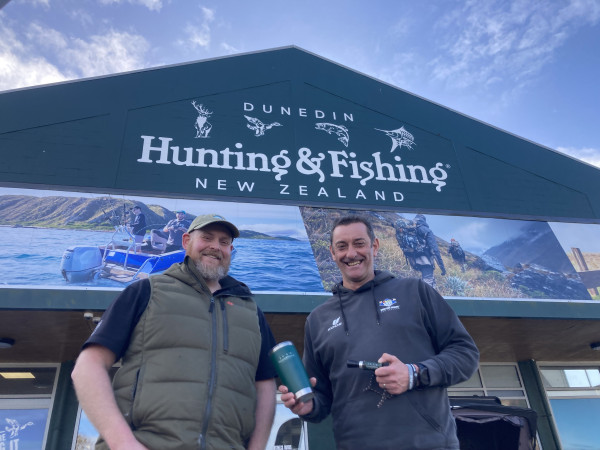
Dunedin Hunting & Fishing New Zealand’s Ryan Dunbar presents the duck hunters’ prize pack to Scott Weatherall, winner of the “Shot of the Season” Otago game bird photo competition. Scott won a Cupped Wing duck call, lanyard and thermal mug.
A photo of a 9-year-old Labrador in the back of a ute with a bag of Canada geese and mallards captures the essence of why many waterfowlers love the pursuit.
Working with a well-bred, trained and motivated gun dog is one of the delights of game bird hunting. It’s a special relationship.
Scott Weatherall recounts the hunt when the winning photo of his 9-year-old Lab Meg was taken on a cold July day in the Maniototo.
“The pond was iced over when we got there, because we'd left the decoys out. We'd gone out for an afternoon shoot the day before, and then we left the decoys out, which we don't normally. Next morning we went back and they were frozen.
“So I said to my 14-year-old son, ‘George we'd better get out there and break up the pond.’ So we did. But then it actually just kept on freezing. I think it was about negative six or seven.
“A group of Canadas were flying around, in and out, and then they obviously decided that they'd come close enough for us.
“George had gone for a walk because he gets a bit bored, so he walks around this big open sort of reservoir that's actually not been filled in.”
It was at this point that the Canadas came into the pond.
“I was like, ‘I'm not waiting for you, pal. Here we go.’ I shot three or four Canadas, and then George came over the stop bank and shot a couple, which was pretty cool.”
One honker fell onto land but the rest splashed down in the water. Retrieving them was a big job but Meg was up for it, as well as having brought back two mallards.
Thanks for everyone who entered the “Shot of the Season” photo competition. Final judging was done by Dunedin Hunting & Fishing NZ, who generously sponsored the $250 duck hunters’ prize.
It’s a dog’s life
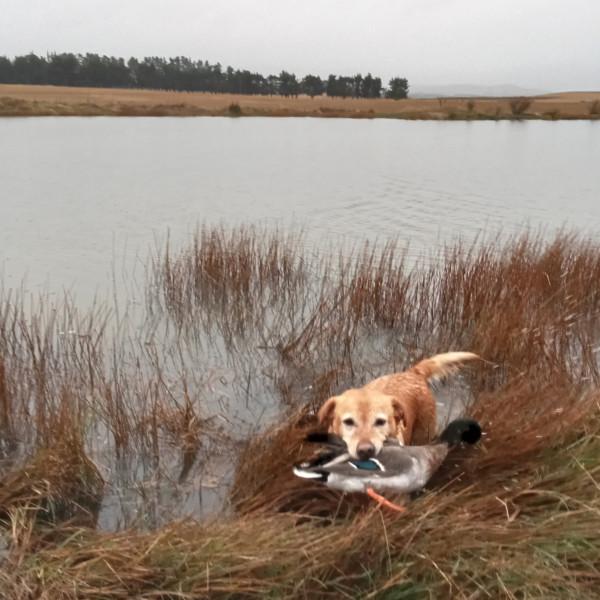
Meg on the job in the Maniototo. Photo: Scott Weatherall.
Meg loves the hunt but the days are starting to catch up with her ageing joints, says Scott Weatherall. Father, son and dog have gone game bird hunting every weekend of the season.
“She's gone real lame, like no good,” Scott says. “I took her to the vet after a good day when we got about 20-odd ducks. Mallards had been coming in in ones or twos and we’d shot all day.
“She still loves it, you know. But later on she was no good. I was pretty sure it was just arthritis. The vet goes, ‘It’s probably going to be her last season, isn’t it?’”
Scott messaged his partner.
“I texted Justine, ‘I think what the vet said was we've got to look to get a new pup’. Fair to say that didn't go down that well. And fair to say we don't have a new dog.”
Hunting honkers
George has been keeping a tally with the season almost over. And he’s in front. Scott has mainly done the calling and George the shooting.
What’s next for the Weatheralls in the off-season?
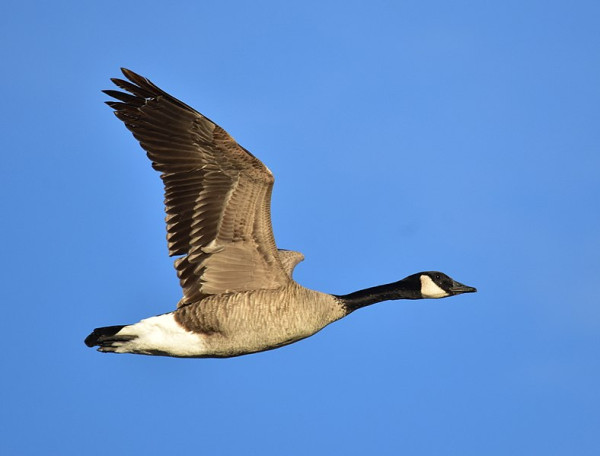
“He's keen as mustard to try and go somewhere where there are a large number of Canada geese,” Scott says. “So that's kind of next on the radar. They're big and loud and they definitely have got some charisma to them.”
Canada geese are a challenging off-season hunting opportunity for experienced waterfowlers. Successful goose hunting requires careful planning, scouting, teamwork, camouflage, and skilful shooting.
Once listed as a game species, Canada geese are now regarded as pests by farmers, who lobbied successfully to have them delisted from the game bird schedule by the then-Minister for Conservation. Since being removed from Fish & Game’s management in 2011, their population has continued to grow.
We encourage keen and proficient hunters to speak to farmers and organise goose hunts.
Slow-cooked goose salamis
The rich, gamey flavour of Canada geese may not be everyone’s favourite dish.
But talk to your local butcher about getting the right mix of goose and other meat ingredients for making salamis. Dunedin Hunting & Fishing’s Ryan Dunbar has this simple suggestion for how to cook delicious goose salamis:
Add:
- Goose salamis
- Two packets of Maggi devilled sausages mix
- Hot water
- Tomato paste
Cook in a slow-cooker on low for 8 hours.
National shoveler count
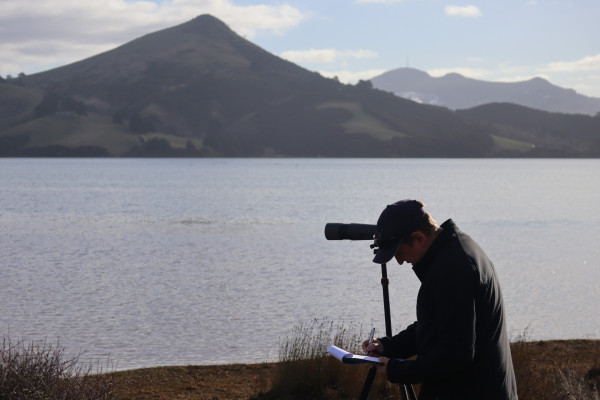
Otago Fish & Game officer Jayde Couper notes shoveler counts at Hoopers Inlet on Otago Peninsula. Photo: Bruce Quirey.
Otago Fish & Game took part in the national count of New Zealand shoveler ducks (kuruwhengi) last week after a slight delay caused by severe weather.
On the first Monday of August each year, Fish & Game teams across New Zealand fan out with binoculars and spotting scopes to about 300 sites to record shoveler, a native game bird.
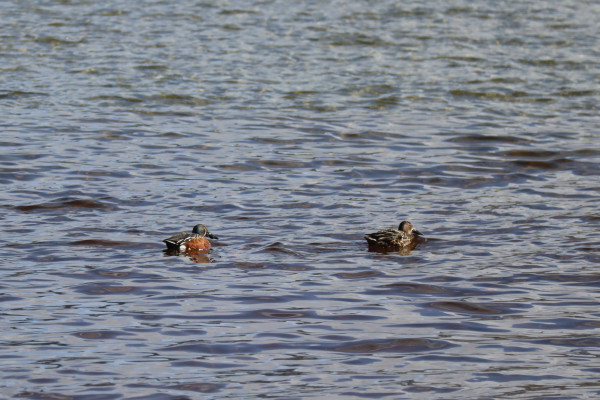
New Zealand shoveler, such as these at Hoopers Inlet, are recognisable by their broad, spoon-shaped bill. Photo: Bruce Quirey.
Areas counted in Otago included north of Dunedin, the Maniototo district, Ida Valley, Lake Dunstan, Tomahawk Lagoon, Otago Peninsula, Kaikorai Estuary, Takitakitoa Wetland, Taieri Mouth, Waihola, Balclutha and the Catlins. If new locations with good numbers of shoveler are identified, they are noted down for future counts.
Staff and volunteers also count grey teal and pukeko.
In Central Otago, staff headed out in cold and blustery conditions with clear skies and a brisk north-westerly breeze. Shoveler were often tucked into mobs of grey teal making for tricky counting.
In other parts of Otago, snow and ice delayed the counts until the weather settled, offering sunny but very cold conditions. On the Maniototo, good numbers of shoveler were spotted along with black swans, Canada geese, scaup, grey teal, mallards, paradise shelducks and a pair of crested grebes.
Parrie ‘special’ season
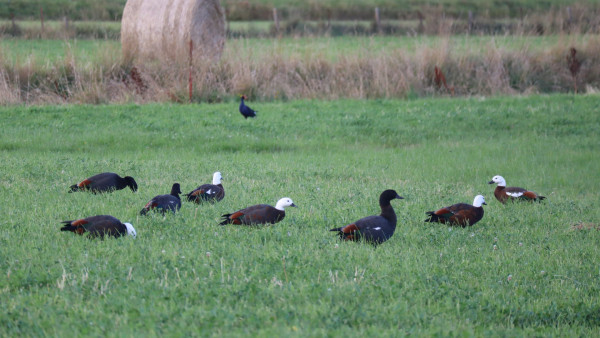
Your whole-season Game Bird Licence 2026 includes “summer” or “special” seasons in several Fish & Game regions early next year.
Otago’s special season for paradise shelduck is on March 6-14, 2027.
By summer’s end, it’s a good chance to dust off the hunting gear, teach younger or novice hunters before the next Opening Weekend, and help farmers hunt parries that might be causing a nuisance to crops. Here’s what else you need to know about the nine-day season:
- You will need your 2026 game bird whole season licence or a valid day licence
- Hunting is not permitted within 200 metres of open water
- Daily bag limit — 15 paradise shelducks
- Lead permitted
- Other game birds and protected species must not be hunted
- Check the 2026-27 Game Bird Season Regulations
Staying active off-season

Once the season is over, keep active and set yourself up for next year.
Here are some ideas for the off-season:
- Keep your dog fit and agile with regular training. Consider joining a gundog trialling group
- Scout out new hunting spots so you’re ready for next Opening Weekend
- Take time to thank the farmers who gave you access this year and start conversations with new landowners for future opportunities
- Look after habitat for ducks and other wildlife — get involved in planting, weed control, or riparian projects
- Repair, rebuild, or add some comforts to your maimai
- Clean, maintain and store your decoys, calls, and firearms
Bird flu – High Pathogenicity Avian Influenza (HPAI)
H5N1 Highly Pathogenic Avian Influenza (HPAI) has been detected in New Zealand.
Game bird hunting has continued. No game bird species have tested positive for H5N1. Fish & Game is working alongside Biosecurity New Zealand (MPI), the lead agency, and we will keep you updated as things develop.
For more information, click here: High Pathogenicity Avian Influenza (HPAI) - Fish & Game and keep an eye on our Facebook page.
Disclaimer:
The information presented in these news items is based on the context and regulations in place at the time of publication. Please note that some articles may include reference to laws and regulatory standards that have since changed. For the most current and accurate information please check our Fishing Licences & Regulations pages or our Hunting Licences & Regulations pages.