Otago - The Game Call - 16 July 2026
- Otago
- 16/07/2026
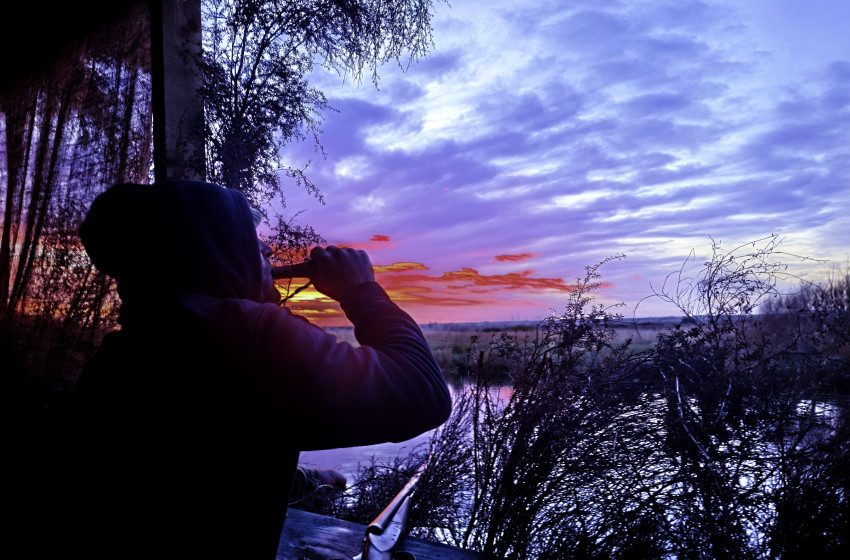
Make the most of the final fortnight
Welcome to another edition of The Game Call – your fortnightly Otago regional hunting report. The Otago mallard season has only two weeks to go, ending on July 26. Don’t miss your last chances to get out there chasing this wily species and harvesting tasty wild kai.
Pictured above: Our favourite pick from Round 6 of the “Shot of the Season” Otago game bird photo competition: this photo of Jared Anderson. “A cold clear morning on a local Catlins lagoon. Birds were few and far between, but the view and serenity made up for it!” Photo: Andrew McDiarmid.
See details below on how to enter and be in to win a Duck Hunters Prize Pack from Dunedin Hunting & Fishing!
In this issue:
- Watching the weather
- Fog and ice
- Finding birds
- Where to hunt
- Decoy spreads
- Mallards and geese
- Man's best friend
- Harvesting wild kai
- So much water
- Gundog trial weekend
- Pukeko survey
- 'Shot of the Season' Otago photo comp
- Otago key dates
- Local regulations
Watching the weather

A green head drops into the spread. Photo: Josh Hasler.
Wānaka son and father Josh and Michael Hasler are watching the weather to plan their next mallard mission this weekend.
“There are only two weekends to go in the mallard season,” Josh says. “We’ll be heading out this weekend again, for sure. Where we’ll end up depends on the weather.”
Josh and Michael have been out chasing ducks most weekends this season.
“It’s been a pretty good season really. This has been one of the better seasons of late.”
Josh has been going duck hunting with his dad for 14 years, and started shooting about 11 years ago.
“In the past seven or eight years I’ve been going out more, as I played a bit more rugby when I was younger.”
Fog and ice

The Naseby area was blanketed with snow last week whereas fog clung to the Maniototo Plain and other parts of Central Otago. Photo: Bruce Quirey.
Fog and a mostly frozen pond didn’t stop Josh Hasler and his dad Michael from having a successful hunt last weekend.
“We got onto the mallards in Central Otago. The fog didn’t put them off,” Josh says.
“We did our first couple of shots. Next minute the whole mob turned up. We pushed them all off and they came back slowly throughout the day. It was pretty relaxing shooting.”
Josh says that was probably the coldest day they’ve been out so far but it worked in their favour. They set out decoys at the end of the long pond that was largely frozen apart from where they were.
“Most of the birds we shot landed in the water. We did have a couple that skidded on the ice. The old man jumped in the kayak and broke the ice to get to them.”
Finding birds

Josh’s decoy spread on an irrigation dam. Photo: Josh Hasler
Josh has been doing “a bit of everything” when it comes to duck hunting spots this season, including irrigation dams, puddles, break-fence style paddocks and birds feeding on grain feed.
The pair shoot around Wānaka, across Central Otago, and in the Central South Island Fish & Game Region around Omarama as well. Josh and his dad usually scout on a Saturday and then shoot on the Sunday.
“We just look for the birds and that’s where we end up. We’ve noticed changes in the birds’ locations, especially with the changing weather two weeks ago and all that rain.
“We’d seen quite a few birds in some places, and then last weekend it was frosty and cold and they were all gone.”
Decoy spreads
Late in the season, it’s possible to make do with just a small spread of decoys. Mallards are starting to pair up.
Setting decoys out in pairs helps to match that behaviour. Lone drakes looking for mates can often be called in to just a few decoys.
While it’s not necessary to use a large spread of decoys — it doesn’t hurt either.
“We’re still putting out around 30-odd decoys and, depending on where we are, a few geese or swan decoys,” Josh says. “We’ll have maybe six or 12 geese in the spread. Sometimes the geese will bomb straight into that, and sometimes they’ll stay away from it.”
Mallards and geese
The Haslers have shot “pretty much all mallards and the odd goose that comes around” this season, Josh says.
“We haven’t actually shot anything else – no parries or even spoonies.”
Like many duck shooters, Josh says he tends to target mallards. However, the good news is that after the mallard season ends on July 26, paradise shelducks remain in abundance across the region and black swans (in Area B) can continue to be hunted until the end of August.
Josh has been cautious when identifying shoveler ducks (spoonies), because the Otago daily bag limit for shoveler is one drake.
“We’ve seen spoonies but they’re just a bit quick. We’ve been really careful with identifying them. Unfortunately we haven’t been able to pick them in time, and before you know it they’re gone.”
Man’s best friend

Xena waits in her blind for the next job. Photo: Josh Hasler
Seven-year-old female black Labrador, Xena, is an invaluable part of the Hasler team.
Asked how she went in the cold last weekend, Josh replied: “She wouldn’t rather be anywhere else, to be fair.
“She’s got a real good nose on her, which we’ve needed a couple of times when ducks have dived and gone under the banks.”
Harvesting wild kai

Xena hitches a ride on the kayak.
One of the most rewarding aspects of game bird hunting is bringing home wild kai. The Hasler family process their ducks like a well-oiled machine.
“Between me, mum and dad, we’ve got a bit of a system,” Josh says. “We’ll shoot them on Sunday, breast them on Monday and then sort through them.
“We’ll separate all the best ones for schnitzels and stir fries — all that kind of jazz. Anything with pellet holes goes into mince or to the butcher for salamis, sausages and chorizos.
“You definitely can’t let them go to waste.”
So much water

Phin scans flooded paddocks on the Taieri Plain. Photo: Bruce Quirey.
Too much water is sometimes not a good thing for waterfowlers — but it’s good for ducks.
During heavy recent rainfall, we drift-hunted an Otago river but found few ducks along the way — instead they were dispersed in large mobs across flooded paddocks.
Some low-lying areas were once lakes before they were drained. During periods of prolonged or intense rainfall, these areas remain prone to flooding and can temporarily revert to lake-like conditions.
We set out a decoy spread on a saturated paddock. A group of parries dropped into the decoys on semi-submerged grass, resulting in one taken. However, the mallards stayed out in the temporary “lake”. Decoys were shifted and we hid in a tree belt. We even had a natural “motion decoy” — a little shag swimming and feeding on the drowned worms.
Passing mallards circled but refused to commit. We could only watch as they cupped into other parts of the “lake” several paddocks away or continued on their journey.

At the end of the morning, we walked up on a few ponds and eventually came onto some ducks as well as a hare on a fence row. Duck pancakes and Italian-style hare cacciatore will be served!
Gundog trial weekend
Working Gundogs NZ Inc is inviting hunters, handlers and dog enthusiasts to its inaugural retrieving trial weekend at Toko Mouth in South Otago.
The two-day event will run on Saturday 1 August and Sunday 2 August, featuring three trial classes from Novice through to Open Championship, showcasing the skill, steadiness and training of working gundogs in realistic field conditions.
- For further details or to register interest, contact Terry and Maree Wilson at [email protected].
- Local training days are also held monthly in the South Otago region for those wanting to get involved or improve their dog work ahead of the season.
Pukeko survey

Otago Fish & Game will conduct its annual pukeko monitoring survey during the first week of August.
If you see any groups of pukeko greater than 10, please contact Steve Dixon with the numbers of pukeko seen and a location (GPS coordinates if possible). Email [email protected]
‘Shot of the Season’ — Otago Game Bird Photo Competition
Show us your best photo shots from your Otago game bird hunts!
We're celebrating the photographers among our hunters with the "Shot of the Season" photo competition.
Each fortnight, we'll select a favourite photo that captures the essence of game bird hunting in this region. Every featured photographer will go into the running for a duck hunters’ prize pack thanks to Dunedin Hunting & Fishing NZ at the end of the season.
Submit your entries:
- Email: [email protected]
- Subject line: Photo competition
- A brief caption describing the photo including names (from left) of any people or pawed hunting buddies.
Fortnightly favourites featured each edition of The Game Call during the season.
Rules:
- Photos must be taken during the 2026 game bird hunting season in the Otago Fish & Game region.
- All entries must include the hunter's name, contact details, and date/location of the photo.
- Photos must showcase ethical hunting practices (proper bag limits, respecting the resource, etc.)
- Submissions accepted via email or drop us your photo and details on the Otago Fish & Game Facebook page.
- Fortnightly winners will be featured on our website and social media.
- All fortnightly winners automatically enter the grand prize draw.
- Staff and immediate family of Otago Fish & Game are ineligible.
- By entering, you agree your photos may be used for future Otago Fish & Game promotional material.
Otago key dates
- July 26 — last day of mallard-grey and shoveler season.
- August 30 — last day of paradise shelduck and black swan (Area B only) season.
- August 30 – last day of upland game season.
Local regulations
Be sure you know the local game bird hunting regulations.
- Each region has its own set of regulations working in conjunction with the national regulations.
- These include bag limits and season lengths.
- Download the regulation booklet for each region from the Fish & Game website by selecting here.
Grab your hunting licence online and let the adventures begin.
Got any Otago game bird hunting news?
Send your hunting news and photos (with hunters’ names) to [email protected] for consideration in the Regional Hunting Report.
Disclaimer:
The information presented in these news items is based on the context and regulations in place at the time of publication. Please note that some articles may include reference to laws and regulatory standards that have since changed. For the most current and accurate information please check our Fishing Licences & Regulations pages or our Hunting Licences & Regulations pages.