Otago - The Game Call - 21 May 2026
- Otago
- 21/05/2026

Tonight’s dinner sorted
Welcome to another edition of The Game Call – your fortnightly Otago regional hunting report.
Pictured above: the magic of anticipation waiting for more birds on a foggy, still dawn in coastal Otago last weekend. Photo: Dean Halvorson.
In this issue:
- Keeping up family traditions
- Bringing the hunt to the birds — irrigation ponds
- Floating maimai – the specs
- ‘Shot of the Season’ Otago photo comp
- Preliminary data backs up what we suspected
- Upland season opens soon
- Grab a mate and head out
-
Local regulations
Keeping up family traditions
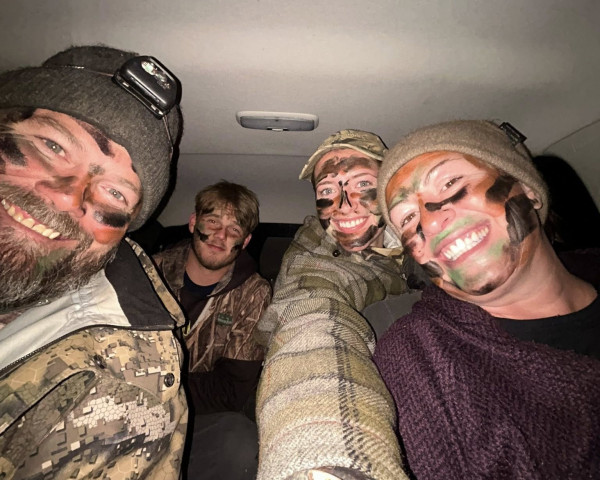
Heading to the maimai on Opening Morning are (from left) Jeff Pont, Talford Cullum (from the UK), Kassidy Pont and Amie Pont. Photo supplied.
Opening Weekend in the Maniototo is about far more than ducks for the Pont whānau — it’s about community, connection, and family traditions across generations.
Amie Pont says the social atmosphere remains a major highlight of the game bird season.
“It’s better than just doing an adventurous activity — it’s eating together — a bit of good competition," Amie says. "Then when you sit down, it's just really nice to have a storytelling time.”
Amie, a regional field advisor for Herenga ā Nuku / Outdoor Access Commission, says local traditions still revolve around the annual opener — even the local rugby schedule adapts so the community can congregate for hunting.
This year, the family's floating maimai project on a local irrigation pond added a new dimension to the weekend. Despite lower mallard numbers than hoped, they harvested around 30 birds, including mallards, paradise shelducks, and Canada geese.
For Amie, the hunting is only part of the attraction; it’s about "just all of us getting to know each other better".
She is also encouraged to see more women getting involved, including her own daughters who are now planning to get their firearms licences. “Some of the family members only had girls, so that changed things," Amie says. Her daughter Kassidy shot her first duck, a parry, from the pop-up blind with dad Jeff. "Everybody's all out and having a good time together.”
Bringing the hunt to the birds

Scanning the skies for any sign of ducks aboard the floating maimai on a Maniototo irrigation pond are (from left) Matt McSkimming, Talford Cullum and Amie Pont. Photo supplied.
As large irrigation ponds pop up increasingly across Otago, they are changing bird behaviour.
These big, open waters become bird magnets — and many are not hunted on Opening Weekend, providing safe refuge for ducks.
Birds also often choose to settle in the middle, because irrigation ponds offer little natural cover around their margins.
Maniototo hunters Jeff Pont and Matt McSkimming decided the solution was to take the shooting to the birds by building a floating maimai.
Jeff, a rural contractor, and Matt spent several years planning and collecting materials before launching the platform on a relatively new private irrigation pond near Ranfurly, with the full support of the landowner. Jeff says the design is incredibly stable and carried up to seven people on Opening Weekend. He believes it’s capable of safely carrying up to 12.
Operating the maimai required careful logistics. Firing directions were strictly managed to ensure nobody shot back towards the pond’s lining. To get into position, they used electric outboards to maneuver the platform before anchoring it. When birds began landing on the opposite bank later in the day, they simply moved the platform — and it helped to move mobs towards hunters in pop-up blinds on the bank.
While the challenging opening conditions meant they didn’t shoot big numbers, large mobs of ducks, Canada geese and seagulls were seen around the structure prior to Opening Day.
Jeff says the crew might give the floating maimai another crack this weekend before deciding on its long-term future, as it will eventually have to be removed from the pond.
Floating maimai — the specs
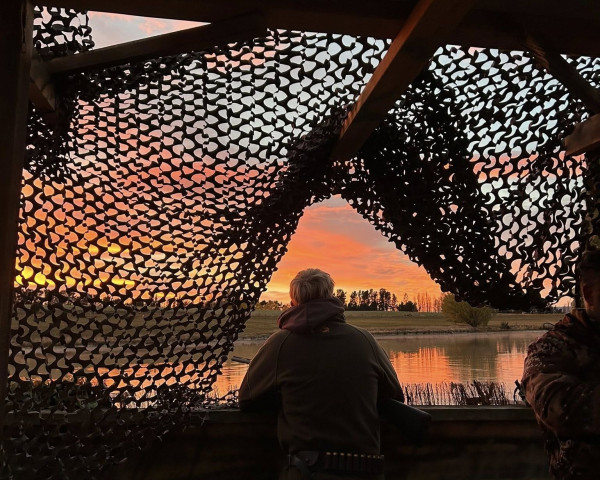
Visiting UK citizen Talford Cullum, aboard the floating maimai, probably won’t want to go home after Opening Day sunrises like this on the Maniototo! Photo supplied.
Jeff Pont's floating maimai design:
- Footprint Dimensions: 4.4 metres square.
- Structural Frame: Large, recycled pallets.
- Walls, flooring, roof: Purchased plywood.
- Camoflauge: Brushwood screens, camo nets, camo paint.
- Flotation Base: 12 drums (3 rows of 4) wrapped in silage tape. Drums secured with straps inside the gap under the platform.
- Added Stability: Dual outriggers each with a drum.
- Mobility: Propelled across the pond by electric outboards.
- Anchor: 40kg tractor weights.
‘Shot of the Season’ — Otago game bird photo competition

Our favourite pick from Round 2 of the “Shot of the Season” Otago game bird photo competition: this photo of a happy young Maniototo hunter, Sophia Becker (aged 5), helping dad collect the ducks up after a successful second opening day. “Smile says it all,” says her dad, Jimmy Becker. “Fourteen in total for the morning and Sophia was as excited as Christmas.”
Show us your best photo shots from your Otago game bird hunts!
We're celebrating the photographers among our hunters with the "Shot of the Season" photo competition.
Each fortnight, we'll select a favourite photo that captures the essence of game bird hunting in this region. Every featured photographer will go into the running for a duck hunters’ prize pack thanks to Dunedin Hunting & Fishing NZ at the end of the season.
Submit your entries:
- Email: [email protected]
- Subject line: Photo competition
- A brief caption describing the photo including names (from left) of any people or pawed hunting buddies.
Fortnightly favourites featured each edition of The Game Call during the season.
Rules:
- Photos must be taken during the 2026 game bird hunting season in the Otago Fish & Game region
- All entries must include the hunter's name, contact details, and date/location of the photo
- Photos must showcase ethical hunting practices (proper bag limits, respecting the resource etc.)
- Submissions accepted via email or drop us your photo and details on the Otago Fish & Game Facebook page
- Fortnightly winners will be featured on our website and social media
- All fortnightly winners automatically enter the grand prize draw
- Staff and immediate family of Otago Fish & Game are ineligible
- By entering, you agree your photos may be used for future Otago Fish & Game promotional material
Preliminary data backs up what we suspected
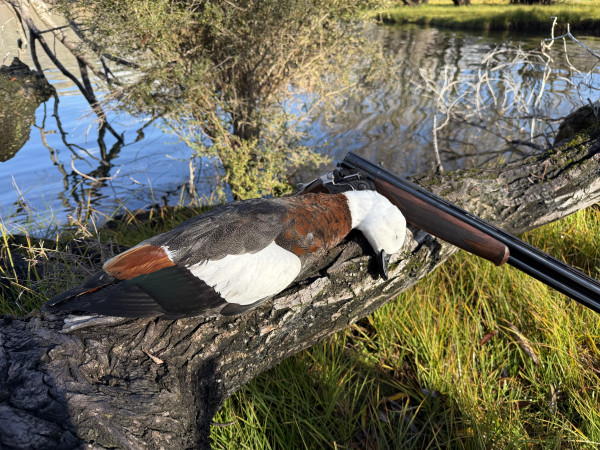
Paradise shelduck/pūtangitangi put on the sixth-highest average weekend bag in over 30 years. Photo: Mason Court.
The Opening Weekend data is starting to trickle in, and it confirms what a lot of you already suspected over the coffee thermos: it was a pretty lean start to the season for many Otago hunters when it comes to mallards.
Preliminary stats from our harvest survey calls show mallard and grey duck (greylard) numbers were hard to come by, leading to the lowest average Opening Weekend bag and success rates we’ve seen across 2010-2026 survey data.
That said, the weekend wasn’t a total write-off. Parries put on a great showing, yielding the sixth-highest average weekend bag in over 30 years. A few hunting crews also managed to defy the odds and bring home some great numbers.
A big thanks to everyone who took the time to chat with us for the harvest survey — your info is incredibly valuable for managing the game resource. We will continue to run these harvest surveys throughout the season, so please keep taking those calls if you get a ring.
If your main pond was a bit quiet on opener, don't go cleaning the shotgun and putting it away just yet. The best thing about the Otago mallard season is its length — we still have nearly two and a half months of mallard hunting ahead of us.
As the winter conditions set in and the weather plays ball, bird behaviour will change, opening plenty more hunting opportunities.
Upland action opens on long weekend

Junior hunter George Weatherall with a California quail cock bagged in Central Otago last season. Photo: Scott Weatherall.
Now is the time to be scouting locations and asking permission from landowners for access for upland game bird hunting.
- When: The upland game bird season in Otago opens on Saturday, May 30, 2026, the start of the King’s Birthday long weekend.
- Habitat: Quail are distributed in the drier parts of Central Otago and Southern Lakes districts. They’re found in shrubland on hillsides, scrubby river margins, forestry, orchards, and vineyards. Favoured habitat includes briar rose, matagouri, bracken, blackberry and gorse.
- Private Access: Most hunting for California quail takes place on private land. Permission to access farmland must be obtained first from farm owners. Access to private land is a privilege, not a right.
- Important: Be sure your dog has an up-to-date dosage with a Praziquantel drug at least 48 hours before you go to prevent the spread of tapeworms and protect farmer’s stock from sheep measles. Carry proof of dosing.
- Public Access: Publicly available land for upland game bird hunting is highly limited. To hunt on these lands, you are required to hold both a valid Fish & Game hunting licence and a specific DOC game bird hunting permit. The Department of Conservation’s online permit system offers access to game bird hunting on Public Conservation Land at:
- Bendigo Scenic Reserve (upland game)
- Blackstone Hill Conservation Area (upland game)
- Diamond Lake and Lake Reid (waterfowl)
For more information, visit the Otago - Fish & Game Where to Hunt page.
Grab a mate and head out
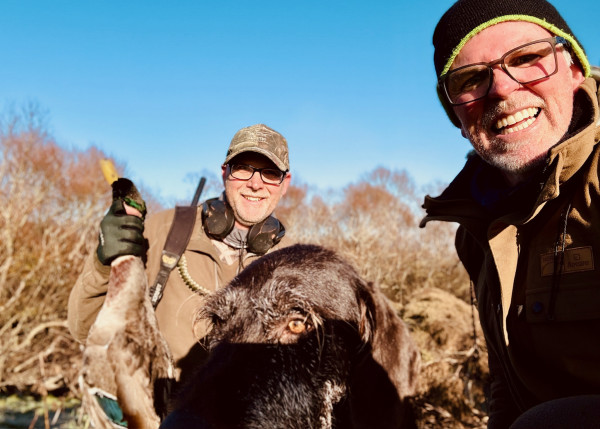
Bruce Quirey (left), Phin the Cesky Fousek, and his old school mate Dean Halvorson, who came along as an observer on a successful hunt last weekend. Photo: Dean Halvorson.
Whether you missed the start of the season or want to introduce a friend to the sport, day licences are the perfect way to get back out there.
Day licences are on sale now.
- Adults: $27
- Juniors (12–17): $10
Some of the best waterfowl hunting happens once the season settles in.
There’s nothing quite like heading outdoors with good company and returning with fresh wild kai for the family table. With plenty of season left, good hunts are likely still ahead of you.
A day licence entitles the holder to hunt or kill game for one full day during the open season across all regions.
View all licence options: Standard Licence Options
Check, Clean, Dry
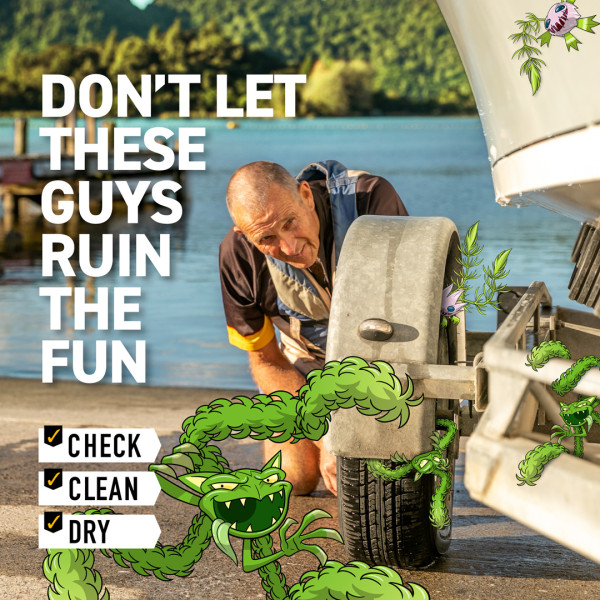
As the season progresses, hunters move around in pursuit of birds in different areas.
Many licence holders will be crossing from one region to another. Destructive organisms can hitch a ride in a single drop of water on decoys, waders, boats and trailers. Invasive freshwater pests such as lake snow, lagarosiphon, didymo and golden clams pose serious threats.
South Island hunters can play a vital role in protecting our waters by following three simple steps between visits to different waterways:
- CHECK: Remove all plant and other material from items that have been in the water.
- CLEAN: Mix 10% dishwashing detergent with water, use to soak or scrub all items and leave wet for 10 minutes.
- DRY: Dry items completely and leave for at least 48 hours.
North Island hunters are advised to follow the clam-inclusive Check Clean Dry protocol that will kill the clam as well as other invasives.
Local regulations
Be sure you know the local game bird hunting regulations.
- Each region has its own set of regulations working in conjunction with the national regulations.
- These include bag limits and season lengths.
- Download regulation booklets for each individual region from the Fish & Game website by selecting here.
Grab your hunting licence online and let the adventures begin.
Got any Otago game bird hunting news?
Send your hunting news and photos (with hunters’ names) to [email protected] for consideration in the Regional Hunting Report.
Warm barrels,
The team at Otago Fish & Game
Disclaimer:
The information presented in these news items is based on the context and regulations in place at the time of publication. Please note that some articles may include reference to laws and regulatory standards that have since changed. For the most current and accurate information please check our Fishing Licences & Regulations pages or our Hunting Licences & Regulations pages.