Otago - The Game Call - 4 June 2026
- Otago
- 4/06/2026
Welcome to your latest edition of The Game Call – your fortnightly Otago regional hunting report.
In this issue:
- Waterfowling versus weather
- Scouting know-how
- Last-minute change pays off
- Valued time spent with the kids
- Upland game season kicks off
- 'Shot of the Season’ Otago photo comp
- Local regulations
Waterfowling versus weather
A lack of a windy and wet conditions that traditionally get ducks moving is a common theme among waterfowl hunters so far this season. Some hunters describe the weather as being "a month out" from where it would normally be, with few storms, little wind and a lack of puddles and flooded ground.
But game bird hunting isn’t just about numbers — it’s about spending time together in the outdoors. We’ve heard some great stories from parents and their kids getting out and bagging some birds.
This week’s showers and rain will create a few more puddles. The weekend outlook is mostly fine with gentle to moderate winds. As one person put it, hunters are "hanging out for some terrible weather over the next two months".
Ducks around but unpredictable

Meg retrieves a Canada goose on a freezing cold morning in the Maniototo. Photo: Scott Weatherall.
Hunters are still finding birds, but movements have been inconsistent and — for some hunters — locating ducks on public water has been tricky. Ducks are shifting locations frequently, with numbers varying significantly from day to day.
Birds may be using lakes, ponds or feeding paddocks one day before disappearing and reappearing elsewhere a few days later.
Birds appear increasingly wary as the season progresses.
Hunters who locate active feeding areas are still finding reasonable numbers of birds. Harvesting birds appears highly dependent on being in the right place at the right time.
Scouting know-how
With ducks becoming increasingly wary and bird numbers varying from day to day, successful hunting often comes down to time spent scouting rather than luck.
This week we asked Otago duck hunters Chris Bell, Dan Kunac and Gus McSkimming their top tips for scouting.
Learn the birds' patterns
Identify where ducks are feeding, loafing and roosting, and when they are using those areas. Watch for patterns such as:
- Whether birds arrive in the morning, evening or only during windy conditions.
- Which paddocks they are feeding in.
- Where they are travelling to and from at dawn and dusk.
- How weather influences their movements.
Evening paddocks
Hunters noted that ducks are often found on ponds and rivers in the morning before moving to paddocks to feed in the evening. Grain paddocks can appear empty for much of the day before birds begin trickling in during mid-afternoon, with larger numbers arriving close to dark.
Cover the kilometres
Successful scouting often involves plenty of driving. Watch ducks flying at dawn and dusk and follow their flight lines to identify feeding areas and roost sites. Paying attention to their movements while you're travelling between home and work can reveal valuable clues.
Technology and good optics
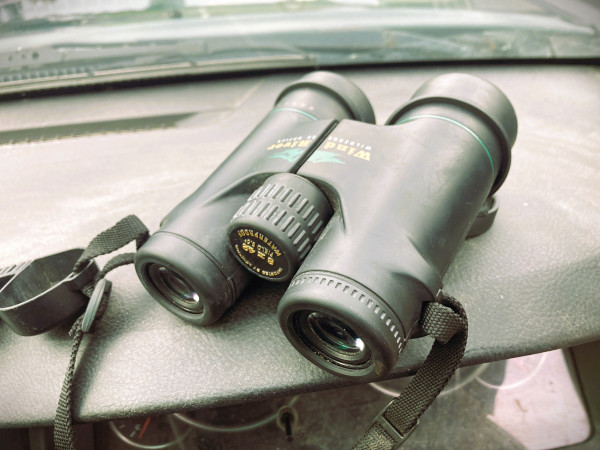
A quality pair of binoculars is essential for scouting. Technology such as Google Maps can help locate ponds, effluent ponds and other water bodies that may be hidden from roadside view by trees or terrain.
Stay current
A paddock holding ducks on Monday may be empty by the weekend. Food sources can be quickly exhausted, particularly when large numbers of birds are using an area. Regular scouting right up to your planned hunt is essential.
Access is everything
Finding ducks is only half the battle. Securing permission from landowners and building relationships face-to-face is the key. If you already have access to a property, investing time to monitor it can pay dividends.
Natural cover
If you’ve located ducks feeding or loafing, use nearby natural cover such as shelterbelts, drains and hedgerows.
Putting time into observation, learning bird movements and adapting to changing conditions remains the best way to find success during the remainder of the season.

Pay attention to prevailing winds. On big water, birds will seek out sheltered corners. Photo: Bruce Quirey
Use the weather to your advantage
Wind remains one of the best hunting conditions. Ducks are generally more predictable in windy weather and are more inclined to commit to a landing.
Read more
In the 2026 game bird issue of Fish & Game magazine, Hamish Carnachan walks through the art of scouting private land, the door-knock dance with farmers, and how to hold onto access once you've earned it.
Select here to read the article.
Last-minute change pays off
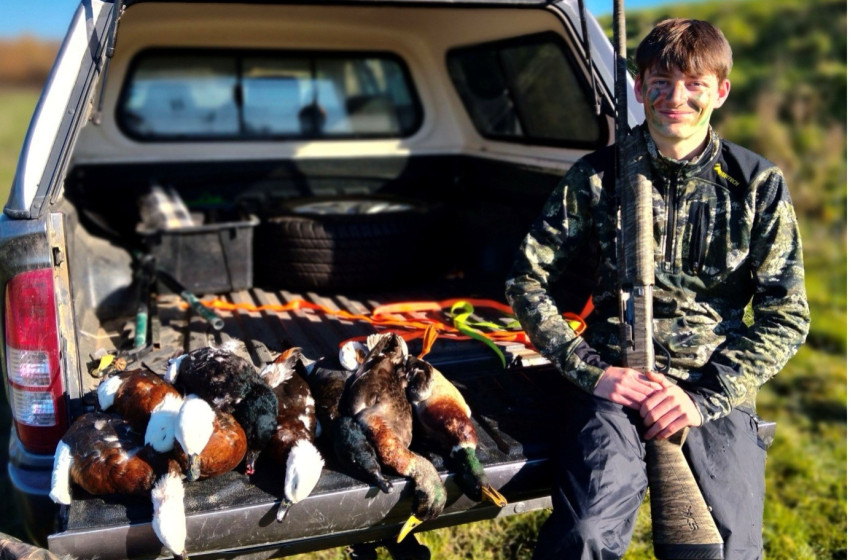
Securing an Opening Weekend spot came down to the wire for Jonathan Wagstaff and his 17-year-old son, Adam. After late notice that they had lost access to their usual group spot, the pair had to scramble and improvise. They got a farmer’s permission to hunt over a long, narrow, unfenced stretch of water near a local river — no pre-feeding, and no established maimai. Relying on a pop-up blind hastily brushed in with old fake grass, a camo net, and dead branches against a floodbank, Jonathan braced himself for a slow weekend.
"Like most fathers, you want something to happen for your kids," Jonathan says. "I was quite nervous and almost set for disappointment."
Instead, the improvised set-up delivered. The duo managed 22 birds — mostly parries with a few river-hugging mallards — over the weekend. To top it off, Adam won the father-son bet by dropping the first bird of the morning with his new shotgun, a victory Jonathan laughs that he will "never hear the end of".
The success has carried through the season, with the pair heading out for two more hunts. For Adam, who has been shooting since he was young with a .410 and 20-gauge, mastering the quick, sit-up-and-shoot reaction time of a layout blind is a new learning experience.
A highlight came just last weekend when a shoveler duck (spoonie) came into the spread. It was Adam's first time seeing one in the field, and a welcome sight for Jonathan, who considers the spoonie his favourite New Zealand game bird (a close rival to his days shooting woodcock in the UK).
Ultimately, the bag numbers are just a bonus. For Jonathan, the real win is seeing his son trade gaming and electronics for early mornings in the great outdoors.
"A big part of it is if he’s happy and smiling, it’s been a good day. Good memories, good times. Which is what it’s all about."
Valued time spent with the kids

A harvest of mallards and a parry from the Taieri area last weekend. Photo: Scott Weatherall
While this season may not be serving up perfect weather for waterfowling, that’s not stopping father and son Scott and George Weatherall from making the most of it with their loyal Lab, Meg.
“It’s not all about the hunting or the kill, but it’s about the experience,” Scott says.
Last weekend, the duo took their dinghy up to Lake Waipori and bagged some mallards and a parry. “Gosh, there were heaps of ducks around the Taieri on the weekend,” Scott says. “There were more on Waihola, not as many around Waipori. There were so many ducks in that catchment.”
Scott says they’ve never shot their bag limit, nor is that his goal — though George might beg to differ.
“We’ve been out every week so far,” Scott says. “Sometimes we shoot out to a local estuary. It doesn't really matter what the weather is. We head out when we can and make use of the available time. Even if we go for a jump shoot there’s minimal times when we get nothing. I’m all about the experience and opportunity.”
Thanks to the generosity of a local landowner, they’ve also been lucky enough to hunt on a Maniototo property — even if it was minus 5 degrees.
Scott says it’s about the value of spending time with his children.
“I just spent a couple of hours with my son George at the local estuary a couple of weeks ago, and he kept talking for the whole time. It’s not all about the hunting or the kill, but it’s about the experience.”
Upland game season kicks off
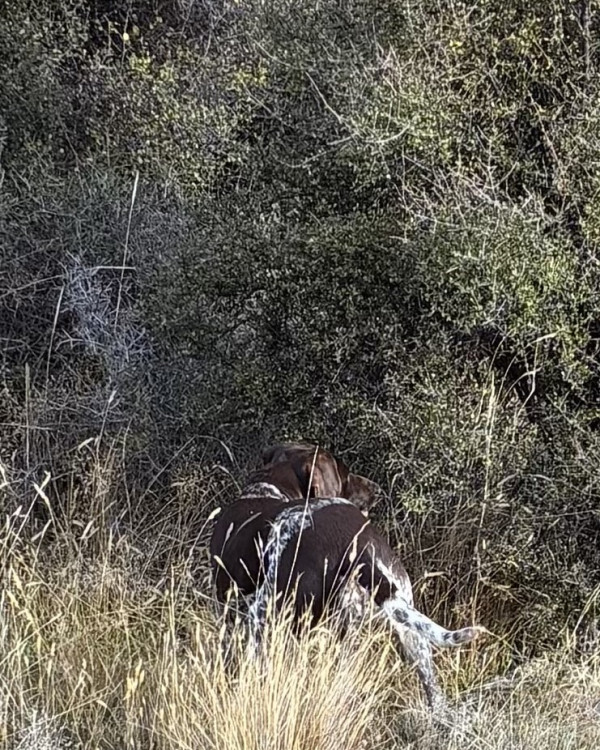
German shorthaired pointer Storm marks a quail in Central Otago last weekend. This one was successfully harvested. Photo: Andrew Pattillo
Central Otago hunters David Pattillo, his son Andrew, and a mate hit the hills for the Opening Weekend of the upland game bird season. While the birds proved a bit elusive, the trio still enjoyed a weekend of working the dogs and getting away into the high country.
The team secured seven birds on Saturday and two on Sunday, but David notes the birds "didn't really play ball." The unusually mild weather seemed to keep the birds from forming tight coveys.
"I don't think they coveyed up tight yet because of the temperature," David says. "They tended to disperse and go in all different directions. Depending on where they go, they can be hard to flush."
Habitat and predators were also front of mind. David observed that changes in habitat, like briar spraying, can make birds disappear quickly. However, he was pleased to see that possums — which he notes "have a lot to answer for" regarding vulnerable quail — had been heavily controlled on their hunting block.
All about the dogs
For David, the true joy of upland hunting lies in the experience rather than the tally. The weekend was a great run for their dogs, which included David’s Vizsla, Andrew’s German shorthaired pointer (GSP), and their mate's GSP.
"It's important the dogs are under control. Upland game is pretty fun with the dog. In fact, you can't really do it without them."
Despite the scattered birds and mixed reports from other hunters in the area (including one group that came home empty-handed), the Pattillo crew is already planning to head out to a few different spots next weekend.
David sums up the true appeal of upland game hunting:
"The dogs, and the walk. Getting away up in those hills. It’s quite nice. I enjoy it more than duck shooting. You don't know what you're going to get ... but it’s not really about the numbers."
‘Shot of the Season’ — Otago Game Bird Photo Competition

Our favourite pick from Round 3 of the “Shot of the Season” Otago game bird photo competition: Adam Wagstaff (17) on a cool, foggy start in layout blinds. Photo: Jonathan Wagstaff.
Show us your best photo shots from your Otago game bird hunts!
We're celebrating the photographers among our hunters with the "Shot of the Season" photo competition.
Each fortnight, we'll select a favourite photo that captures the essence of game bird hunting in this region. Every featured photographer will go into the running for a duck hunters’ prize pack thanks to Dunedin Hunting & Fishing NZ at the end of the season.
Submit your entries:
- Email: [email protected]
- Subject line: Photo competition
- A brief caption describing the photo including names (from left) of any people or pawed hunting buddies.
Fortnightly favourites featured each edition of The Game Call during the season.
Rules:
- Photos must be taken during the 2026 game bird hunting season in the Otago Fish & Game region
- All entries must include the hunter's name, contact details, and date/location of the photo
- Photos must showcase ethical hunting practices (proper bag limits, respecting the resource etc.)
- Submissions accepted via email or drop us your photo and details on the Otago Fish & Game Facebook page
- Fortnightly winners will be featured on our website and social media
- All fortnightly winners automatically enter the grand prize draw
- Staff and immediate family of Otago Fish & Game are ineligible
- By entering, you agree your photos may be used for future Otago Fish & Game promotional material
Local regulations
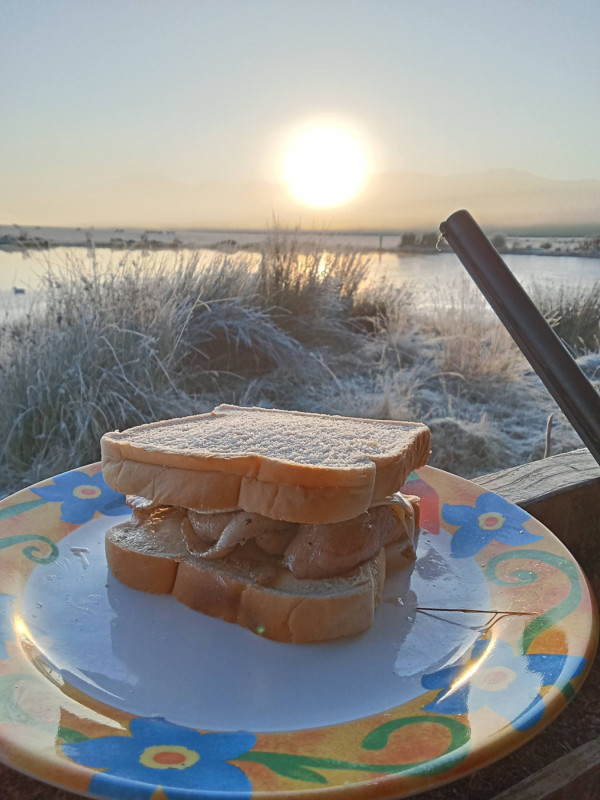
Keeping the lad keen with a hot bacon and egg butty on the Maniototo. Photo: Scott Weatherall.
Be sure you know the local game bird hunting regulations.
- Each region has its own set of regulations working in conjunction with the national regulations.
- These include bag limits and season lengths.
- Download regulation booklets for each individual region from the Fish & Game website by selecting here.
Grab your hunting licence online and let the adventures begin.
Got any Otago game bird hunting news?
Send your hunting news and photos (with hunters’ names) to [email protected] for consideration in the Regional Hunting Report.
Disclaimer:
The information presented in these news items is based on the context and regulations in place at the time of publication. Please note that some articles may include reference to laws and regulatory standards that have since changed. For the most current and accurate information please check our Fishing Licences & Regulations pages or our Hunting Licences & Regulations pages.