Reel Life October 2026 - Central South Island
- Central South Island
- 19/10/2026
November Fishing
November is a favourite month to fish for many anglers, and for good reason.
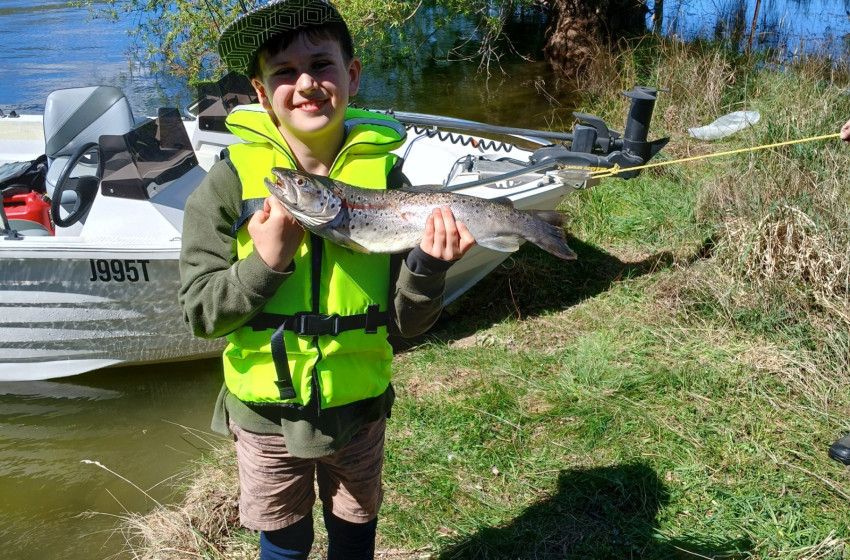
Image above: Miller Weston with his Lake Opuha brown trout caught while out with grandad and the South Canterbury Anglers Club during the school holidays
November fishing highlights include:
- Ideal spring flows in lowland waters like the Opihi River provide a great opportunity for both spin and fly anglers;
- Sea-run brown trout are in the tidal reaches chasing silveries (common smelt);
- Post-spawned rainbows are hungry and in search of an easy feed in the canals and hydro lakes;
- Spring brings beetles to our grassland streams – read how to fish them here;
- Perch and tench increase in feeding activity as water temperature increases;
- Twizel Kids Salmon Fishing Day runs on 7 November (see article below for info);
- High-Country Opening means all waterways are open from 7 November.
Spring Tip for Lake Benmore and Pukaki Anglers
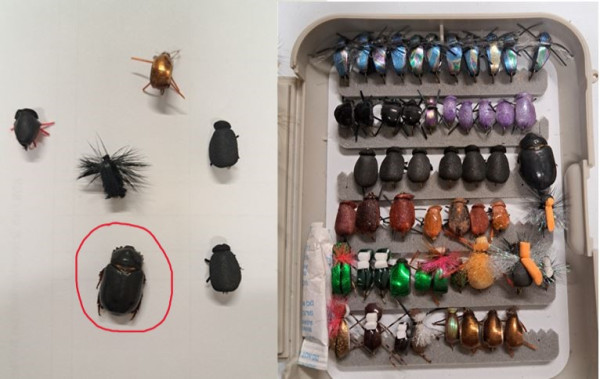
Beetles will be on the menu soon; stock up on beetle flies to match the hatch. One of the beetles above is a live black beetle found on the Rangitata River in November last year
Benmore diet research shows that during spring; some trout take full advantage of the opportunity to feed on small migrating sockeye smolt.
After hatching, sockeye fry emerge from their redds and head downstream in search of lake habitat — making them an easy meal for hungry brown trout.
Now is the perfect time to target these trout using a small silver lure or softbait around river and stream inflows during the spring months.
Although the research was conducted at Lake Benmore, the same approach is worth a try at Lake Pukaki, which also has a high population of sockeye salmon, and trout are likely to show similar feeding behaviour.
The same diet research also highlighted the prevalence of snails in Benmore trout diets. We recommend using a fly that matches the snails present at your fishing spot and use a slow or dead drift retrieve near structures or weed beds.
CSI ‘Low-country’ Opening Day 2026
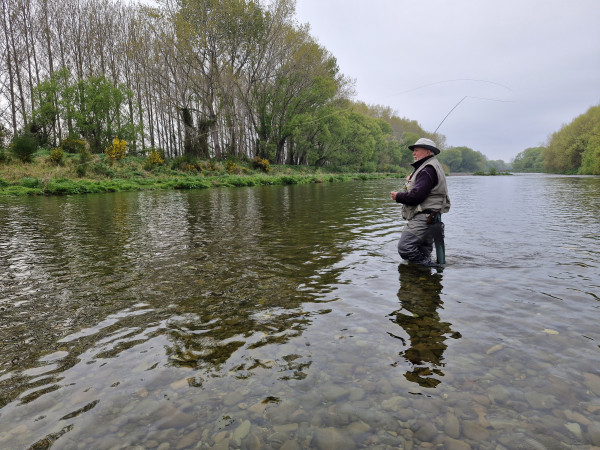
Ralph De Clifford fishes the Temuka River for the first time on Opening Day 2026.’ Photo credit: Rhys Adams
The 2026/27 fishing season kicked off with the opening of our low-country waterways on Thursday 1 October. Rangers were active across the region and caught up with 66 compliant anglers in the Waitaki, Pareora, Opihi and Orari Catchments. One angler was found in breach of the sports fishing regulations, using more than one rod.
The Opihi River Catchment offered great water levels, as did the Rangitata, Orari and Pareora rivers. High flows on the Waitaki made shoreline access difficult, however jet boat anglers had success. Lake Opuha has been popular since Opening Day with quite a few anglers submitting School Holiday catches to the weekly fishing report.
See more photos from Opening Day in our facebook post
CSI High-country Opening – 7 November 2026
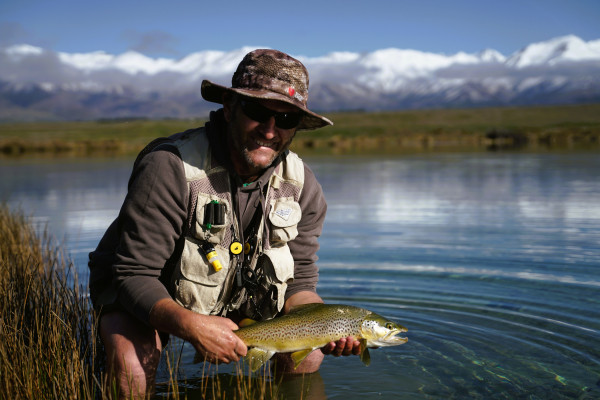
Glen Currall with this gorgeous high-country brown trout in the Mackenzie area on High-country Opening last year. Photo credit: Jase Van Beers
The first Saturday of November sees our high-country waterways open for fishing.
This is not to be confused with some of our neighbouring regions' High-Country Opening Days which is November 1st.
From rivers such as the Tekapo, Twizel, Maerewhenua and Hakataramea to popular lake destinations including Lake Alexandrina, Lake Heron and the rest of the Ashburton Lakes, plenty of high-country options open on 7 November.
Some of our dedicated high-country anglers don’t purchase their fishing licence until closer to High-Country Opening so if that’s you, get yours online here or pop in-store to support your local businesses and treat yourself to a new fly or lure.
In your high-country travels, please be mindful of farmed stock and seek permission to cross private land.
Lake Heron / Ōtūroto New Regulation Reminder – Single Hooks Only
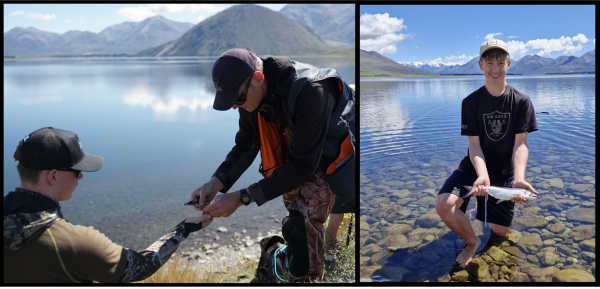
Ranger Hamish Stevens educates some Lincoln High School students at Lake Heron last season on the incoming regulations and demonstrates how to replace a triple hook with a single. The lessons paid off for Thomas Hampton who landed and released the young salmon pictured.
From 7 November onwards, no angler may use a lure with more than one hook and one point when fishing in Lake Heron.
The single hook regulation aims to achieve quick and easy unhooking of undersized salmon to reduce injury risk. Minimising the handling of landed fish helps to ensure they are released with the best chance of survival.
The regulation change covers all types of fishing at Lake Heron. For example, spin anglers sight-fishing for brown trout cruising the shallow margins must use single hooks from November 2026.
This decision was made in the 2025 triennial anglers notice review but implementation was delayed by one season to allow time for anglers and retailers to equip themselves and for rangers to educate anglers on the upcoming change.
A voluntary additional action you can take for even easier releasing of fish is to crimp (flatten) the barb on your hook with pliers.
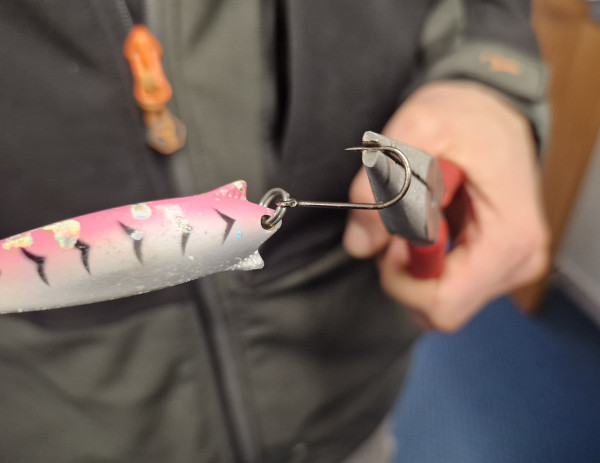
Demonstration of using pliers to crimp the barb on a single hook for easier release of fish.
2026 Kids Salmon Fishing Day
Date: 7 November 2026.
Venue: Loch Cameron, Glen Lyon Road Twizel.
Register at the tent from 8.30am; fishing starts on the horn at 9am.
Click here for more information.
Contact: [email protected] or 03 615 8400 for further enquiries.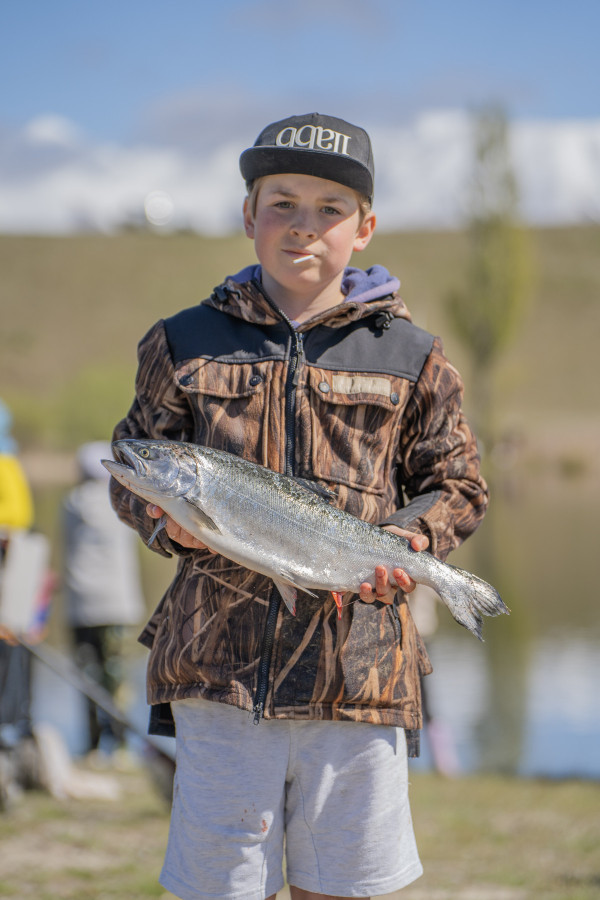 Taylor Spiers with his salmon at the 2025 Kids Salmon Fishing Day - Photo credit: Braided Creative
Hard Labour at the Canals
This Saturday, 24 October, the Twizel Hard Labour multisport event is on.
Kayakers will be active from around 8.30am until 11am, racing from Lake Ruataniwha through the Ōhau B and Ōhau C canals and into Lake Benmore via the Ōhau C tailrace.
Lake Ruataniwha is closed to all powered craft from 7am until 9am.
Please do not fish while kayakers are passing, particularly at the SH8 bridge above the Ōhau B canal. This annual event has Meridian approval.
Jet Boating – Where and When Can Jet Boats be Used on Rivers?
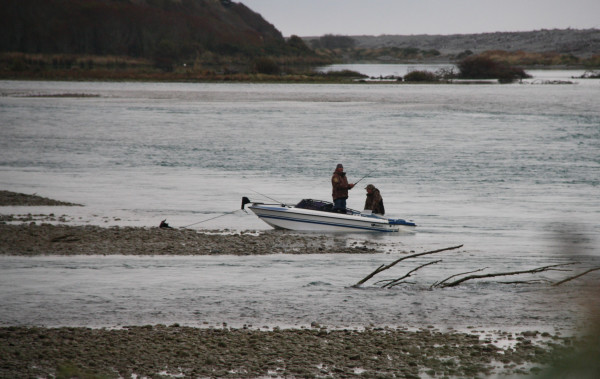
Jet boats are a great tool for accessing fishing spots but boaties must be mindful that jet boating is only permitted on some rivers,
Jet boats are a great tool for accessing fishing spots on rivers, but jet boaters need to be mindful that they can only boat a limited selection of river sections in New Zealand.
The use of jet boats is legally restricted in New Zealand primarily through speed restriction (Regional Councils/ Harbourmaster) and restrictions on activities undertaken on surface water (District Councils). However, there are other restrictions on the use of motorised craft, such as at wildlife refuges and reserves etc.
District Councils Plans list permitted and prohibited activities and rules, including the use of motorised craft on surface water.
The Regional Councils Navigation Safety Bylaws list waterways with “speed uplift” where jet boating can take place. Speed uplifts allow a boat to be used at speeds in excess of 5 Knots; this means that jet boats can operate at the high speeds they are designed for. There are also restrictions listed where speed uplift may only apply to a certain river stretch and specified times of year.
You can request a temporary reservation or exemption from the Harbourmaster by submitting a form, as specified by them, and including the necessary fee. Exemptions can allow for jet boating events and club days etc where a speed uplift is not provided for in the bylaws.
To ensure you are jet boating legally our advice is to treat all rivers as if the use of motorised craft is prohibited until you have done your own research and confirmed the use of motorised craft in excess of 5 knots is permitted.
Important Links to Plans and Bylaws regulating jet boating in the Central South Island Fish & Game Region rivers:
- Environment Canterbury Navigation Safety Bylaws
- Timaru District Council Plan – Activities on the Surface of Water
- Ashburton District Council Plan – Rural Zones
- Mackenzie District Plan – Activities on the Surface of Water
- Waimate District Plan – Rural
- Waitaki District Plan – Rural Zones
- Apply to Harbourmaster for a Temporary Exemption
Examples:
Rangitata River – jet boating partially permitted, excluding upper section above Red Rocks / Turn Again Point between March and July, and excluding Deep Creek tributary at all times.
Navigation Safety Bylaws specifies that the Rangitata River, including the lagoon and tributaries, is a Speed Uplift Zone (see page 29).
The Timaru District Council (TDC) and Ashburton District Council (ADC) Plans specify that use of motorised craft like jet boats is permitted on the Rangitata River at any time other than above Red Rocks also known as Turn Again Bend (NZMS 260, Sheet J36, Grid Reference 515208) between March and July inclusive (see section 6.20.2.1(4) TDC Plan and section 3.8.7 (a) ADC Plan). Additionally, ADC Plan specifies jet boating is prohibited at all times in the Deep Creek tributary.
Hopkins / Dobson Rivers – Jet boating permitted in mainstem but excluded in tributaries
Navigation Safety Bylaws specifies that the Hopkins and Dobson rivers (mainstems) are Speed Uplift Zones but that their tributaries (Spring Creeks / Temple Stream etc) are excluded and the 5 Knot speed limit applies (see page 28).
Opihi River – jet boating is not permitted unless part of authorised events held by the New Zealand Jet Boat Association
Navigation Safety Bylaws do not provide a Speed Uplift Zone.
The Timaru District Plan (see section 6.20.2.1(3)) specifies that use of motorised craft is permitted for the New Zealand Jet Boat Association for up to two family day events on the Opihi River between the State Highway 1 Bridge and the confluence of the Opihi and Opuha Rivers. within the period September to February (inclusive) conducted between 10.00am and 3.00pm when the river flow measured at the State Highway 1 Bridge exceeds 30 cumecs.
And
Up to one jet sprint event conducted by the New Zealand Jet Boat Association outside but adjacent to the mainstream of the Opihi River, of up to two days duration in September of any one year.
Keep up to date
For news and updates find us on Facebook here.
See what other anglers are up to by reading the Weekly Fishing Report, delivered directly to your email inbox throughout the season. Sign up to the CSI Weekly Fishing Report here.
To contribute to our newsletters, send your photos and stories to [email protected].
Photos of released fish should demonstrate good catch, care and release practices to be considered for publication.
Disclaimer:
The information presented in these news items is based on the context and regulations in place at the time of publication. Please note that some articles may include reference to laws and regulatory standards that have since changed. For the most current and accurate information please check our Fishing Licences & Regulations pages or our Hunting Licences & Regulations pages.