New research points to warming Canterbury seas as a plausible factor in salmon decline
- North Canterbury Central South Island
- 30/11/2026
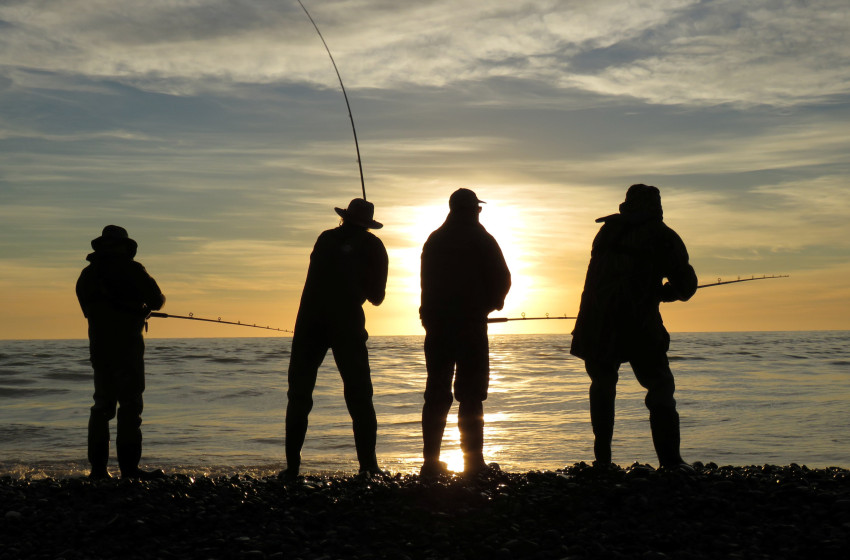
New research commissioned by Central South Island and North Canterbury Fish & Game Council’s has identified warming ocean temperatures as a potentially important factor in the long-term decline of Canterbury’s wild sea-run Chinook salmon, but likely not the only one.
Photo Above: ‘Anglers fish for salmon where the Rangitata River enters the Pacific Ocean’ Photo credit Rhys Adams / Fish & Game
Fish & Game had long considered changing ocean conditions a likely contributor to declining salmon numbers due to the universal nature of the fishery decline across unique river catchments that all connect to the sea. This study provides the strongest evidence to date that warming sea temperatures may be playing a significant role.
The study, undertaken by Earth Sciences New Zealand, examined changes in the marine environment off Canterbury and compared these with more than three decades of Fish & Game salmon run data from the Rangitata, Rakaia and Waimakariri rivers.
Fish & Game surveys show the number of wild Chinook salmon returning to these three rivers has declined by about 90% over the 33 years from 1992/93 to 2024/25.
The research found the Canterbury marine region has warmed substantially over this period. Sea surface temperatures increased by about 1.3°C between 1960 and 2025, while the frequency of particularly warm days has also increased, with most warming occurring since 1992.
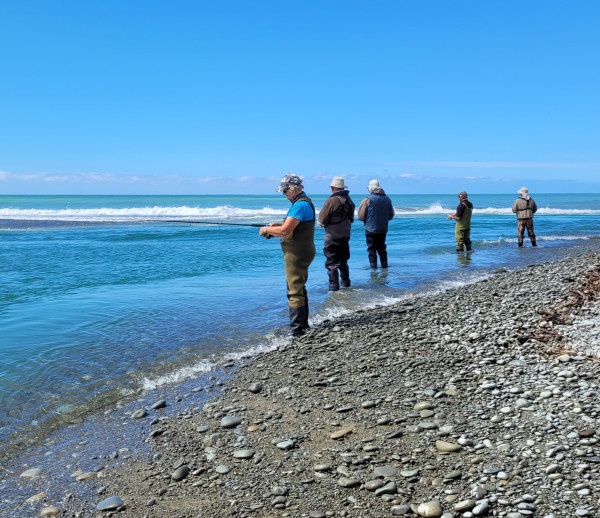
‘Anglers fish for salmon where the Rangitata River enters the Pacific Ocean’ Photo credit Rhys Adams / Fish & Game
Lead researcher Dr Matt Pinkerton said the most striking result was the relationship between warmer sea-surface temperatures and poorer salmon runs.
“Across all three rivers, warmer sea temperatures were strongly associated with lower numbers of salmon returning to spawn. This is particularly important because New Zealand Chinook typically spend around two to three years at sea—roughly two-thirds or more of their lives—before returning to spawn.”
However, the researchers stress that correlation does not prove that warming seas caused the decline and that other factors are likely contributing.
“This research does not tell us that warmer oceans are the cause of declining salmon numbers. We recorded poor runs during some cooler periods as well, which tells us other factors are also affecting these fish. But ocean warming is a plausible part of the picture.”
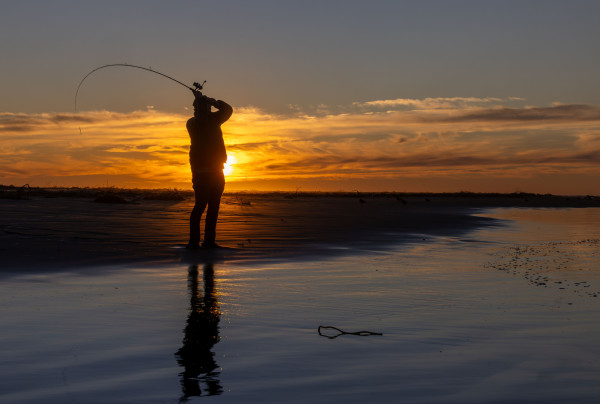
‘A salmon angler casts in the hope of catching a salmon at the mouth of the Waimakariri River mouth’ Photo credit Peter Meecham
The study investigated several other potential explanations related to the marine environment, including changes in ocean primary productivity, salmon prey, predators, and commercial fisheries. It found no obvious pattern in available fish or fishery data that strongly matched the long-term decline in salmon runs. Direct impacts on salmon from marine commercial fishing were considered unlikely, based on available information.
The report also identified important factors outside the study’s marine focus. Freshwater habitat, barriers to migration, genetics and river water quality and quantity could also influence salmon numbers but were not examined in this study.
Central South Island Fish & Game Chief Executive Steve McKnight said that for salmon anglers and fisheries managers, the findings provide important new evidence about the challenges facing one of Canterbury’s most valued sports fisheries.
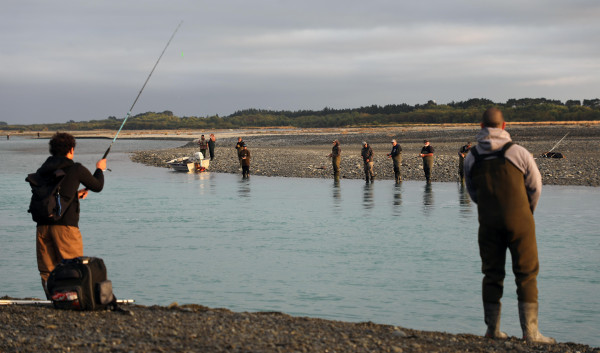
‘Anglers in pursuit of sea-run salmon line the river’s banks where the Rakaia River enters the sea.’ Photo credit Richard Cosgrove / Fish & Game
“These salmon spend a large part of their lives at sea, so understanding what is happening in the marine environment is essential. This study gives us a much clearer picture of changes in the marine environment and potential implications for salmon populations.”
Building on this research, Central South Island and North Canterbury Fish & Game are working together on a complementary project, in collaboration with another scientific agency, to investigate potential changes in salmon marine diet and growth rates over time. The study will use an otolith (earbone) library collected over several decades. The findings will contribute to the broader body of research, helping strengthen our understanding of salmon in the marine environment and supporting informed fisheries management into the future.
Disclaimer:
The information presented in these news items is based on the context and regulations in place at the time of publication. Please note that some articles may include reference to laws and regulatory standards that have since changed. For the most current and accurate information please check our Fishing Licences & Regulations pages or our Hunting Licences & Regulations pages.