Otago Weekly Fishing Report - 5 November 2026
- Otago
- 5/11/2026

Shelter key to success in high-country opening
The opening of Otago’s high-country season on Sunday saw strong winds sweep across the region, with exposed rivers bearing the brunt. Finding shelter from the wind was key to success, with anglers making the most of smaller, sheltered tributaries.
Otago Fish & Game rangers were out checking licences around lake tributaries, with more than 30 anglers checked throughout the day. Encouragingly, all those checked were complying with the regulations.
It was also good to see plenty of junior and novice anglers, along with families, making the most of opening day. Several were catching their first fish on the fly rod.
Pictured above: A squirmy worm fooled this rainbow for Swati Korabu fly fishing in a lake tributary on opening day of Otago’s high-country season. Credit: Jake Haigh.
Some rivers were still carrying colour following midweek rain, although fish could still be spotted in the shallows.

Jake Haigh catches and releases a rainbow in a lake tributary. Credit: Swati Korabu.
Anglers had success with a range of flies, with hot-headed nymphs and worm imitations proving effective early in the morning. As the day progressed, fish began favouring more natural patterns, such as pheasant tail nymphs.
Those who braved the wind around the upper reaches of the lakes also found fish feeding, although controlling casts in the blustery conditions proved challenging.
A reminder that the high-country season for North Canterbury and Central South Island does not open until Saturday 7 November.
If you haven’t already got your fishing licence, buy one online, or drop into your local licence agent.
Soft-bait success in the Catlins

This brown trout caught by Hadlee Edmunds (inset) took a soft bait during a mayfly hatch in the Catlins River. Credit: Ronan Prince-Ruiz, Hadlee Edmunds.
While trout can become focused on a particular food source, it's still worth trying a soft bait, says Hadlee Edmunds from Dunedin Hunting & Fishing.
Hadlee Edmunds headed recently to the upper Catlins River with workmate Ronan Prince-Ruiz for some fishing, landing three trout, including a 3lb brown.
The fish were holding at the heads of pools where the rapids flowed in. The river was running low and tannin-stained, with plenty of mayflies hatching but no trout rising. Hadlee reckoned the fish were feeding on nymphs below the surface.
“Even if fish are rising, casting into their path and keeping the bait near the surface rather than letting it sink can sometimes produce a take.”
Hadlee hooked a trout on his first cast, taking it in the middle of the river. It was a beautifully coloured fish, he says.
They were using a black and gold paddletail soft bait on a 1/16oz jighead, casting downstream and letting the soft bait drift across the current.
Damsels taken on the hang

This rainbow took a beaded damselfly nymph, fished from a float tube in Lake Dunstan. Credit: Tim Johnson.
Tim Johnson, from Central Otago Hunting & Fishing, has been enjoying some good fishing from his float tube at the top of Lake Dunstan.
Fishing with a sinking line and mainly size 12 olive damselfly nymphs with a heavy bead, Tim landed seven trout on Saturday afternoon and another three the previous Sunday.
The fish were holding in seemingly random water, particularly around underwater ridges and pinnacles. Tim says getting out in the float tube provided a good opportunity to explore the area and get a better feel for the underwater contours.
The fish were mostly rainbows, with a couple of browns, ranging from 2–4 lb. There also appears to be plenty of rainbows about.
Boat anglers can try anchoring up and casting out with a sinking line, allowing the fly to sink before retrieving. Takes often come on the hang.
Harling has also been producing fish, with black and olive woolly buggers popular choices. If the water is a little silty, black is a good option as it provides a stronger contrast.
Fishing looking up

This brown trout caught by Benjamin Boss last weekend took a size 14 CDC blue-winged olive mayfly. Credit: Benjamin Boss.
Benjamin Boss enjoyed his first dry-fly fishing of the season last weekend, visiting a remote brown trout fishery in Otago.
“Finally we’ve had some dry fly fishing!” Ben says. “It’s the first time I’ve had them looking up this season.”
The window was short, with trout rising for about an hour between 3pm and 4pm as the wind dropped and temperatures peaked. The fish took a size 14 CDC mayfly before the hatch petered out and the trout stopped rising.
“The fish actually ignored a couple emerger patterns initially, then ate this size 14 blue-winged olive split-wing dun. Such a simple fly but deadly.”
Plenty of options when rivers clear
Mark Sanders, from Southern Wild in Wānaka, says upper tributaries have been running high, and he's hoping for a few days of settled weather to help them clear.
Worm imitation patterns are worth trying around lake edges and in rivers running high and discoloured. A gold bead nymph has also been producing well in the Clutha River.
“If you haven’t caught anything by the end of the day, throw on a worm imitation pattern, such as a squirmy worm, and you won’t go home disappointed,” Mark says.
Despite the cold water, a few hardy anglers are already wet wading. As Mark puts it, you need a bit of Southland swede in you to brave the water at this time of year, while visiting North Islanders are sensibly sticking with their waders!
Soft bait fishing clinics

Practical tips and techniques for anglers of all experience levels.
Want to catch more trout, salmon and perch? Soft baits are an effective spin-fishing method worth adding to your tackle box.
Join us with Lance Gill, from Okuma NZ, for a free clinic at Lake Waihola and Butchers Dam. Each session from 6.30pm-8.30pm includes a one-hour talk and demonstration, followed by a chance to try your luck catching a trout or perch. Learn about lure types, rig setups, braid-to-mono knots, casting techniques and retrieves that trigger strikes.
- LAKE WAIHOLA: Wednesday 11 November
- BUTCHERS DAM: Thursday 12 November
Click here for more details and register now.
Clutha Pumped Hydro proposal
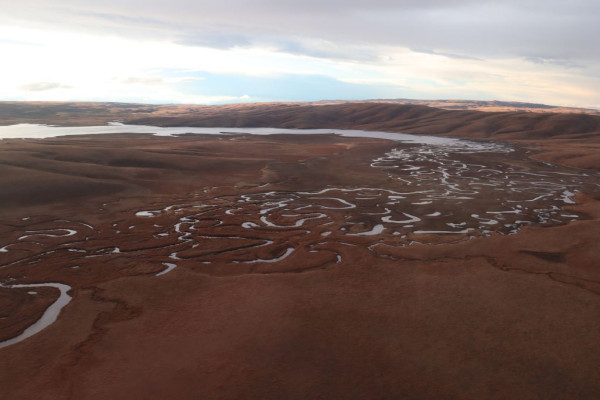
The proposed Clutha Pumped Hydro (Onslow) project could have significant implications for Otago's freshwater fisheries and game bird habitat.
The project would expand Lake Onslow to create a large-scale energy storage facility, providing hydropower during dry years. It is intended to progress under the Fast-track Approvals Act, making early engagement important for Fish & Game and licence holders.
The proposal may result in the following:
- The Lake Onslow fishery as we know it may be lost, due to the loss of spawning habitat and, during dry years, shallow habitat which supports trout populations.
- The current location of fishing huts could be inundated.
- Flows in the lower Clutha River/Mata-Au up to about 200 cubic metres may be moved between Lake Onslow and the Clutha/Mata-Au.
- Rare high-country scroll plain, which provides game bird habitat, may be flooded.
- Pest species from the Clutha/Mata-Au may be introduced into Lake Onslow and the Teviot River.
- Public access, particularly during construction, may be impacted.
You can review preliminary information in the project's referral application.
Fish & Game is engaging with the applicant to better understand the proposal, confirm potential adverse effects and explore ways to minimise impacts. This could include mitigation measures, offsets or compensation where fisheries or habitat are lost.
We recognise that while the project is intended to help New Zealand reduce carbon emissions from electricity generation, it is rare to see a proposal with such potentially significant impacts on a fishery.
Fish & Game is inviting licence holders to share their views. Click here to provide feedback. Responses will help inform Fish & Game's work on the proposal.
Over the border: Upper Ahuriri Beat System
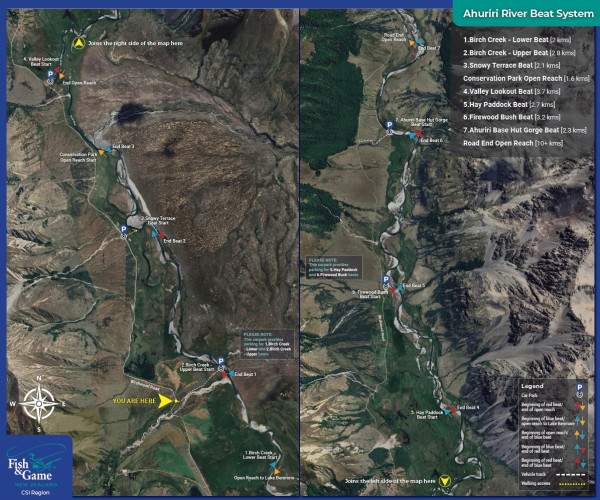
Ahuriri River beat system. Credit: Central South Island Fish & Game.
Otago anglers who make the trip across the regional border to fish Central South Island waters may be interested in the trial voluntary beat system on the upper Ahuriri River.
The system is aimed at reducing encounters between anglers on the river and improving the overall angling experience. To learn more about the voluntary beat system and how it will operate on the upper Ahuriri River, watch the video here or visit our website here.
Guides planting day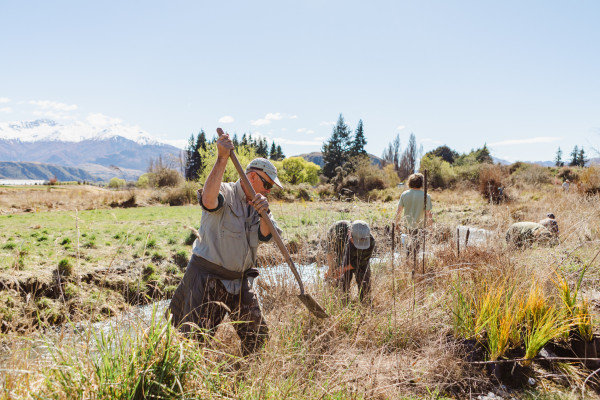
Professional guides dig in for the environment with Fish & Game at a Lake Wānaka tributary this spring. Credit: Jeff Forsee.
Fishing guides, local anglers and Fish & Game staff teamed up this spring to plant more than 200 native plants along a Lake Wānaka tributary, helping improve trout spawning habitat.
The plants included harakeke (flax), Carex secta and toetoe, and were planted along the banks of a small tributary known for its rainbow trout spawning runs. As the plants establish, they will provide shade and cover while helping to absorb nutrients before they enter the stream.
New Zealand Professional Fishing Guides Association president Dean Bell said the day was a good opportunity for guides to give back to the fisheries they rely on.
“It was great to see our members getting involved and invested in protecting the resource. These fisheries are important to our industry, so it’s fitting that we give back and play our part in looking after them for future generations,” Mr Bell said.
Mr Bell said the initiative also provided an opportunity to build relationships and strengthen communication between the guides association and Fish & Game.
Otago Fish & Game also values opportunities to work with licence holders, including fishing guides and local anglers, on projects like this. By combining our efforts, we can make a real difference to the health of our waterways and improve habitat for trout and other freshwater species.
Special thanks to the landowner for granting permission and providing vehicle access to the site, helping make the planting day possible.
Club updates
We welcome updates from Otago angling clubs.
143rd Waipahi Gold Medal
What is believed to be the Southern Hemisphere’s longest-running fishing competition, the Waipahi Gold Medal, returns to South Otago this Saturday 7 November.
The event on the Waipahi River is run by Otago Anglers Association. Competitors’ beats have been drawn.
Otago Fish & Game will be collecting trout otoliths (ear bones) from the weigh-in — research that helps determine where fish have lived during their life cycle and supports management of key spawning streams within the lower Clutha/Mata-Au catchment.
Mahinerangi Gold Cup
The Mahinerangi Gold Cup fishing competition will be held at Lake Mahinerangi on Sunday 8 November. Taieri Anglers Club president Ron Blankestyn says the event will be held rain, hail or snow.
The annual fixture is run by the Taieri and Lawrence angling clubs. Tickets are available at Hunting & Fishing Dunedin, Paper Plus Mosgiel and the Outram shop.
Weigh-in is at 4.30pm at the Lawrence Anglers Club hut at Mahinerangi. Fish & Game will collect the fish heads for analysis.
Women on the Fly NZ

Cast & Connect: Women’s Fly Fishing Weekend
The Camp, Lake Hāwea | 11–13 December 2026
Join Women on the Fly NZ for a weekend of fly fishing, new friendships and time together supported by The Camp, Lake Hāwea.
Registrations are open.
Full details and registration: womenonthefly.nz/thecamp2026
Why not join a local fishing club?
Select here for a list of Otago fishing clubs.
If your club has any news or photos for inclusion in the Weekly Fishing Report, please email [email protected] by the Monday prior to publication on Thursday.
Lake Wānaka live webcam

A screengrab of the Lake Wānaka webcam taken at the time of writing.
Want to know conditions at Lake Wānaka? Check this live webcam from the Wānaka water sports facility.
Here’s the weekend outlook:
Dunedin
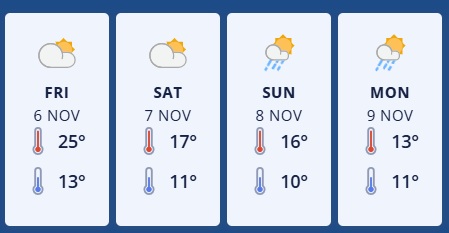
Saturday looks best for fishing. Fine, becoming cloudy in the evening, with southwesterlies turning northeasterly in the morning. Sunday partly cloudy, with occasional rain from evening. Southerlies developing in the morning.
The Taieri River at Outram is at 20.6 cumecs this morning.
Click here for live Dunedin weather updates.
Wānaka
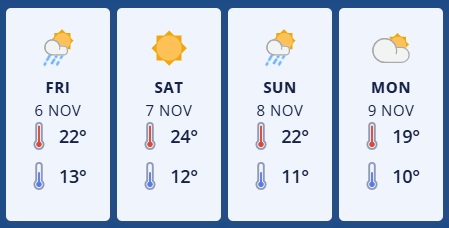
Fish should be looking up as the day goes on if temperatures rise into the 20s. Saturday fine. Northerlies developing for a time in the afternoon and evening. Sunday fine, then a few showers developing in the afternoon. Southerlies developing in the evening.
Click here for live Wānaka weather updates.
Alexandra
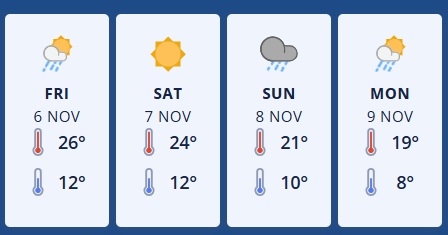
The fishing looks best on Saturday. Fine, with northerlies developing for a time in the morning and afternoon. Sunday occasional rain from morning. Southerlies developing in the afternoon.
Click here for live Central Otago weather updates.
Clutha Regional Forecast
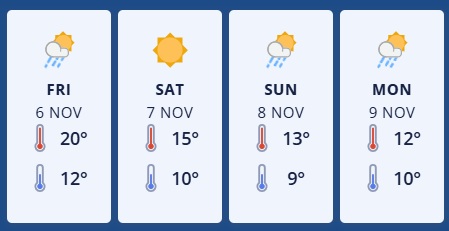
Get out there on Saturday. The weather’s looking good for entrants in the Waipahi Gold Medal. The Waipahi River is above median flow at 3.5 cumecs. Saturday will be fine, with westerlies turning southeasterly in the afternoon. Sunday partly cloudy, with occasional rain from evening. Southeasterlies developing in the morning.
The Pomahaka River was above median at 8.38 cumecs at Glenken this morning.
The lower Clutha River at Balclutha is flowing at 883 cumecs.
Click here for live lower Clutha weather updates.
For more ORC water monitoring and alerts information click here.
Grab your licence online and let the angling adventures begin.
Got any Otago fishing news?
Send your fishing news and photos (with anglers’ names) to [email protected] for consideration in the weekly report.
Disclaimer:
The information presented in these news items is based on the context and regulations in place at the time of publication. Please note that some articles may include reference to laws and regulatory standards that have since changed. For the most current and accurate information please check our Fishing Licences & Regulations pages or our Hunting Licences & Regulations pages.